‘You Can See Everything’: An Endeavor of Deception
A24
One of the best, most arresting films of 2026 is a three hour documentary on the disgraced head of Theranos, Elizabeth Holmes. The fall is host to a veritable flood of movies castigating Silicon Valley narcissists—Alex Gibney’s four hour documentary Musk, Aaron Sorkin’s The Social Reckoning, and Luca Guadagnino’s Artificial, focusing on Sam Altman—so adding one more to the mix may trigger exhaustion and overload. But if there’s one thing that You Can See Everything avoids, it’s predictability. This is not a straightforward movie.
Nathan Fielder’s presence as a co-director (along with Lance Oppenheim) and interviewer is the first signal that this will be a more diagonal experience. Fielder is best known for the shows Nathan for You and The Rehearsal, both of which muddy a documentary style with the sense that Fielder, himself, may always be in character. And sure enough, the questions he has for Holmes are rarely what one would expect. “What do you like when you flirt?” is just one of many such lines of inquiry.
Holmes is most famous “for that thing”—that thing being swindling investors by proclaiming to have developed a wonder machine that can run dozens of medical tests with only a single, small sample of blood. The “iPod of healthcare.” Only this iPod was defective from the start. Holmes was sentenced to prison for fraud, and this is actually where our experience with Fielder and Oppenheim’s film picks up. Holmes and her partner, Billy, invited the documentary crew into their lives throughout the weeks leading up to the start of Holmes’ prison sentence.
For Elizabeth and Billy, it’s a chance to set the record straight, to record a more sympathetic version of the story. For Oppenheim and Fielder, it’s a chance to get at the heart of a distinctly American trope of deception. That journey will take them further afield as they work on the film, expanding to encompass the nature of fiction vs. truth, the separation between reality and our interpretations of it, and our flailing attempts to understand the figures weaving these lies.
I will not give too much away. It’s worth experiencing the discombobulation when You Can See Everything veers into unpredictable territory. What starts as a strange conversation laced with ample cringe comedy and non sequitur mutates into a tense investigation. The meta line of questioning here is not so much about how and why Holmes defrauded investors; Fielder is not seeking to understand these acts but the person behind them, her relationship to truth, and our relationship to her. But to ask these questions means asking ourselves why we’re so prone to believing these lofty promises. It casts doubt on the ability for any reflexive attempt—whether a documentary or fictionalized retelling—to mine all the way to the psychological bedrock we seek. Fielder evens twists the film into a recursive exploration of documentary ethics. You Can See Everything swerves headlong into the densest thicket of quandaries. But this miasma is never dull. It’s surprising, thrilling, and funny.
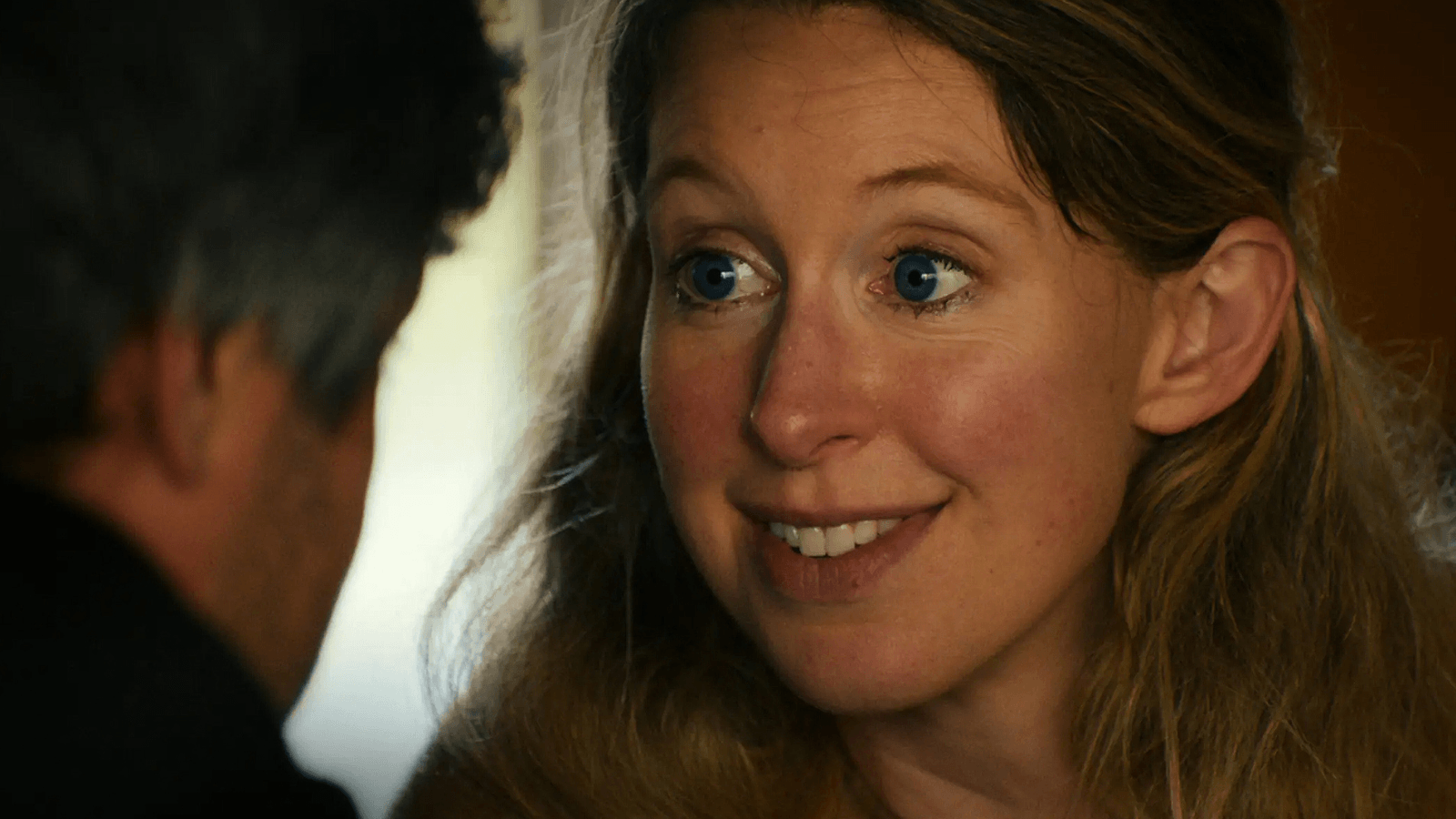
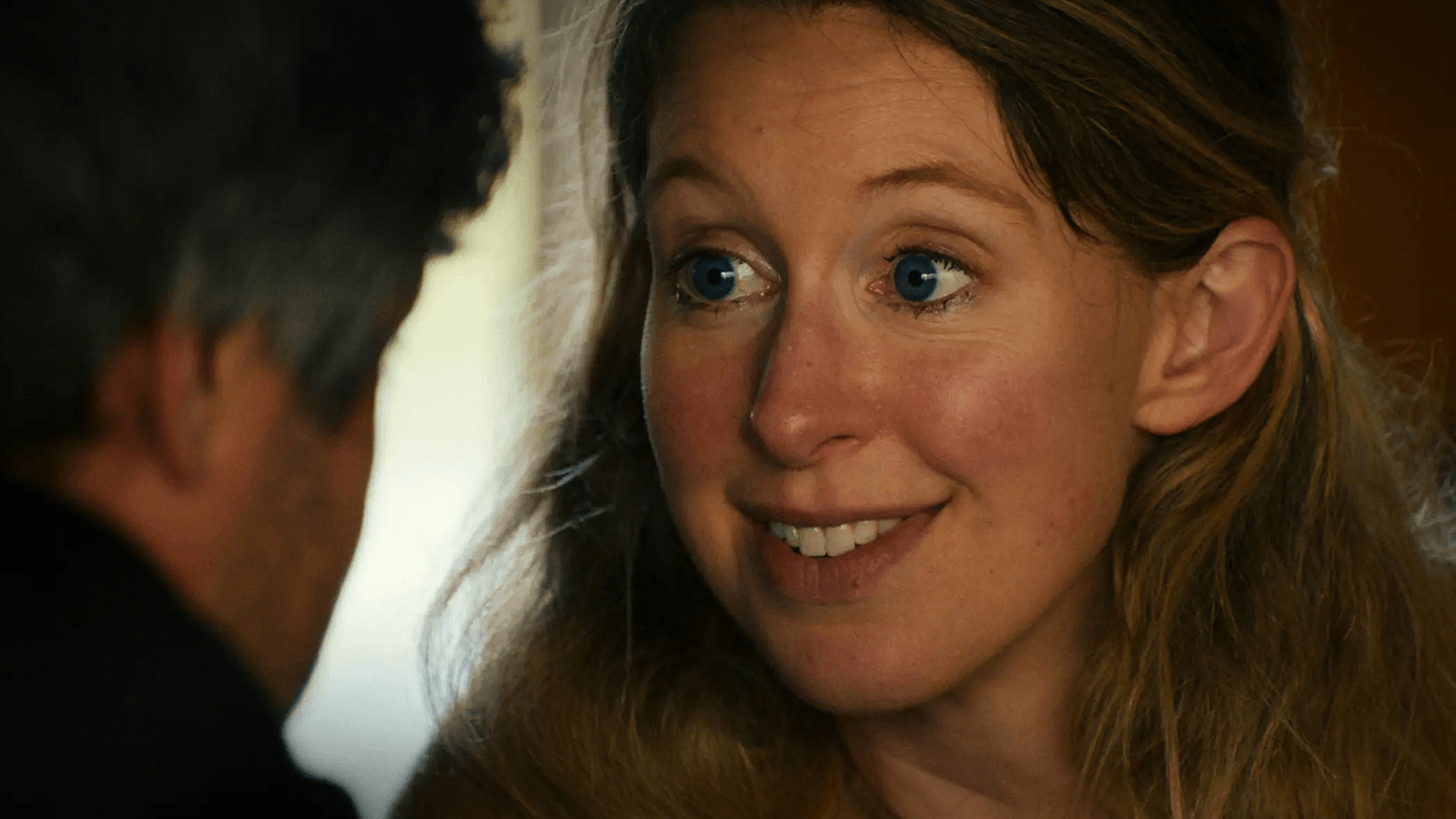
Three hours can’t ever answer these questions, but the real potency of You Can See Everything isn’t in resolution, it’s in sensation. Fielder and Oppenheim render via cinema the uncanny experience of having one’s world reshaped by proximity to a charismatic grifter. (Speaking of uncanny: I spent four years just down the road from Bryan, Texas, where Holmes remains incarcerated.) The film is composed of extremely tight close-ups that aren’t so much claustrophobic as they are engulfing—the viewer is fully fixated on the face in the frame, subject to their expressive power. Fielder and the viewer alike are deluged by the overwhelming sense of irrationality that has become a subtle undertow in American life. The allure of the sui generis tech genius and the worship of wealth has done a real number on us, and trust feels like a scarce resource.
Two things are clear from Fielder’s time with Holmes. The first is that, even at our most visible, most observed, most naked, we are still profoundly capable of weaving a façade around the truth. The second is that the salesmanship never ceases. The hustle is endless and insatiable until it becomes an entire way of being. Holmes seems trapped in it—and she may not even be the biggest self-deceiver on display. So what’s at the bottom of it? Is it a disease? A pathology? And is it contained to a handful of power hungry individuals, or has it become encoded into our cultural DNA?
You Can See Everything isn’t a cure for these modern maladies, but it might just serve as therapy. Or diagnosis. But let’s not say both.