The Ghostly Images of ‘Fatherland’
Canal+
Cinema is all about ghosts, to paraphrase Derrida. It is a haunted medium. Haunted by the past, materialized by images of a moment that no longer exists yet recurs with every run through a projector. Haunted by people, some who are dead and some who are simply no longer that same person on the screen. And more mysteriously, haunted by a possible / impossible future: a film enunciates a desired world that was never realized. Or, per Josh Larsen’s observation, movies are prayers.
A film like Paweł Pawlikowski’s Fatherland illuminates this nature more vibrantly than most. Despite the simplicity of its title, Fatherland carries an implicit skepticism; the central question is “Where’s home?” The memory of belonging haunts those who now wander. The temptation to return to a place is present, but it would never be the same. In fact it feels as if the whole world—or at least the whole of Europe—has been radically transformed by the experience of World War II. Many debates of the previous century have queried the possibility of art after the Holocaust. Fatherland asks about the possibility of even finding a home.
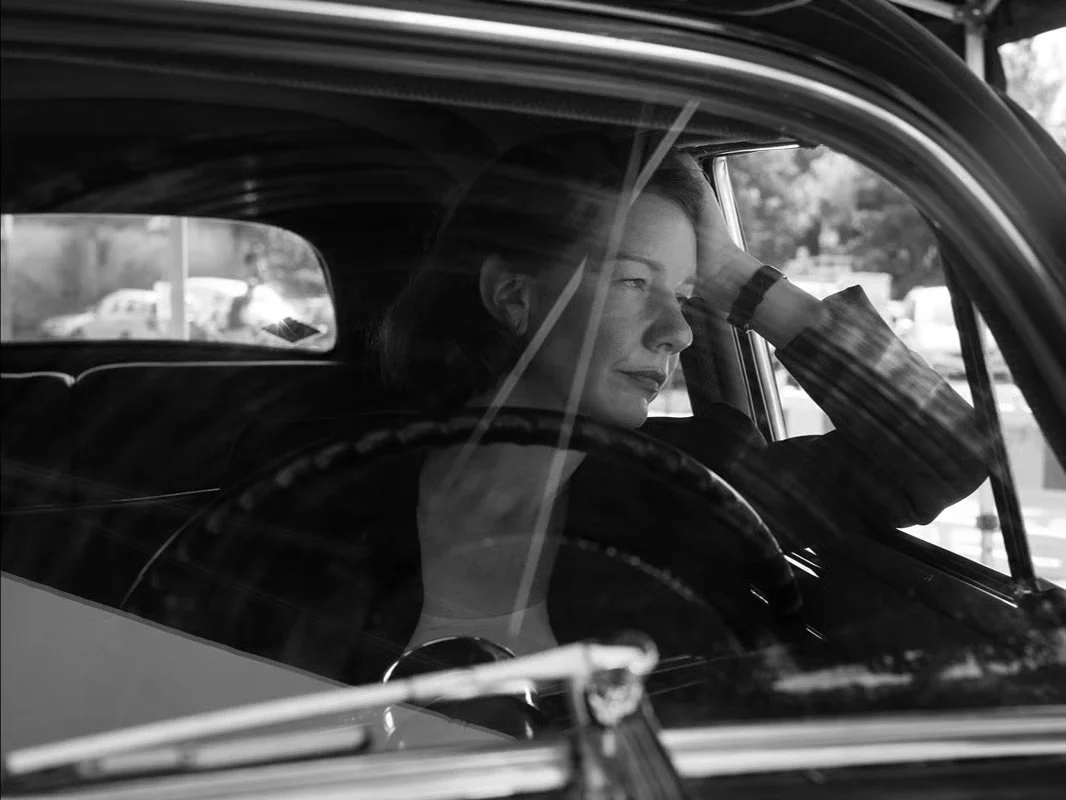
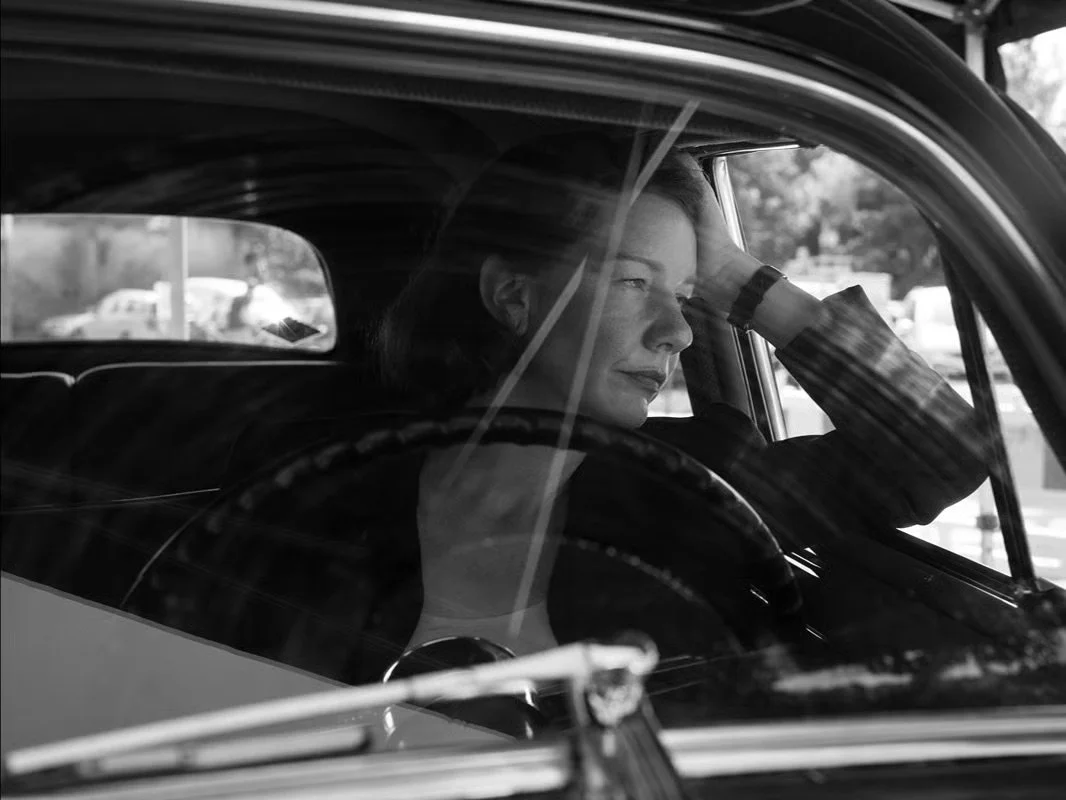
To match this vagabond existence, Pawlikowski works with cinematographer Łukasz Żal (The Zone of Interest, Hamnet) to effect a ghostly visual sensation. Fatherland is arrayed in the faintest black and white photography, as though the filmmakers have strained to restore film buried long ago. The lights are dim, in this film, but it creates an aching quality that communicates the sense of its world. Sometimes it feels like an old movie; sometimes it feels like the real thing.
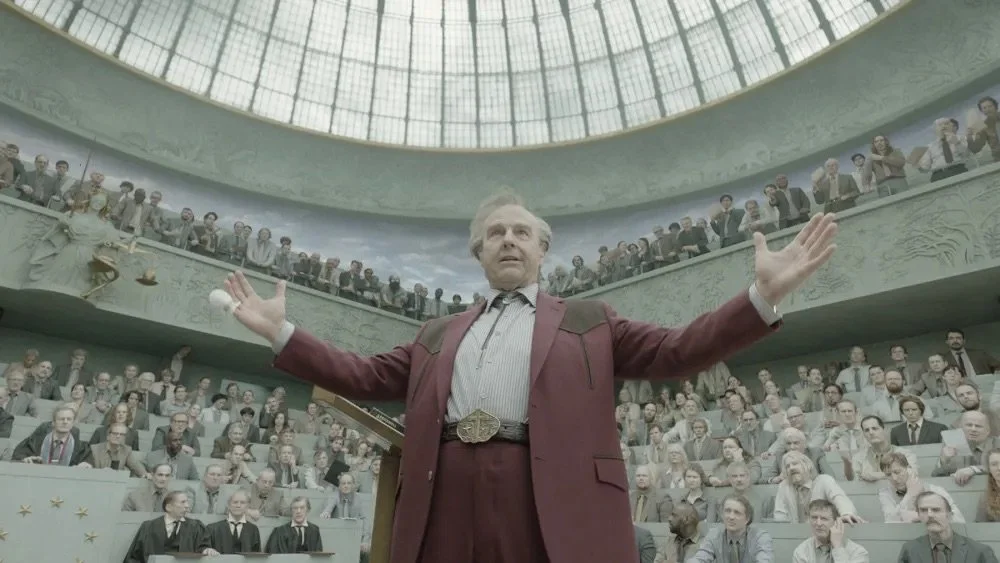
In 1949 a Germany that has been geographically and psychologically scarred by the Third Reich’s reign sees the return of Thomas Mann (Hanns Zischler). Given his vocal opposition to Hitler and his regime, Mann and his family fled the country in 1933, eventually settling in the United States. Over fifteen years later, with Germany rebuilding and having been offered the Goethe Prize, Mann makes his way back to a country he could scarcely recognize. This is not the country of his early years, but a Germany trying to sort out its identity—still plagued with former Nazis in positions of cultural power, simultaneously tugged between the West and the East.
But this is not entirely Thomas’ story. The film’s heart beats with Erika (Sandra Hüller), Mann’s daughter and assistant. Erika’s relationship to Germany is also divided and frustrated, though it shows more sharply than her father’s. Hüller cuts through the frame in clipped, concise movements, and her venom, when it’s unleashed, is unmatched among other actors.
Another haunting reverberates. During their time in Frankfurt am Main, the news reaches them that Klaus Mann (August Diehl), Erika’s brother, has committed suicide. The film opens with Klaus talking with Erika on the phone. The image is with him, and Erika remains distant, imprinting his face through the rest of the film. In a literalization of Derrida’s ghostly cinema, both Erika and Thomas see the visage of Klaus among crowds. He is gone, but they can’t escape his presence.
Fatherland is a small, considered film. There are countless weighty questions—the possibility of a good Germany, the Faustian bargains made by various characters, the failures of a father, the legacy of art amid political regimes—but Pawlikowski never places them in focus. Instead they linger as afterimages, ghosts drifting past the edges of perception.