‘A Child of My Own’ Is a Disastrous Lie
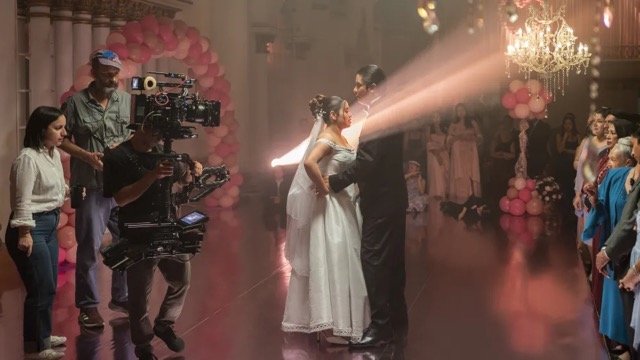
A Child of My Own. Netflix
In Maite Alberdi’s latest documentary, A Child of My Own, an interviewee states that “in real life, more things happen than [in] fiction.” It’s a key not so much to the film, itself, as it is to Alberdi’s project. Alberdi is best known for The Mole Agent, a documentary that saw a charming elderly man go undercover in a retirement home. A real story about a guy pretending to be someone else to solve a possible mystery. If the extravagance of reality and the hazy borderline with fiction wasn’t enough on its own, then consider that The Mole Agent serves as the inspiration for Netflix’s fiction series A Man on the Inside (starring the inevitably charming Ted Danson). Another Alberdi documentary, The Eternal Memory, maps an elderly couple’s fracturing memory onto the instability of Chile’s national memory.
The blur of real and fictional, of narrated and retold and contradicted, is a clear draw for Alberdi in telling this story: Alejandra, a Mexican woman, is desperate to become a mother—a despair worsened by the familial and cultural pressures she’s subjected to. But after persistent failures to conceive, a fateful interaction launches her into a risky scheme. One day while working at her hospital, she encounters another young woman, Mayra, who is pregnant but can’t keep the child, and the two come to an agreement: If Mayra will carry the child to term, Alejandra will adopt it. Seems caring enough, but Alejandra spends the next seven to eight months convincing her husband and in-laws that she is, in fact, pregnant.
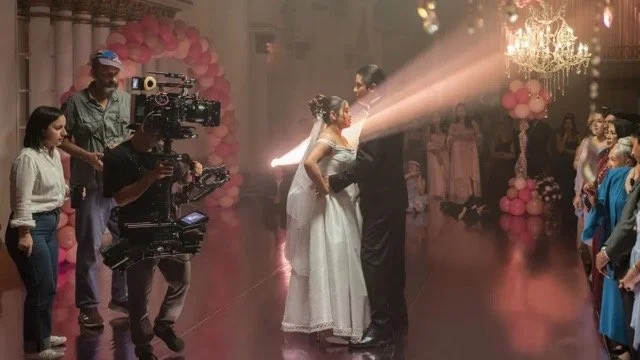
A wild plan (the word ill-conceived comes to mind) full of deceptions and convolutions that Alberdi twists even more by having most of the tale be reenacted. She calls immediate attention to this—the first sequence of the film is a casting call for the actors to play Alejandra and her husband, Armando—and for a time the film overlays the real and acted lines. A Child of My Own is constantly playing in the blur between reality and fiction.
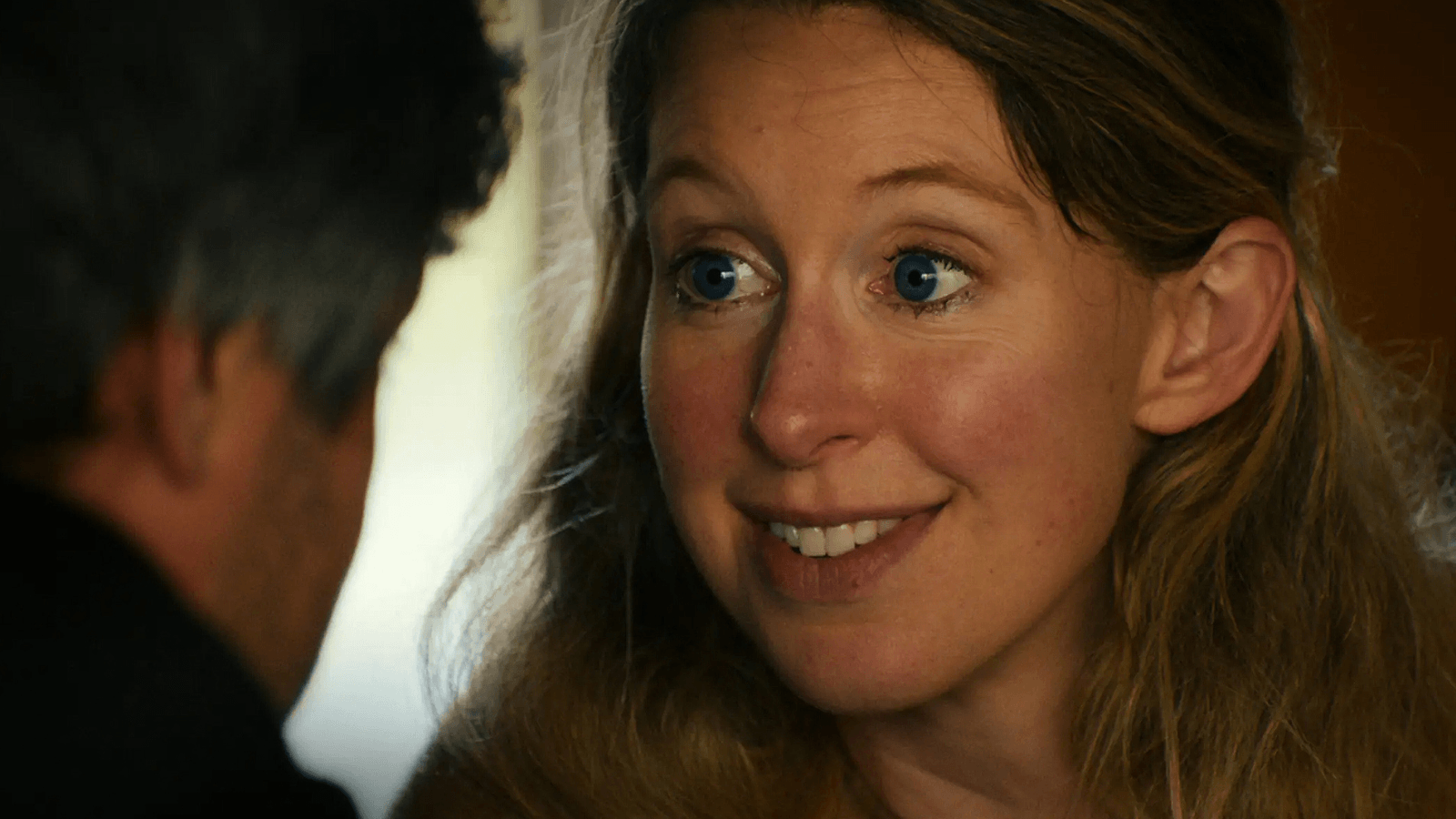
But it loses itself in that blur. The film maintains a playful attitude, but an unsettling question pushes and pushes itself to the foreground until it can’t be ignored. Whose story is this? Alejandra’s clearly, but is she the right one to be telling it? Right about when this concern overwhelms any investment in the story, the film suddenly abandons its reenactment and cuts to Alejandra—the real Alejandra. In the present day. In prison. Because what we’re discussing, what we’re playfully enacting, is the abduction of a newborn child.
The film made me uncomfortable as it forced me to interrogate it. I sat in the theater wondering, Is this film—evil? Alberdi briefly saves it with the jump to the present day, but she never turns to fully investigate Alejandra’s story or the ethics of how she has arranged this film. There are meaningful critiques about the pressures this culture puts on women, on wives, and on mothers, but these become secondary concerns as Alejandra’s story is challenged. Mayra refutes Alejandra’s tale of an adoptive scheme. And while Alberdi does include an interview with Mayra, it’s miniscule compared to the space given to Alejandra’s story—lie? delusion?—and Mayra is visibly distrustful and wary of the filmmakers.
Seeing the finished product, I can’t say I blame her. A Child of My Own gestures toward the perspective of others (of the courts, in addition to Mayra), but it centers itself within Alejandra’s telling. It is a story of her own, whether or not it bears any reality. The decision to emphasize comedy and levity through reenactment casts further doubt on the film. This isn’t whimsy. Any commentary that the film is striving to make is dismantled by the abortive choices in form and perspective. I’m interested in the intersection of truth and fiction, particularly in documentary forms, but the decision to allow harmful deception to overwrite reality in both content and form makes A Child of My Own disastrous.
The kicker is an omen of potential further disasters to come: Netflix has purchased A Child of My Own. Given the company’s current investment in Alberdi’s projects, it’s impossible not to recoil at the idea of an inevitable streaming series based on this documentary. I’m sure that it, too, will be full of whimsy, full of that bright pink sheen with which it can present the ethically compromised as a lighthearted romp. It will be even less interested in self interrogation, and therefore even more of a failure. We can layer story on top of story on top of story, but we can never completely flatten the ugly truth.