Performance and Survival As Political Acts in ‘Yellow Letters’

Yellow Letters. If Productions
What does it mean to play a role?
Performance is a complex thing. When we talk about movies, we often evoke the idea—implicitly or overtly—of the suspension of disbelief. Of immersion. Of getting lost in the action. But that’s not entirely honest, is it? After all, we frequently choose to watch certain movies because we love this or that actor. How can we forget that part of the thrill of the Mission Impossible franchise is watching Tom Cruise perform these stunts? Or that Cate Blanchett draws us in even as Lydia Tar repels us? Or that having Michael B. Jordan play dual roles in Sinners adds a layer of delight to the experience?
We are never entirely immersed, but that isn’t a barrier to enjoyment of movies. It actually becomes productive, multiplying our investment. We learn something about Tom Cruise when we watch Ethan Hunt respond to being disavowed yet again. We admire Cate Blanchett’s craft as she adopts disparate personas. We appreciate Michael B. Jordan’s accomplishment even more when we see him act opposite himself.
Another common movie trope: the city, itself, is a character. L.A. in La La Land (other a thousand other movies). New York in When Harry Met Sally (or ten thousand other movies). Berlin in Wings of Desire. But even this is playing a role, isn’t it? The setting performs just as much as any actor. We see the qualities and facets that we need to understand the nature of this fictional setting, even if it’s reflexive of a real place. The Seattle of 10 Things I Hate About You or the Chicago of Thief are ideas of those cities more than the real, lived spaces.
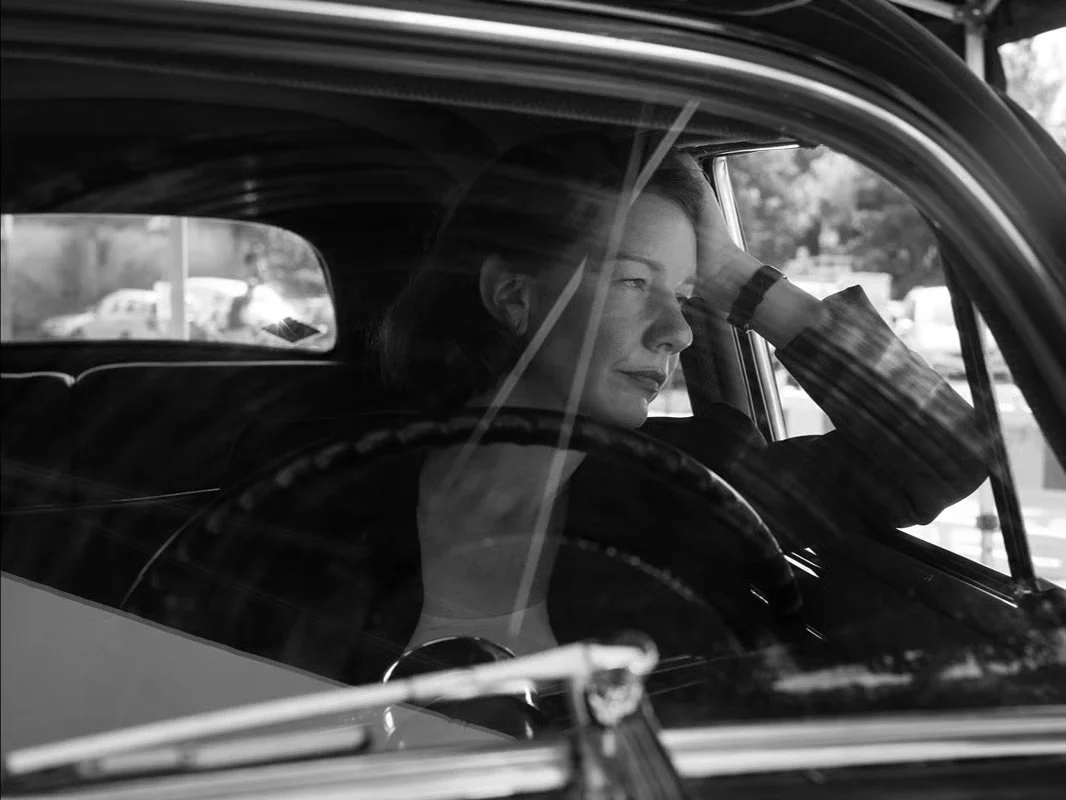
All of which brings us to Yellow Letters (Gelbe Brief), which won the Golden Bear at the 2026 Berlinale film festival. Early on in İlker Çatak’s film, we get title cards declaring the players. Özgü Namal as Derya. Tansu Biçer as Aziz. But a moment later, a more surprising title card flashes: Berlin as Ankara. It tells us exactly what we need to know. Berlin is playing a role, and Ankara will be just as much a character as Derya or Aziz. Later we will add Hamburg (as Istanbul) to the cast list.
Çatak is a German filmmaker of Turkish descent, and his decision to shoot the film in Germany while setting it in Türkiye is a bold one. Bolder still is the film’s acceptance of German buildings, streets, monuments, and language as a stand-in for those one would actually encounter in Ankara. Characters step into German cabs with German license plates and flatly ask for Istanbul addresses. If there’s a moment of audience distantiation, it’s a brief one. Why should this conceit trip us up? We never let the fact that Cruise’s characters always look like Tom Cruise keep us from enjoying any of his films.
Back to Berlin—that is, Ankara. Derya is a revered actor in the national theater; Aziz, her husband, is a professor and playwright. Together, the artistic couple creates expressive art that is critical of the Turkish government. In his classroom Aziz compares “the state’s theatrics” to the study of dramaturgy. At times making vocal art in these spaces is a tenuous endeavor, but they’ve never backed down before. But suddenly Aziz and his coworkers are suspended from teaching, and Derya’s company gives her an ultimatum before cutting her loose. It appears the regime didn’t take too kindly to artistic chastisement.
As the loss of work and income weighs on the couple, the political stressors become relational tensions. How will they pay for their daughter, Ezgi’s (Leyla Smyrna Cabas), education? Should they stay in Ankara or move to Istanbul where they can rely on family? Aziz and his colleagues sue for wrongful termination, but the courts move glacially slow, and they’ll be awaiting justice for quite some time. There’s more than a little of Kafka’s The Trial in this story, because that tale foresaw that one of the greatest tools of oppressive power would be the inertia and inescapability of bureaucracy. “Being made to wait is an act of control.” Multiple times the characters are told that these events had to happen “given the current circumstances.” Which are what? Authoritarian encroachment. Political power tightening its grip on individuals seeking to express their roiling emotions. Those who spent the previous decade decrying cancel culture should ask themselves whether the dynamics on display in Yellow Letters are equal recipients of their condemnation.
The narrative framing of Yellow Letters gets at another truth about acting—performance is a political act. It refracts through the entire film: Derya (and later Aziz) take on roles as an act of political defiance; but the actors Namal and Biçer, themselves, are expressing a firm stance against the machinations of bureaucratic control. Likewise, casting Berlin as Ankara and Hamburg as Istanbul crystallizes pointed critiques of Türkiye that also fold back as cultural warnings for Germany and elsewhere. Performance is political, and we learn something about both the actor and character (about both Berlin and Ankara, for instance) when we watch a performance.
Here, the central (human) performers are electric, portraying developed and thoughtful characters. The script is thoroughly compelling, alternating between nervous and stabilizing at a moment’s notice. When arguments break out, there are some truly bitter barbs. On the other hand, it takes a strong relationship to still flirt amid so much stress. But it will take the strongest of marriages to hold up under such economic and political oppression. (And look, I love seeing a writer husband whose first instinct on completing a draft is to hand it to his wife for revision and edits.) Yellow Letters is wise about the ways that such forces put human relationships under pressure, and the film gives one of the most compelling depictions of a marriage under strain in recent moviegoing.
Somewhere between a tense political thriller and a marriage drama, Çatak’s film charts a steady course through the various questions its characters face. The script is tightly woven—if the characters at times give overly academic or theatrical responses, that’s because such qualities are in their nature. The calm, confident cinematography by Judith Kaufmann is matched with a solid pace of editing that occasionally ratchets up to express the situational tension, but it persistently grounds the film even when characters become unmoored. Not every thematic thread pays off; the myriad of its societal and personal concerns prove a bit much to comprehensively conclude.
But then, that’s partly Yellow Letters’ point. It is frustratingly pertinent far beyond the city limits of Berlin or Ankara. When a regime avails itself of its political power for the sake of pressuring, firing, or otherwise silencing dissenting individuals, everything becomes contested. Somehow life still has to go on. You can speak out, but you still have to find a way to put food on the table. You can hold to your principles, but that choice affects your family’s opportunities. There’s no clear path, but we all must choose a role to play.