‘Dao’ Presents a Glimpse of Diaspora and Reconnection
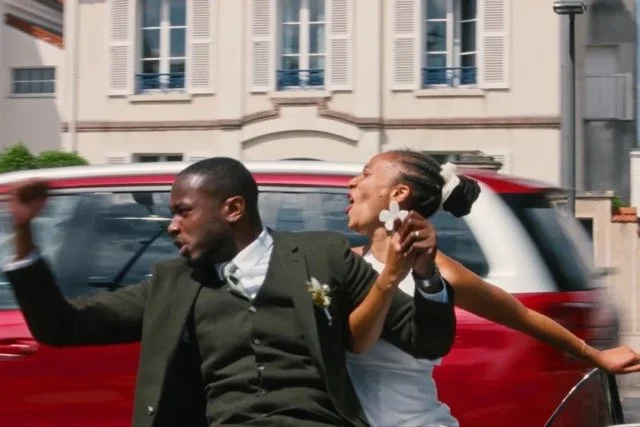
Dao. Srab Films
A curious connection: In the dozen or so films I saw at the 2026 Berlinale, two of them began with recorded casting auditions. In Maite Alberdi’s A Child of My Own, the purpose of the opening seemed aimed at underlining the documentary nature of that film despite the heavy use of reenactments. In Alain Gomis’ Dao, the opposite is true. Gomis has scripted a film and predominantly cast inexperienced or non-professional actors for most of the roles, but he also notes that some subjects of the film won’t be actors at all. Both films are preparing their audience for the blend of documentary and fiction that will follow, though they each place themselves on opposite sides of the spectrum (albeit closer to the middle than any extreme).
It’s a crucial framing device for Dao, as much of the patient, expansive film could easily be perceived as a documentary. The focus of the film is a small village’s communal gathering in Guinea-Bissau near the West African coast. Dao’s three hour runtime will encompass two anchoring rituals—the wedding of a young couple and the remembrance ceremony for a father—and around a dozen personalities that range across generations, life experience, and culture. It’s in these conversations and rituals that the film’s spirit is animated.
Those rites also indicate the multidirectional view of the film. Dao is about tradition and remembrance, but it is equally attentive to how traditions and culture shifts generation to generation. It’s also a tale of diaspora and migrations: many of the people who have gathered are returning home from various places across Europe, while others have always lived in Guinea-Bissau, and the challenges the two groups face are markedly different. The characters (and the actors, captured in intermittent interviews) that either migrated or were born in Europe speak intimately of the prejudice they faced in the French countryside and British cities—trying to make a life in a new land is difficult enough, but far harder when many people don’t want you there. And these migrations also mean that these men and women lose their ties to cultural symbols and ways of life, such that the remembrance rituals feel strange to them.
There’s much loss and hardship from the generations that have spread apart, but those who moved to Europe have selectively adopted things which then challenge those who remained in Africa. At the wedding, a crowd discusses the ways they were disciplined by their parents, with the older attendees all recalling stories of physical punishment, and with almost everyone acknowledging that times have changed—discipline must look different from now on.
Gomis is mostly interested in how these shifts and traditions affect women. The central women (played by Katy Correa and D’Johé Kouadio) are a mother and daughter—it’s the mother’s father who has passed away, her daughter who is getting married—returning to their ancestral village for this gathering. The mother discusses with others the continuation of husbands beating their wives during arguments, and she responds unapologetically: “All that’s over. Don’t let them do it anymore.” She is here to remember, reconnect, and introduce her daughter to their homeland, but she’s clear that some things should be left in the past.
As Dao gently interrogates the family dynamics and how they change with generations, Gomis frames the events with a fluid camera. At times it feels like a documentary—and it may well be in moments with non-actors—but there are touches, like the camera adopting the view of kids hiding under a table, that bring an arranged warmth to many sequences. The photography is broadly lovely and thoughtful as it seeks to respect these cultural patterns without turning them into spectacle. Gomis is interested in what continues to link people across generations, across seas. “May the film be beautiful,” a (presumably real, non-acting) villager tells the crew, as a blessing.