‘Undertone’ Is Hushed by Faint Scares
A24
In his book Audio-Vision, the film theorist Michel Chion discusses what he calls acousmatic sounds. Acousmatic sound is more than just offscreen; it denotes “sound that raises questions... which incite the look to go there and find out.” Sound can redirect the audience’s attention, make them imagine possible sources, and set them on edge. Sometimes, it can do all three at once.
Chion’s sense of acousmatic heightening is the vital concept that energizes Ian Tuason’s Undertone. The indie horror proposes an intriguing gambit: how much tension can be beckoned by the sounds which call out in the dark? Unfortunately, Undertone is also a demonstration that a solid idea is forgettable unless it’s paired with persistent creativity and craft.
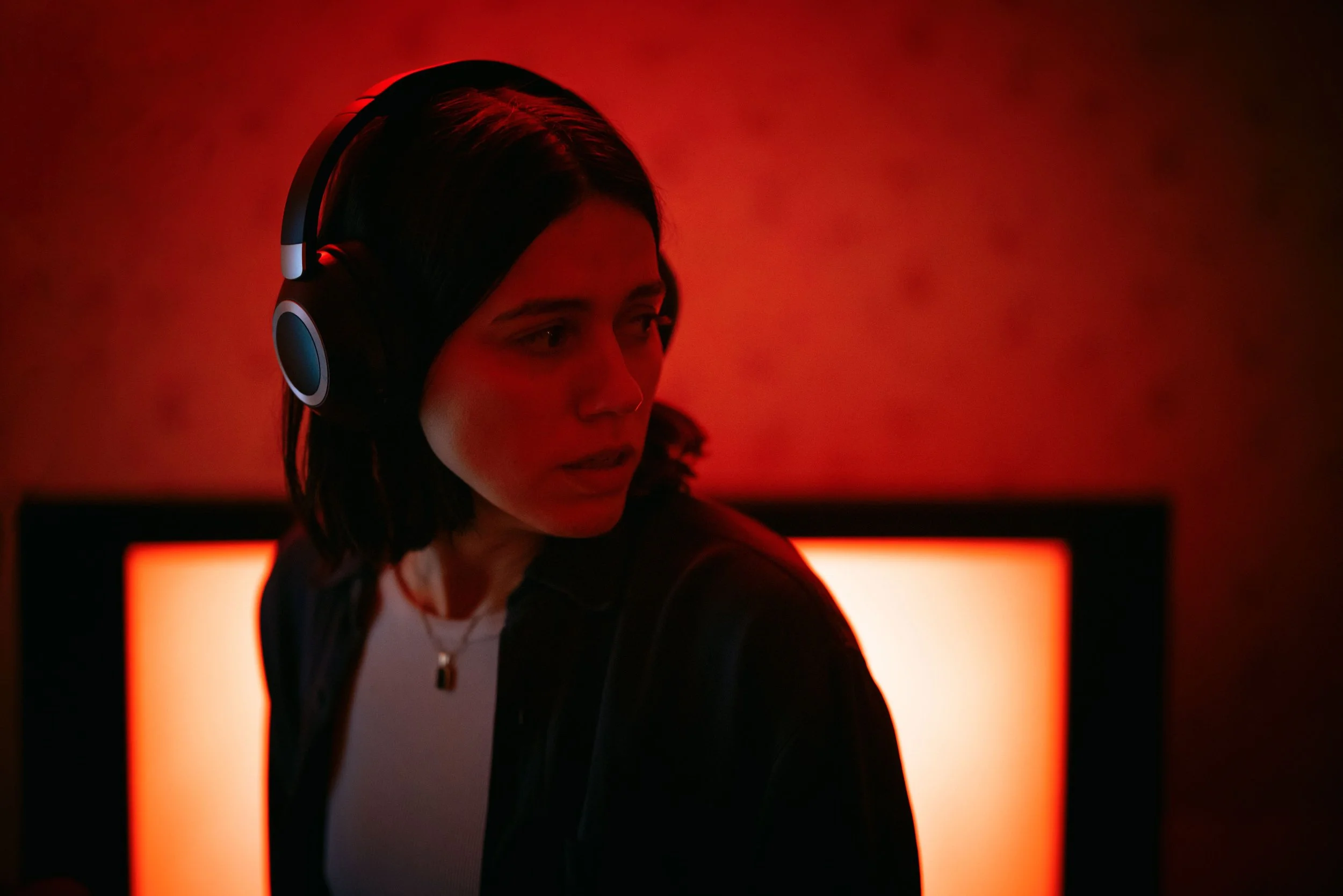
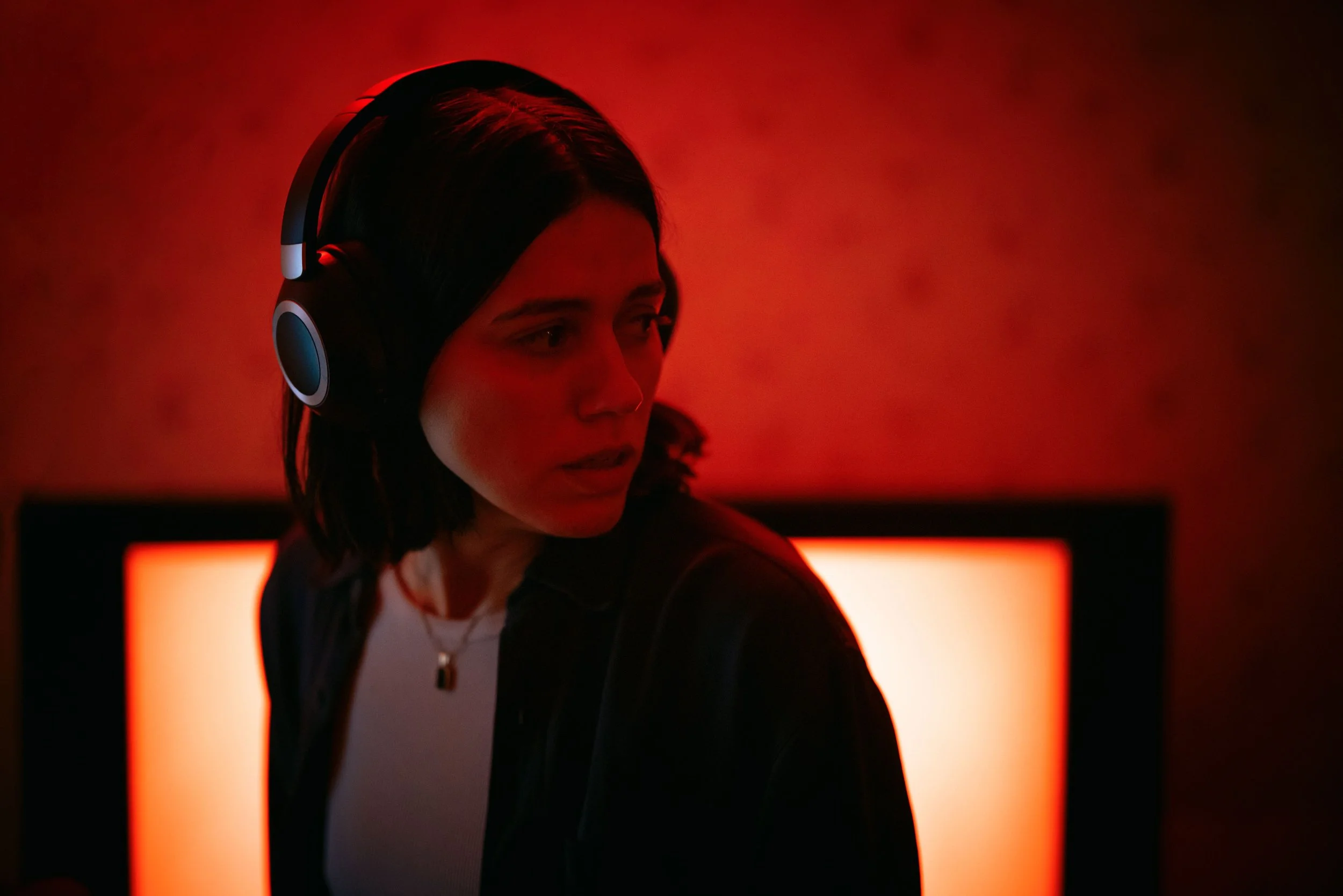
Evangeline (Nina Kiri) is more or less alone. Her mother is bedridden and unresponsive, clearly in her dying days, and Evy is the only caretaker to attend to her. Stuck at home, Evy’s only real activity is recording the “Undertone” podcast with her cohost Justin (Adam DiMarco). With “Undertone” the pair explores strange audio recordings, trying to interpret the possible causes behind disturbing clips. Justin is the believer, quickly grasping at demonic or occultic reasons for the bumps and mysterious mutterings; Evy is the realist, quickly tempering these wild ideas for more earthly explanations. But the latest batch of audio files, emailed to them by an anonymous source, finds them increasingly unsettled.
The files document the lives of Mike and Jessa, a young couple. Mike sets his phone to record through the night to prove that Jessa talks in her sleep. She does, of course. And while her whispers begin innocuously enough, they quickly grow unhinged. Other sounds show up in the files, too, that send the podcasters down rabbit holes researching hidden messages in children’s songs, ancient demons, and cases of grisly murder.
In its best moments, Undertone finds insidious use for the power of acousmatic sound. As Evy listens to the files, the noises become contagious, invading her own home: footsteps coming down the stairs—or her hallway?—water dripping loudly as the camera turns on her kitchen sink. But these moments are brief and too slight. The film spends more time trying to build terror by having Justin read out spooky Wikipedia articles. This might be forgivable, but it also turns upon the most rote of narrative hooks. Inherited Catholic guilt is already on the nose, but Undertone pairs it with secret messages through songs played in reverse, a terror that lost its grip back in grade school. These flimsy sources of horror and emotional development alike stunt the story, rendering Undertone mostly noteworthy for its formal playfulness.
The film is heavily reliant on watching Evy react to noises, and Kiri fares well, but the screenplay struggles to give her nuance. I don’t believe this character—her actions (or inactions) betray the convictions she’s previously shown. One minute she seems burdened by her mother’s Catholicism; the next, she’s eager to name a daughter Mary in honor of that same faith. Her research into demonic mythology and subliminal messages frightens her. But the next time she hops on the podcast, she reverts to the kneejerk, rationalistic disbelief that her experiences should have dislodged.
The sonic engineering that sets up an acousmatic experiment also cuts us off from other spaces. Evy is entirely alone; even when a nurse visits, she talks to Evy from out of the frame. We never see the nurse, or Justin, or Evy’s friends. They’re just voices. But that also dilutes the substance of the mysterious audio files: I’m not worried about the cosmically beleaguered people in the recordings—I only care about Evy’s world, and it’s too sparse.
Undertone is crafted with a frame that could be thrilling, using sound to unsettle and disrupt our understanding of reality. Such moments frequently punctuate horror movies, but rarely are they the thread that runs through the entire story. The Conversation is a masterpiece—and therefore unfair to compare against too much—but Coppola’s film ends up being far more disturbing as Gene Hackman’s Harry Caul finds his own world upended by sonic revelations. The concept that Undertone’s working with is a fertile one that could be used to great effect. But it will take another movie to accomplish that, because Undertone fades into the background too quickly.