‘The End of Oak Street’ Returns to a Lost Time (the 80's)
Warner Bros. Pictures
At this point, it’s not entirely clear whether David Robert Mitchell holds a deep affection for the suburbs or perceives them as an insidious force corrupting the soul of America (or both). In his breakout film, It Follows, the suburbs were quiet and mundane, but a violent darkness lurked along the streets, calmly tracking its teenage victims with a sense of inevitability. The film made its point: these sleepy neighborhoods can’t protect you from everything that’s out there in the world. In fact, the cul-de-sacs might just block your escape. Mitchell followed that film up with the impishly bizarre Under the Silver Lake, which saw Andrew Garfield’s Sam decoding graffiti, cereal boxes, pop songs, and Nintendo Power magazines in a quest to find a neighbor who suddenly disappears from the Silver Lake neighborhood in LA. Another point taken: these streets may organize life, and these billboards may orient desire, but all of these signs only muddy one’s understanding, isolating them from the truth that undergirds reality.
With The End of Oak Street, we are introduced to characters once more living a comfortable life in the suburbs—now in the fictional Flowerdale neighborhood somewhere in Michigan. Well, it looks comfortable, anyway. But even before the danger strikes, the Platt family is on thin ice. Denise (Anne Hathaway) confines herself to the basement where she secretly types out a novel away from the rest of her family, and she might just be contemplating the further escape of divorce. Her husband, Greg (Ewan McGregor), is picking up pizza delivery shifts and hiding the fact that he got laid off from his day job. The kids, meanwhile, are well aware that something’s going on. Audrey (Maisy Stella) is dreaming of getting away from her hometown to pursue the study of science. And Brian (Christian Convery) is mostly dealing with adolescent staples such as crushes and running away from bullies. Life has enough troubles, as it is, but The End of Oak Street furthers Mitchell’s overarching project by emphasizing that there’s something else the suburbs can’t protect you from: Dinosaurs.
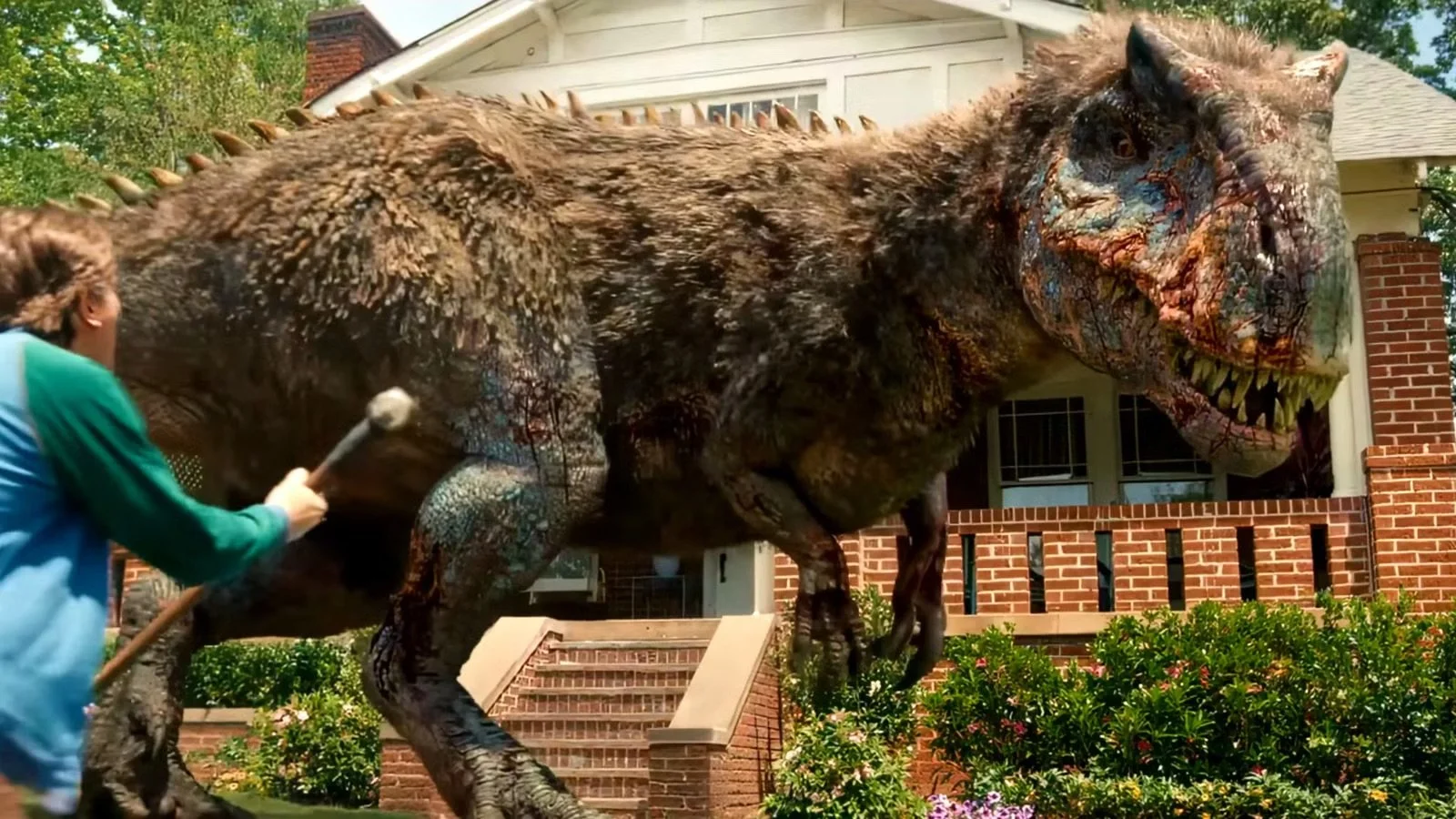
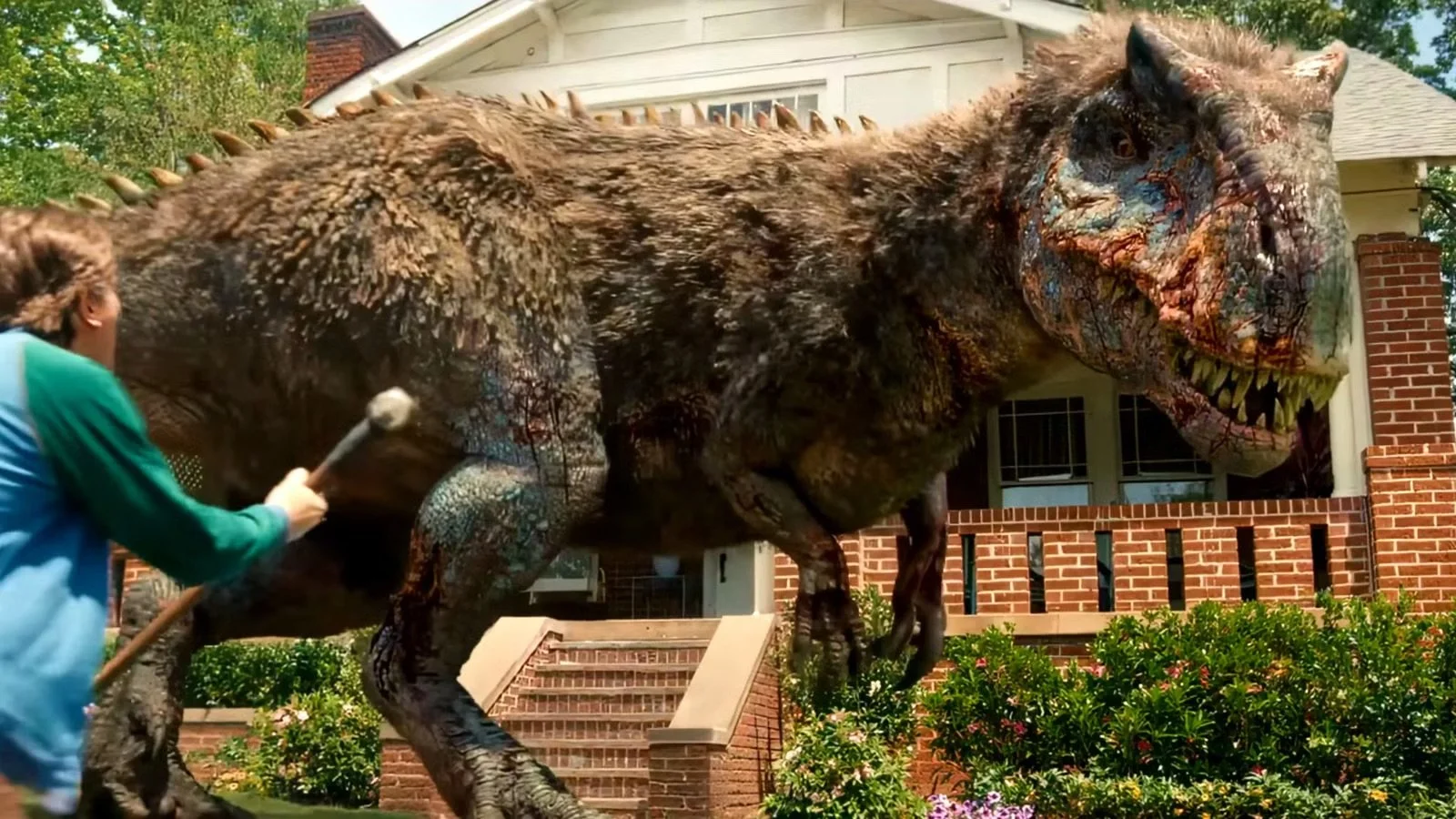
After some mysterious fulguration and small signs strewn throughout Flowerdale, the entire neighborhood is suddenly transported into eons past. Forget being laid off or sorting out feelings for that new girl—there are stegosauruses blocking the road and raptors turning the neighbors into food.
From its first lines and lenses, Oak Street is very clearly carrying a playful tone evocative of a certain type of 1980s film. All of Flowerdale seems to be out for a summer barbecue, the stereophonic sounds of giggling children combining with a washed out brightness to create an exaggerated wholesomeness. So when Brian and his friends bike around, only to suddenly race away from the local bully, we take it in stride. The heightened tone also imbues the dialogue, as one neighbor turns to Greg to tell him “you’ve got a great family,” while Brian worries to Audrey that “mom and dad are fighting again.” These lines are cliches, virtually parodies in and of themselves, and Mitchell arranges them knowingly. But the exact nature of the film’s tone is hard to pin down. Is this parody? (It’s not quite satire.) Pastiche? Homage? Or a wholehearted return to previous sensibilities?
This uncertainty carries throughout the film and even distracts from it at times. I never quite felt like I understood how the film wanted its audience to relate to it. While the 80’s sensibility, the family drama playing out amid supernatural adventure, and the dinosaurs of it all may scream Steven Spielberg, the movie isn’t played straightfaced. Oak Street has far more in relation to movies that Spielberg produced through this era, such as Joe Dante’s Gremlins films, The Goonies, Back to the Future, and (lo and behold) The Land Before Time. Dante’s work seems most pertinent here—the emotionality is pitched to a high degree, the violence is harsh and unforgiving, and the humor is frequently caustic.
These wild swings make Oak Street a bold, impressive, and playful summer movie. It’s the kind of thing we haven’t seen since who knows when. No one is giving a natural performance; that’s not the type of movie we’re in. The cast begins with cutout stereotypes—bullied son, dad who’s pulled away by work, aggrieved mom, daughter tempering her lofty aspirations—and attempts to add layers that make them more real. It works to varying degrees. Hathaway is most successful at making Denise feel complex while matching the pitch of the film’s humor—dare I say she’s better here than in The Odyssey? (I dare.) But the rest never quite turn their characters into much more than familiar archetypes, though Stella comes close.
The action and effects are exciting, though the thrills occur more in short bursts than in extended arcs (as Spielberg excels at). While I never felt invested in the characters’ development, I did feel immersed in the tension of wondering how they’ll escape that allosaurus or whether they’ll see the titanoboa slithering behind them in time to avoid an unspeakable end. There are a lot of loud sections, but the quiet moments are where Mitchell’s film shines brightest.
The End of Oak Street is a welcome summer adventure. Smarter than its high concept and bolder than its popcorn flick premise imply. But the precarity—or perhaps superposition—of its tone between ironic and emotionally sincere leaves me at a distance. It’s a movie that tries to have its dad redemption arc and eat it, too. Still, it’s a fun time. As far as summer dinosaur romps through a theater go, The End of Oak Street is a far superior creature to the hubristic attempts to bring the Jurassic World series back from its own extinction.