‘Resident Evil’ Offers a Devilish Mix of Horror and Comedy
Columbia Pictures
The energy of Resident Evil is summed up neatly in the instructions of the hospital employee who gives the urgent package to our hero in the first couple minutes: “Top priority. No stops.” Who needs exposition when you have a mission? With those terse words, Zach Cregger’s film takes off. The night has turned cold, icy, and dark, posing an outsized challenge for Bryan (Austin Abrams), the medical courier tasked with driving through snow to deliver the package to Raccoon City. But by the time the night is finished, such obstacles will hardly register compared to the much more pressing and horrifying dangers that await him.
Resident Evil is the latest film based on the video game series that first arrived in 1996. Three decades have seen not only an abundance of sequels and spinoffs, but also a glut of films aiming to sate the fans wanting more zombie survival horror. Whether any of those previous movies offer craft or delight, I can’t say (though overall reception of them is pretty low across the board). But I do think it’s safe to say that, even with seven films since 2002, nothing has been made quite like this. Following on the heels of his wildly successful—and just plain wild—Weapons, Cregger finds a formula for making one of the best video game movie adaptations ever released. And he does it by fine tuning a style that he’s honed across his previous films.
The subject matter of Weapons incurred a thematic heft. The disappearance of an entire classroom of young children—along with certain other imagery that Cregger selected—evoked the pain of school shootings, even if such real world bloodshed never actually occurs in the movie. There were cycles of addiction and the harm caused to others as a result of those spirals. But it was also a bizarre and funny movie; like Jordan Peele before him, Cregger focused on comedy for much of his career before switching to directing horror films. Weapons’ tension frequently tipped over into nervous laughter, and the mixture of absurdism and grief created a tonal whiplash that somehow resonated strongly with many audiences. (Perhaps in all the chaos of contemporary life, the need to laugh feels concurrent with a pervasive sense of tension and fear.)
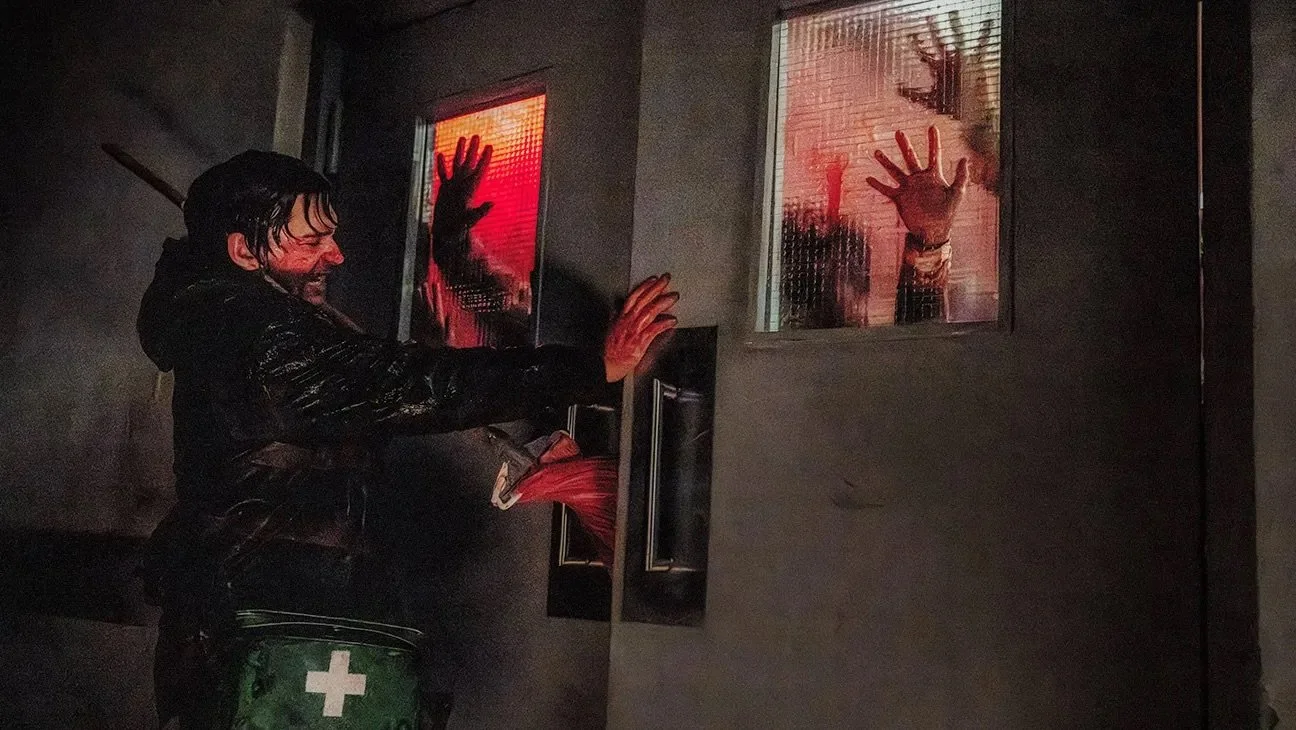
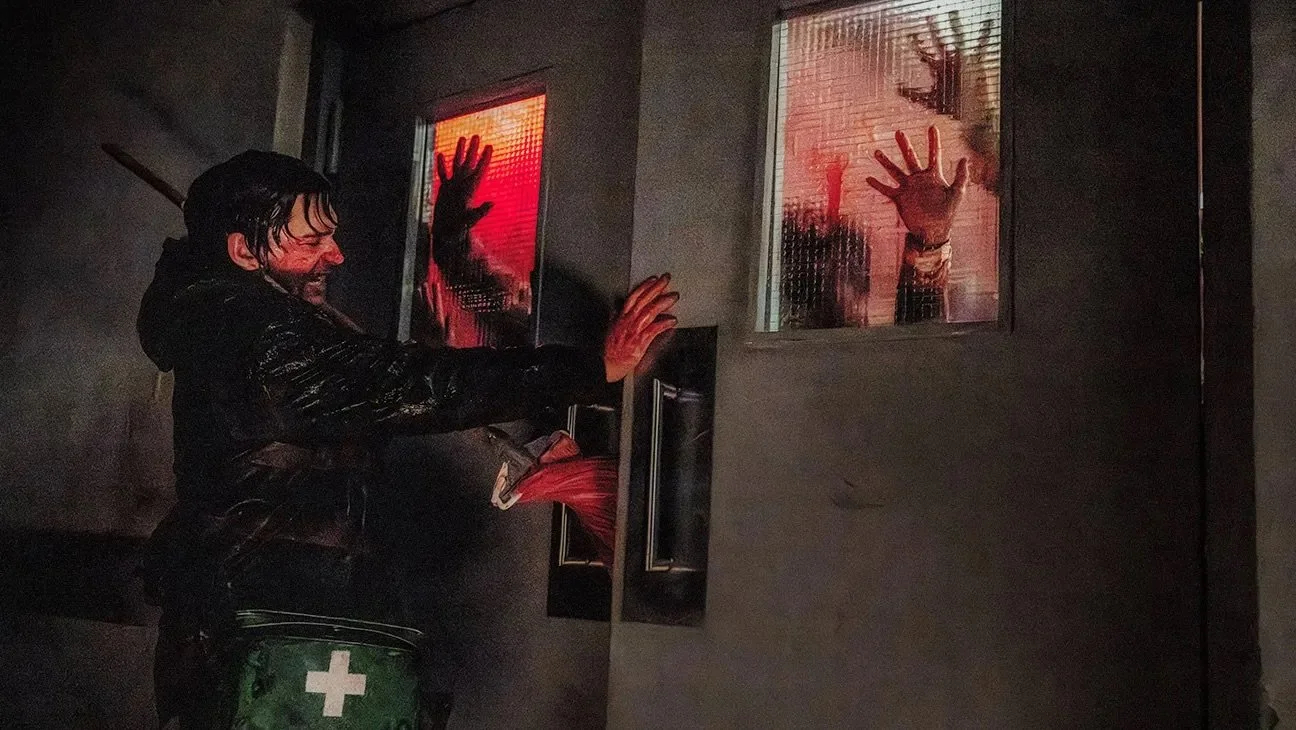
The established IP of Resident Evil unshackles Cregger from any disturbing semblance of reality. We’re here for a thrilling time and a certain amount of cartoonish style. This is a world of super viruses, grotesque mutants, and zombified dogs, after all. Resident Evil is not a better movie than Weapons—but it is more all-out fun. And whereas Weapons juxtaposed weight and humor, Resident Evil is as pure an example as you’ll find of horror as comedy. For the first hour or so, this is an impeccable ride. The first scare is tepid, but it’s really just the setup. The scene quickly veers into absurdity as our luckless hero tries to help a person who’s clearly not much of a person anymore. One thing leads to another and another and… well, you can see where it’s all heading, but the steps to get there are full of surprise and fun and are worth not spoiling.
Zombies aren’t really Bryan’s problem. At least, they’re not his only problem. Each ensuing scene poses a new obstacle that seems simple enough: a locked gate, a blocked tunnel, being stuck in a barn. But they prove more onerous, even before taking into consideration the monsters putting Bryan on a tight clock. With these corkscrews of set ups, escalations, and payoffs, Cregger taps into a sense of comedy arcing back to the cinema of Buster Keaton and Charlie Chaplin, whose absurd escapades somehow always worked out, even as every individual thing seemed to go sideways. Just how things go sideways, only to circle back in unexpected resolutions, is the source of delight.
Cregger then brings a dynamic sense of staging and an effective visual style. The camera is mobile, circling and tracking the action without ever creating a cheap jumpscare by keeping something just offscreen. Crisp lighting casts impossibly stark colors: taillights that bathe the snowy road in red, flashlights that slice the night. But more than any of this, Cregger locks in the pacing, keeping each scenario tight with a constant rhythm of shots and new challenges. The idea that horror and comedy rely on similar buildups of tension is a familiar one by now, but what’s impressive about Cregger’s work here is how frequently the scare and the laugh collide in a single reaction.
Abrams (who also appeared in Weapons) throws himself into the proceedings with joie de vivre—though he certainly isn’t silent like his forbears, constantly cursing under his breath. His responses to the madness around him persistently heighten the comedy, whether he’s squeezing out high-pitched screams or watching tentacles grow from a dead body with a curious, “Oh, uh, interesting. Jeez.” For how much of the film is really a solo act, Abrams gives what should be considered one of the strongest performances of the year so far. Horror and comedy are both easy genres for awards bodies to slight, but his work here is razor sharp.
As Bryan’s journey continues, it eventually funnels toward the lab of the nefarious Umbrella Corporation, and the more the film narrows, the more it loses its intelligence and immersion. Small, grounded, and crafty sequences are replaced with an increasing reliance on CGI mutations and an abundance of blood as the requirements of video game IP foist themselves onto the film. The shift is noticeable, but not disastrous—by this point, Cregger and Abrams have manufactured enough devilish fun to carry the audience through an underwhelming climax.