‘Tenzing’ Can’t Reach the Heights of its Subject
Apple Studios
I’ve never understood the impulse to climb the world’s tallest and most dangerous mountains. Stunning beauty, a unique sensation and perspective on the world, and the obvious exhilaration of an achievement that few have tasted. But are these things worth the exaggerated risk of serious harm or death—especially given that one doesn’t need to be at the very peak of a mountain to be in awe of its stunning beauty? I’m not denigrating those who go to such lengths; I’m confessing how set apart the drive is from my own experience.
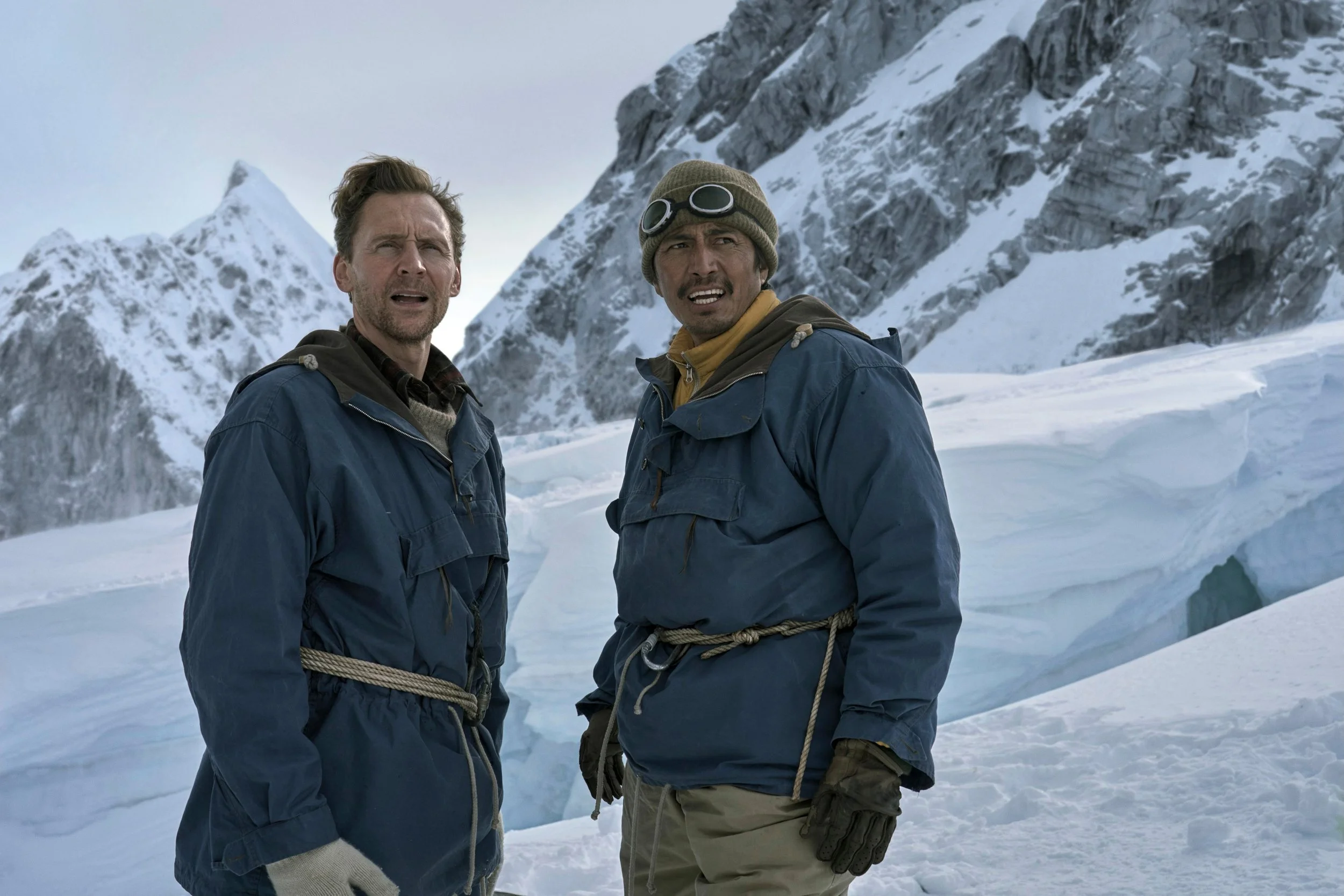
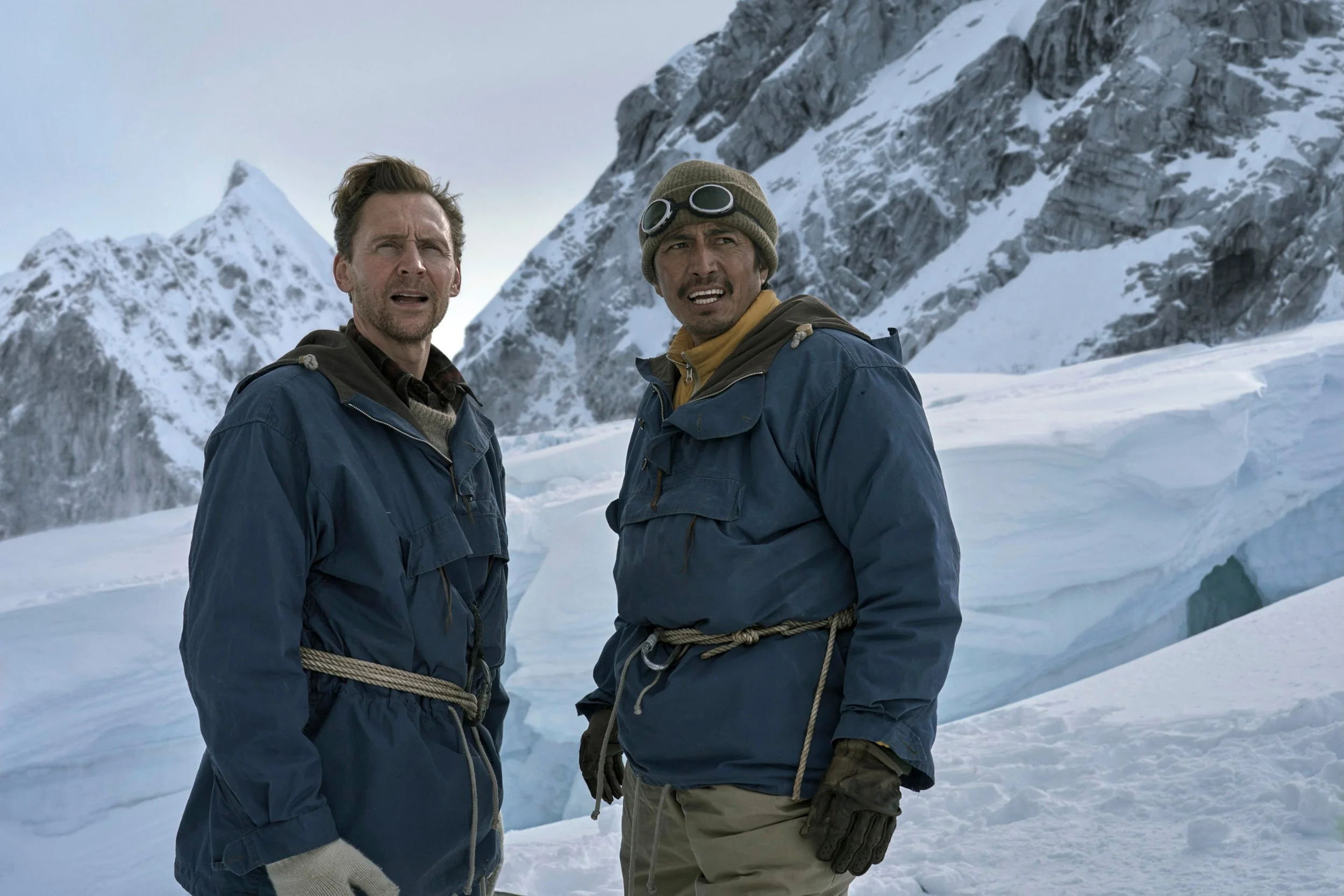
The intent of Jennifer Peedom’s Tenzing isn’t to interrogate that question, but it does trouble it by highlighting a different story—and a different motivation. Tenzing Norgay was with Edmund Hillary at the moment of the first successful summit of Mount Everest in 1953, but his name has been undersung compared to his New Zealand peer. Peedom’s first non-documentary film turns the focus on Tenzing’s life: what experiences formed him, what desires led him to Everest, and what obstacles threatened to prevent his momentous achievement.
While the form is new for Peedom, the subject is not entirely novel. Her 2015 documentary Sherpa spotlighted local Sherpas’ perspectives to give voice to their experiences working with global tourists. How exploitative is the adventure tourism that offers foreigners the chance for personal glory while indigenous Sherpas go overlooked and poorly compensated? This very tension also plays out in Tenzing, as Norgay insists on an official position on the British climbing team for the 1953 expedition instead of as lead Sherpa. But the conflict—which plays out between Tenzing (Genden Phuntsok) and Willem Dafoe’s Colonely Hunt is resolved quickly and neatly. Over neatly, in fact.
Such clean resolution is indicative of the film as a whole. Shot in segments across Nepal (alongside New Zealand), Peedom frames the mountain early and constantly. A brief sequence shows Tenzing as a child and chancing upon the famed adventurer George Mallory, an encounter that sparks the boy’s dreams of climbing Chomolungma (the Tibetan name for the mountain). From here, the film routinely intercuts flashbacks to Norgay’s childhood and early adulthood to pace out the actual 1953 expedition.
The most substantial aspect of the film is the distance between Tenzing and those around him. He is a perpetual outsider—slighted by the European teams who hire him, ostracized by certain Sherpas for his non-Tibetan ethnicity. The British are seeking glory, going so far as to calling Everest “a British mountain” without a trace of irony. They want to conquer this titan of nature. They also want to beat their French and Swiss competitors to the top. But Norgay wants to understand the mountain and to meet the spiritual force that it symbolizes up close. He therefore has a commitment and an attitude towards the mountain that is unmatched by the Western explorers. One man seems to respect him more than the rest, and that’s Edmund Hillary (Tom Hiddleston). Hillary also finds himself a bit distanced from the Brits, and he partners with Norgay to make an attempt on the summit.
Tenzing’s achievement forms a critical exhortation to the mountaineering community; his is a tale that deserves to be told in many forms. Unfortunately, the form here becomes formula, as Tenzing becomes about as paint-by-numbers as it gets. Nothing is incompetent or broken, but every beat is rote. The flashbacks form thematic signposts as looming and unmistakable as Everest, itself. The score does far too much heavy lifting, cueing the audience to whatever emotions the scene is about to call for rather than matching the moment. Perhaps most egregiously, it takes far too long for the climbing scenes to be shot with any sense of power. For much of the film, Peedom relies on too many close-up montages of ice axes striking and boots digging in. These anonymous shots turn what should be compelling action into a mere trace without impact.
Phuntsok is a buoyant presence, but he doesn’t communicate the emotional tension his character feels. He’s outshined by Tenzin Dalha, who portrays the climber as a young adult and better conveys the turmoil that his adventure unleashes. Hiddleston and Dafoe find an edge to thin characterizations, but neither Hillary or Hunt feel like intriguing people. All told, Tenzing is a fine movie certain to introduce more viewers to Norgay’s story, but it never approaches anything like the heights he himself experienced.