‘Primetime’ Airs A Vast Network of Ethical Quandaries
A24
All Dan Plumb (Skyler Gisondo) wants is to be an actor, but that’s a tough dream, especially when you live in Fort Myers, Florida. Dan’s twenty-three but plays younger to the camera, which is exactly the quality that lands him his first real break: pretending to be an adolescent on NBC’s To Catch a Predator. It’s certainly not the kind of gig Dan expected, but he takes to it, learning from the other crewmembers and studying the show’s host, Chris Hansen (Robert Pattinson). Hansen motivates the production with a sense of control and charismatic reserve, and he takes Dan under his wing. But when asked how he prepares, Chris insists, “Nothing I do is acting, Dan.”
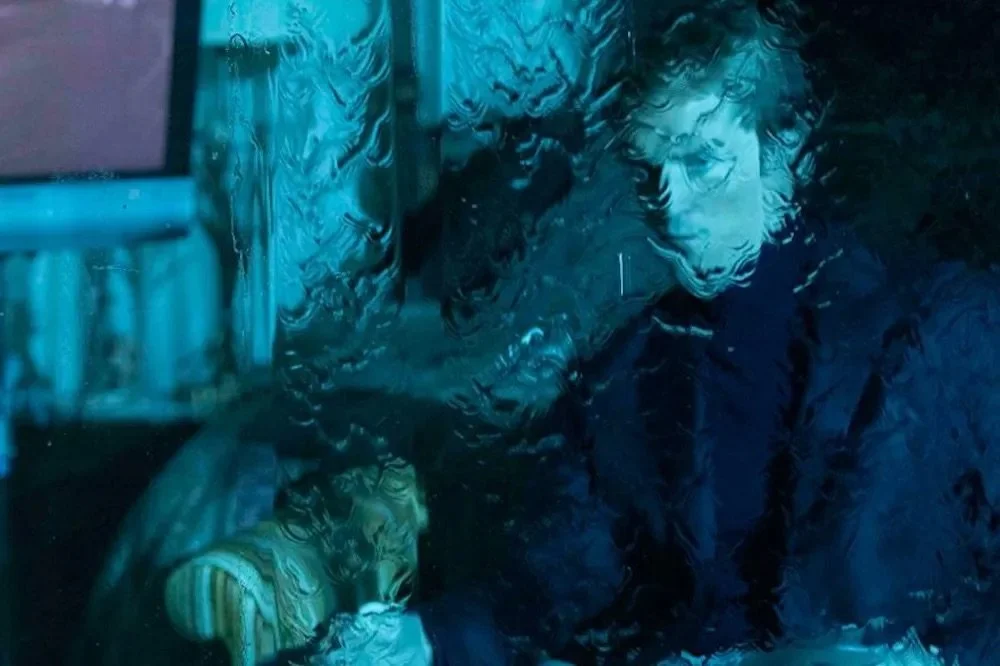
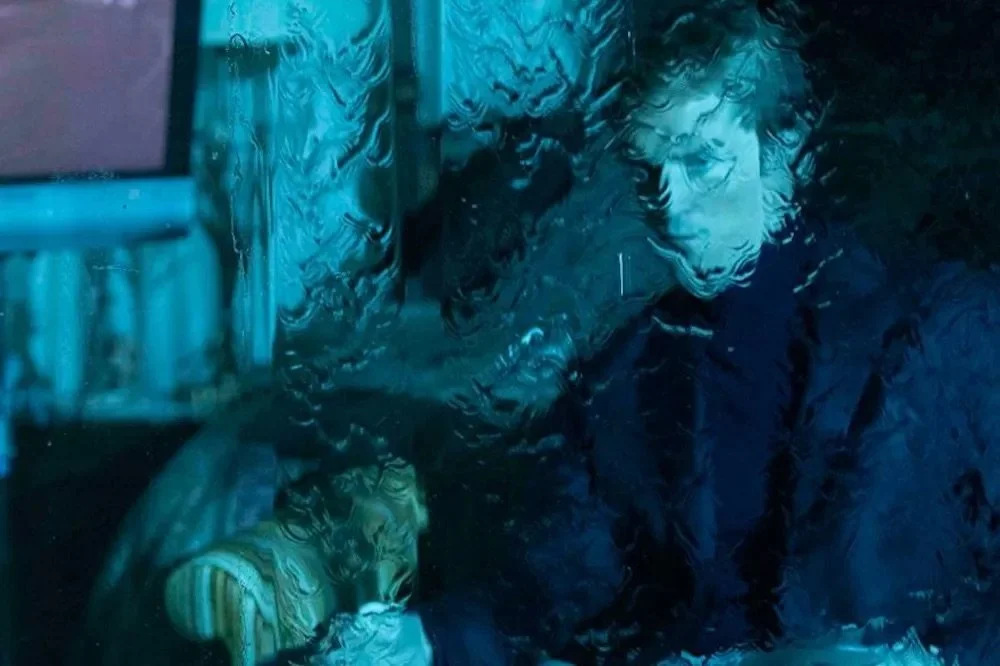
Somehow, such a bald lie locates itself closer to the heart of the matter than a half truth. It’s all an act. Lance Oppenheim’s Primetime opens with hushed words muttered by Hansen as his face is bathed in red, shot in close-up. Every muscle twitch and tic is visible—which means it can be edited. As he repeats sexually explicit lines that predators wrote (thinking they were talking with underage girls and boys), it dawns that he’s not trying to memorize these perverse words—he’s practicing his intonation, dialing in just the right amount of irony, disbelief, and sickened condemnation. His voice, like his show, is as finely tuned as it is lured. Which is not only a strength but a necessity. After all, this is primetime.
Primetime tells a tale of media obsession and distortion, toeing a line between dark thriller and discomfiting satire. For those unfamiliar with the mid-2000s media landscape, Hansen’s show centered around snaring sexual predators by having crew members pose as minors in online chat message boards. Once someone took the bait and arrived to meet a teen, Chris Hansen would smoothly enter the frame and ask what, precisely, these men were doing. The perpetrators would evade and deflect, but Hansen had all their chat logs, leaving them not only trapped and arrested, but also exposed to a nationwide audience.
As Oppenheim’s film picks up steam, To Catch a Predator is gaining traction, and NBC has just repositioned it to go head-to-head with Lost: a challenge, but what a glorious challenge it is for Hansen and his producer, Andi (Merritt Wever). But a primetime slot incurs a demand for bigger ratings, which in turn means finding ever more sordid stories to feature. Oppenheimer works with David Bolen and Chip Carey for cinematography and lighting, respectively, to match this lurid tone beat by beat. The imagery is awash in hazed neon and film grain, and Pattinson’s distorted faces share some commonality with the abstract sequences in Brandon Cronenberg’s Possessor. One scene goes so far as to frame Hansen’s dark home with a single room lit upstairs, as though Hansen is a mad scientist in a Universal Pictures monster movie. Having opted for documentary forms with Ren Faire and Some Kind of Heaven (and the upcoming You Can See Everything featuring Nathan Fielder), Oppenheim switches to an overtly baroque tone.
But the strength of the project falls flat as style outpaces pointed interrogation. There are thorny questions as Hansen’s crew presses for bigger spectacles: the fluid relationship between reality TV, network news, and a twisted sense of justice; the framing of media as a new site of public punishment like the pillories of old; the militarization of police (even for a small town like Murphy, Texas); and how shows such as To Catch a Predator mark an evolution of showbiz that continues into streaming and podcast true crime obsessions today. Primetime doesn’t need to be Network, but relegating these concerns to a tertiary place in the film makes it all feel slight.
The power of the film, then, resides in its style and performances. Pattinson is having a hell of a year, from The Drama to The Odyssey and with a turn in Dune: Part Three coming up. His enactment of Hansen’s demeanor is a bit affected, but even that clarifies the character’s strained theatricality. He stares deviously into the camera, savoring every line like the script is a set menu and he wants to remember each dish. Wever and Gisondo also shine, offering two very different representations of how the participants are seduced by the idea of purpose that To Catch a Predator offers. Andi’s decision making is clouded by the potential windfall if the show wins awards, and she even winds up grooming Gisondo’s Dan in ways that mirror the very sexual predators she’s trying to capture. “You were amazing. You’re a movie star.” The waves of emotion are visible in Gisondo’s responses to Andi and Chris’s manipulation—in the course of the events, Dan is disturbed, committed, confused, ambitious, and opportunistic. Gisondo switches between each of these effectively.
As he’s pushed on the ethics of his show, Hansen makes a decisive statement: “A man must be held accountable for the decisions he makes.” But these words fold inward in unintentional ways. How do his decisions—or the decisions of NBC to chase ratings with this show—distort justice? How does America’s relationship to these forms of media deform our cultural interactions? And will accountability be enough to resist the power of media, whether it takes the form of reality shows, news programs, streaming, or podcasts? Primetime holds a distorted mirror up to our world, but it doesn’t take the time to really observe what’s there.