Control Is a Violent Force in ‘Minotaur’
MK Productions
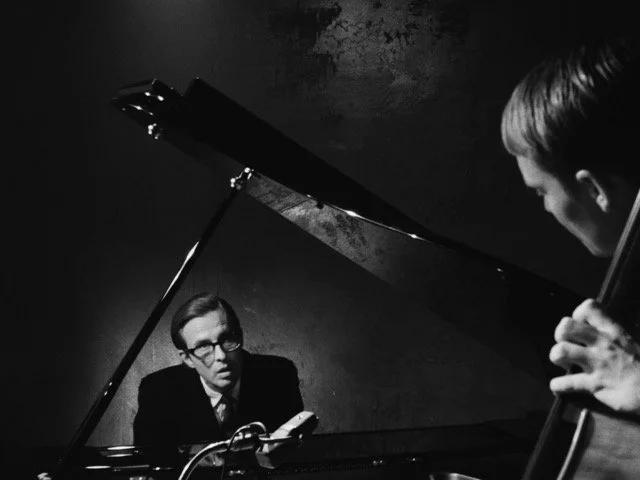
A driving, tapping sound initiates Andrey Zvyagintsev’s Minotaur. As a few musical notes join the march, it’s clear that at least part of the sound is coming from a piano’s action, the inner workings of this instrument rustling and scraping. If either we listen closely or if the sound is artificially amplified, we can perceive that which was invisible and inaudible to us.
Minotaur is a film suspended between the outward facing and the imperceivable components of a much larger system. The inner pieces move unseen, shuffling, coordinating, reworking. Perhaps they go unheard, but their effects vibrate into something much louder.
Gleb (Dmitriy Mazurov) is a Russian businessman. He’s a man of control, of orderliness. A composed man able to respond to crises. But some crises mock our attempts at control. As Russia’s war against Ukraine picks up steam, Gleb’s employees are already fleeing by droves to other countries where they can’t be conscripted into service. Now the city’s mayor instructs Gleb that the military demands a quota from each local company for the draft, forcing Gleb to face the idea of selecting which of his workers are most replaceable. This is not how a draft is meant to work, of course, but the economic powers have a deft hand at stacking the deck.
Matters grow worse when Gleb discovers that his wife, Galina (Iris Lebedeva), is cheating on him with another man. Zvyagintsev’s is based on Claude Chabrol’s The Unfaithful Wife, repurposing the structure of that story to take heavy swings at Russia’s violence and aggression against Ukraine and other nearby countries. It’s personal for Zvyagintsev. In the wake of the film’s premier at Cannes, Russia labeled the director a foreign agent.
Gleb is a clear analogue for the Russian regime. Times are bad for many, but they view it as something a little propaganda can restore. When a manager tells Gleb that the employees’ spirits are low, he responds: “So, make the spirits high.” Later he tells his son, “you can only win with your brain,” but he himself is quick to resort to violence in the crucial moment.
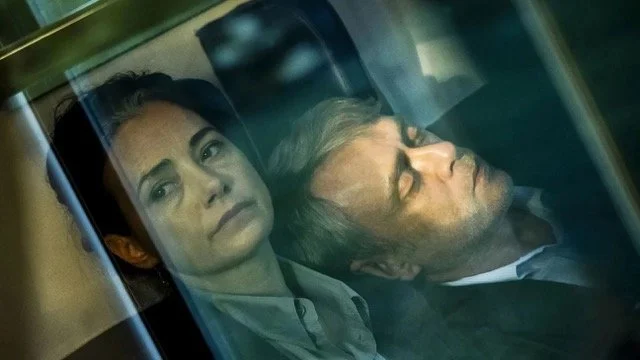
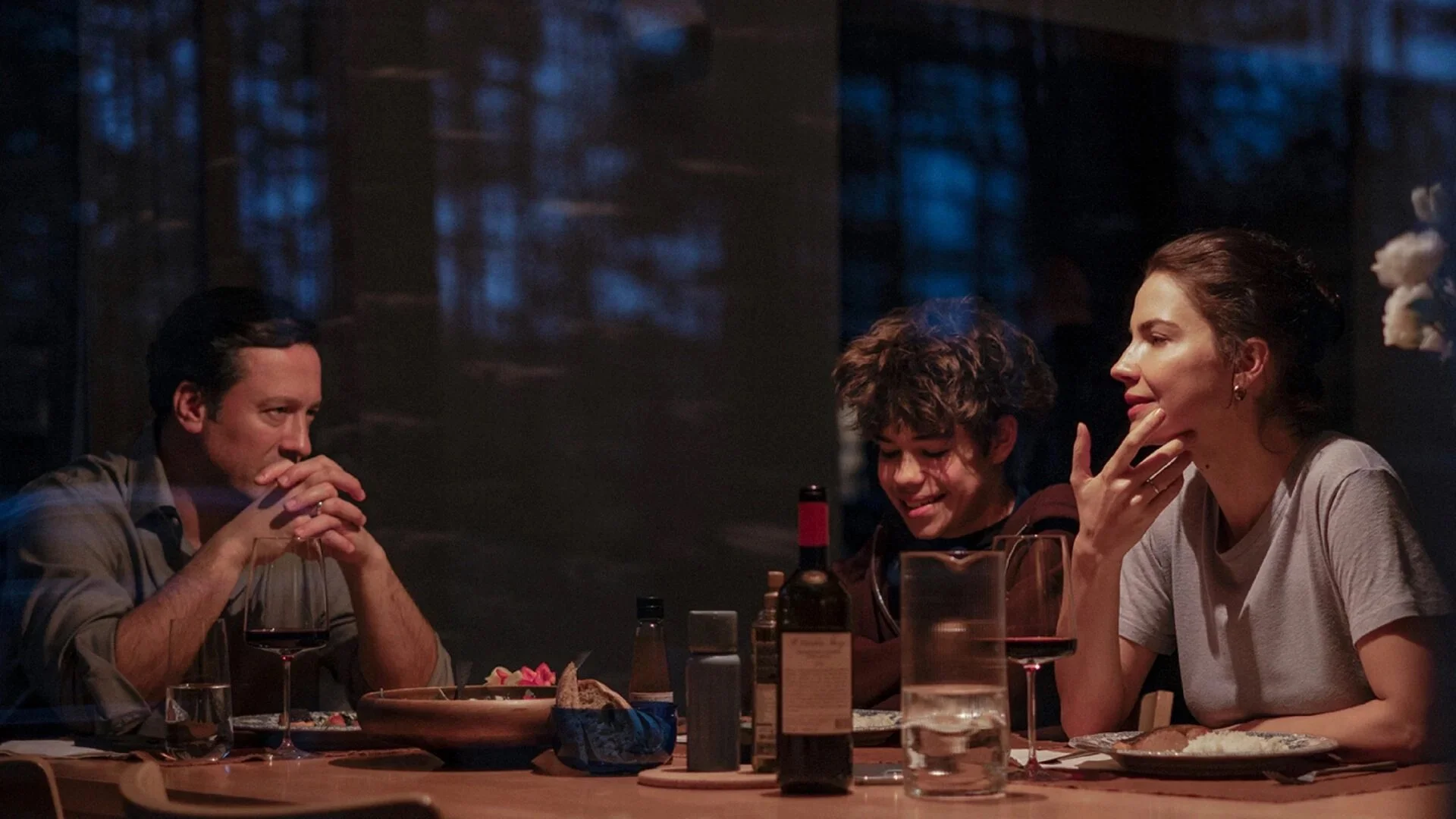
Zvyagintsev contrasts the warm lighting of a home with the cold light of screens. These create entirely different spaces. The spaces of Minotaur are almost always created by glass partitions: windshields, office walls, or floor-to-ceiling windows. There’s hardly a scene where a glass partition isn’t present, giving a false sense of access while imposing a separation. Even more pointed are the draft billboards that Zvyagintsev litters across the backgrounds, always translating the slogans, hinting at the profound human cost of this control.
The driving action of the piano in the opening moment gives a bit of a false impression. This is a patient, cautiously constructed film. While it eventually bursts, the tempo retains its measure. For a time the film evokes Patricia Highsmith as much as Chabrol (Gleb may find a use for violence, but he’s no expert at it), but it returns to a quieter drama. As Gleb’s control slips, the artificial world that he created is threatened. The more natural materials like wood and cotton, like flesh and blood, are less forgiving than phone screens and windows.
Minotaur uses its unhappy marriage to personify an authoritarianism that isn’t creeping but stomping around. Gleb isn’t sending out soldiers to kill and die, he’s just trying to maintain some control. But does control ever exist without violence or its potential? Minotaur isn’t so naive.