‘Hokum’ Is a Creative Collage in a Strong Year for Horror
Neon
A note of caution at the opening. Should you find yourself in a horror movie of any kind, the most ill-fated words which I would wholeheartedly advise you to avoid uttering are: “I’ll live.”
Damian McCarthy’s Hokum is crafted via collage and patient timing. Within the opening scenes two things are patently obvious about Adam Scott’s internationally renowned author, Ohm Bauman. First, he is an alcoholic. While a large glass of whiskey doesn’t imply this in the real world, in a horror story about a novelist, it’s all but guaranteed. Second, he’s already haunted, long before he steps into the Irish hotel where his parents honeymooned decades prior.
If your ears are perking up at the description so far, it’s not due to any sort of extrasensory perception. A haunted, alcoholic author spending a vacation in a strange hotel is familiar ground for horror movies. (And before you ask, yes, there will be a thread of familial violence as well as a fateful costume party.) But McCarthy tills this ground to find that it’s still rather fertile soil, finding fruitfulness by crossbreeding such a setup with the seeds of other forms of horror. This isn’t a ghost story—it’s witchy folk horror. And while Bauman has heaps of trauma, it’s not the source of this terror.
When Bauman arrives at the Bilberry Woods Hotel, he quickly notices a few strange things. A man standing in the woods in an apparent daze. A dead goat crossbowed by Fergal (Michael Patric), a member of the hotel’s staff. Miniature statues depicting fables of a witch tormenting her victims. None of it’s too welcoming, but then neither is he. Before he’s even checked into his room he repeatedly inserts himself into others’ conversations, frequently to insult them. He feels disconcerted by this whole environment, and they feel put off by his priggishness. Among the many omens the hotel staff warns him of, central is the honeymoon suite. It’s shut behind a closed gate, locked for years after the owner trapped a witch inside. Or so they say. Bauman couldn’t hardly care, because he’s locked in his own head. During his first night at the hotel he toasts to the bartender, Fiona, (Florence Ordesh), “To bleak endings.”
With such a pile of breadcrumbs so far, the story could easily settle into a wellworn, predictable path. But the script, penned by McCarthy, continually shapeshifts as Bauman investigates further. Such flexibility is indicated in the opening scene, which features an armored man and a young boy in a desert, following a map in search of something transcendent. It’s revealed that this is the epilogue of Bauman’s latest conquistador novel, but what is otherwise just some fictional table setting immediately unbalances the audience. The terror that Bauman ends up confronting will be supernatural, yes; but it will be equally rooted in humanity. Which side of the coin will be a bigger threat will only be revealed in time.
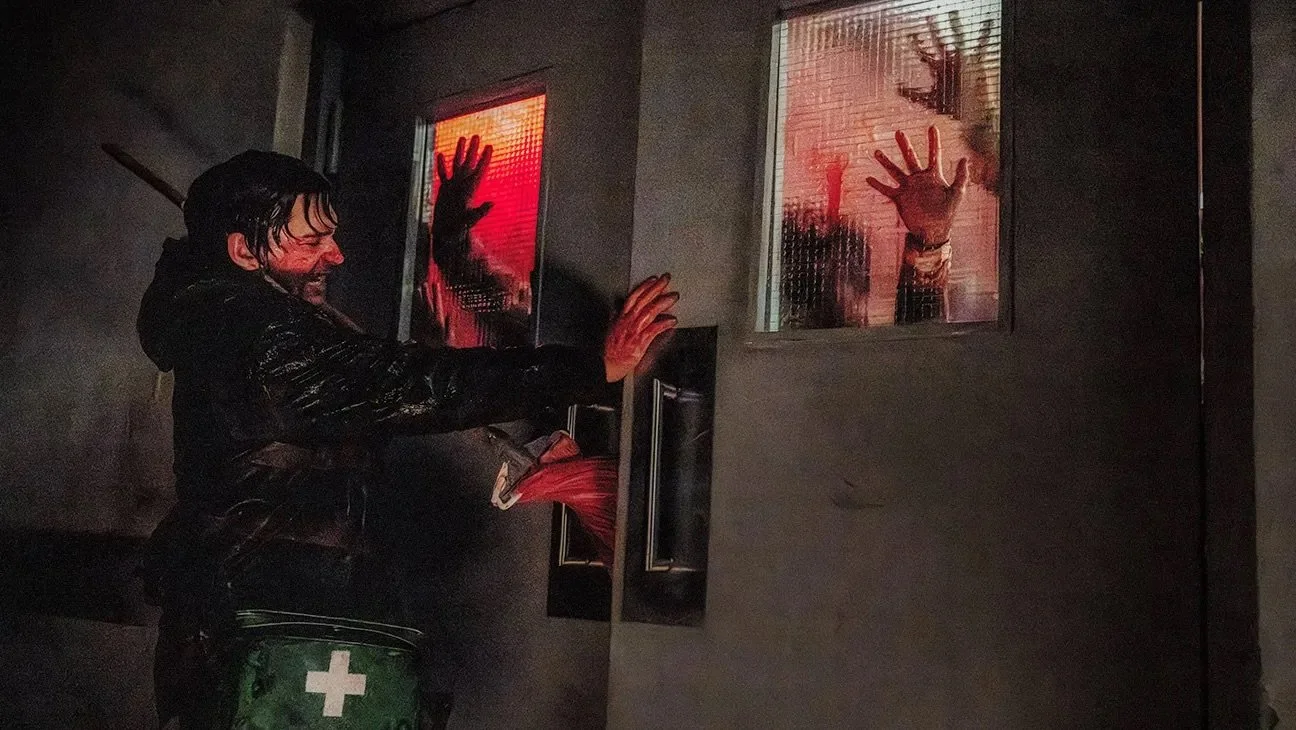
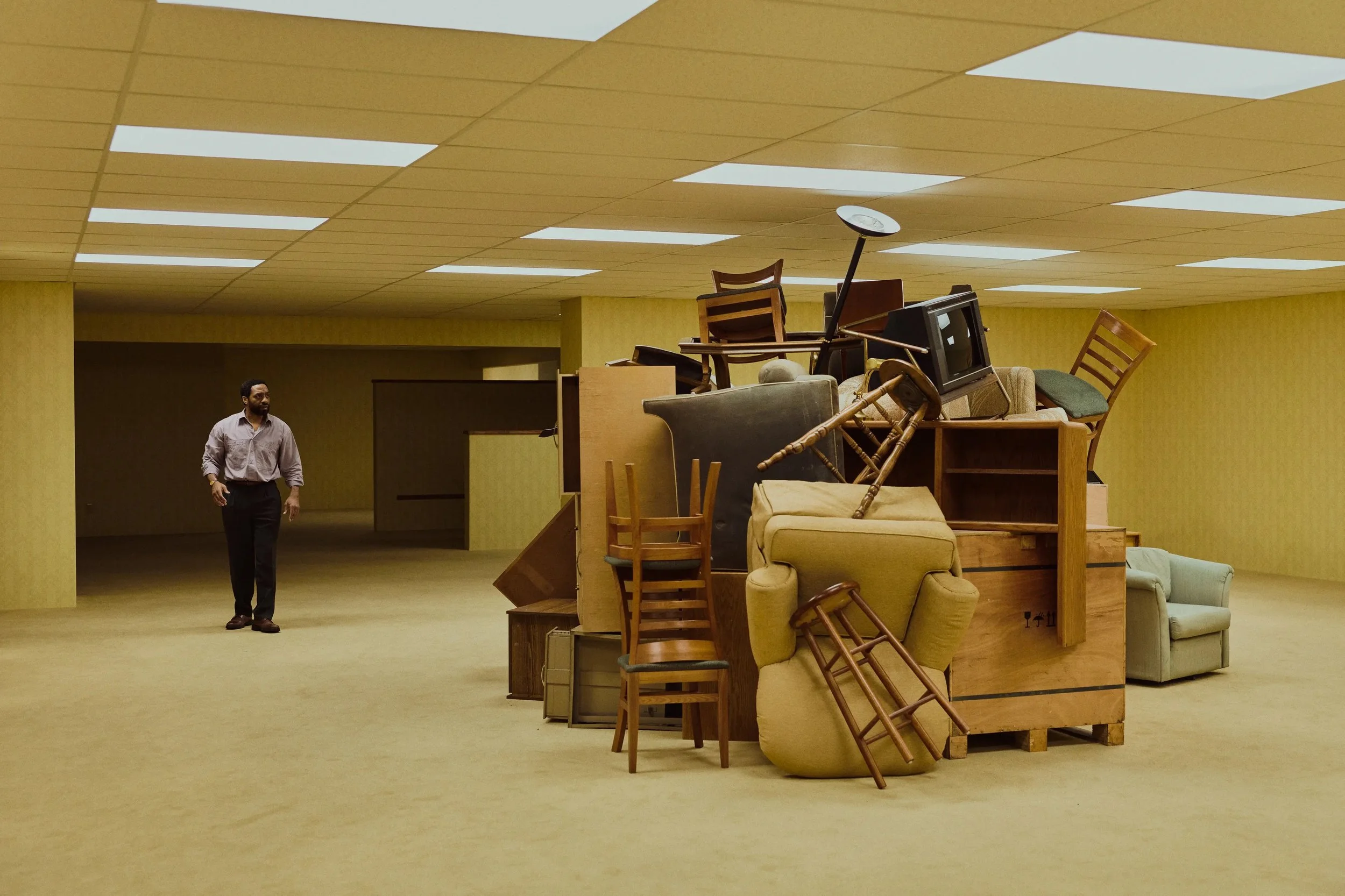
The patchwork of influences and conceits doesn’t render Hokum a reductive film by any measure. It’s a well-crafted film with an engaging, believable plot development. The sense of dread is likewise patchwork, threaded by images of unsettling objects which almost insist that they could be a source of evil, even if most of them aren’t. Tiny stone figurines, old clanging bells, and deteriorating furniture spook just as much as dark corridors and wicked grimaces. (Oh, and the television rabbits from Inland Empire also seem to have reincarnated in deeply troubling forms.)
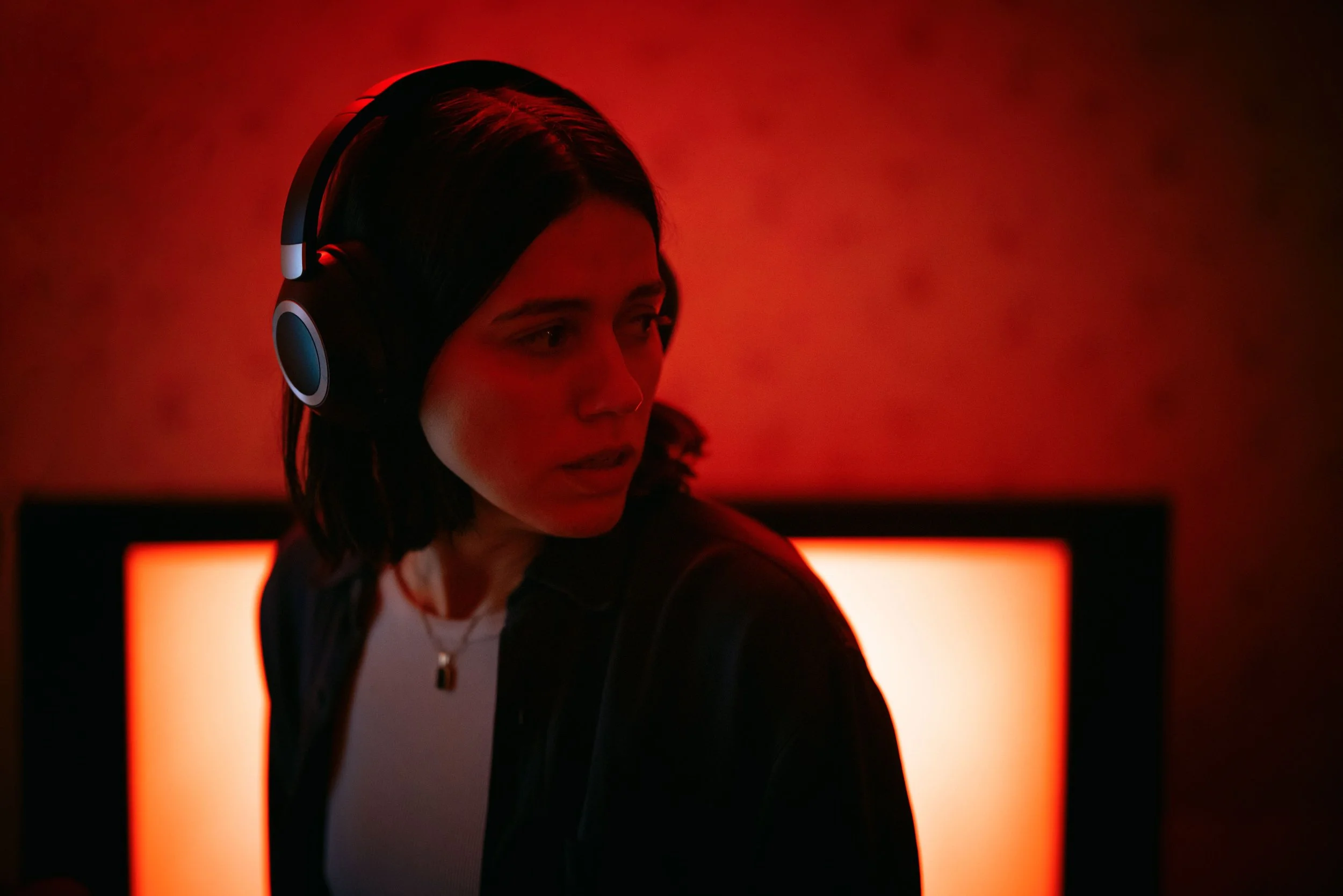
Credit must be given to the sound designers. Witches or not, the wind banshees in ominous howls through the forest. Impossibly resonant clock chimes and bells pierce as frighteningly as any of the imagery. And when a tape recorder comes into play, it becomes the method for a dexterous sequence where the recorded audio fills the negative visual space with imagined terrors. It’s perhaps the best brief sequence in the film, not needing any startling imagery to unsettle. The score is too heavily present, at times shouting for the audience to feel tension though the collage of images is steadily doing its work. But outside of the musical intrusions, the scares here are all about the process—McCarthy’s patient timing is ready to trigger at any point. Some sequences are all about atmosphere, and some are jumps, but you rarely know which.
Scott plays Bauman with the twinge of self-loathing that undergirds his performance in Severance dialed up a bit. Lost in spirits of the past and of the bottle, Bauman isn’t exactly a richly textured protagonist, but there’s a workmanlike characterization that serves the story’s needs. Whether concerned for himself or for others, Scott convinces. A smart script goes a long way when there are so many potential pitfalls. Bauman is arrogant, but he’s not a blowhard, and his journey isn’t a case of curiosity killed the writer. When he does venture up to the honeymoon suite, his motivations for doing so are focused and understandable. And this continues with nearly every decision he makes as things spiral out of control. It’s also refreshing that his trauma isn’t the ultimate meaning of it all—there are real evils in the world that have nothing to do with his past, and he just so happens to stumble into the wrong place at the wrong time. While the scares of Hokum aren’t liable to keep me up at night, the film is a welcome addition to an already strong year for horror.