Universal Pictures
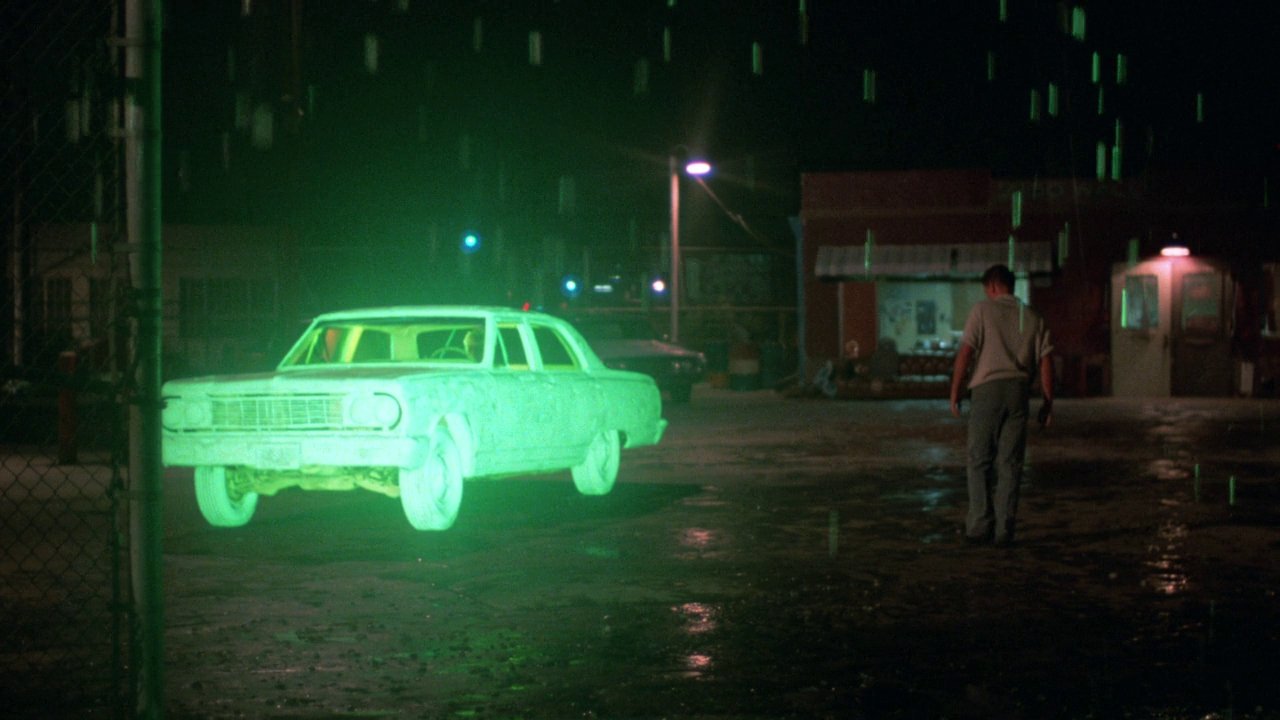
Alien / government conspiracy movies have a long life in cinematic history, from the B-movies of the 1950s to the cultural zeitgeist of The X-Files in the 1990s, and one of the foremost voices of this subgenre belongs to one of the greatest directors of the last fifty years. Steven Spielberg unleashed some of the grandest, most renowned sci-fi films this side of Kubrick with Close Encounters of the Third Kind in 1977 and E.T. the Extra-Terrestrial in 1982. These two films are distillates of Spielberg’s ethos and style: patient scene development balanced by a rhythmically paced narrative; a skillful weaving of exposition with character development; and above all, an admixture of fear and awe at the possibilities of life beyond earth. While alien life would recur in some later films like War of the Worlds and, most clumsily, in Indiana Jones and the Kingdom of the Crystal Skull, Spielberg never approached the topic with the same posture as those two.
To be fair, it seems as though our culture as a whole has changed in its posture toward the question of extraterrestrial life. Government conspiracy theories remain as incomprehensible as ever, yet they now invade our public, political life with a violent regularity. They are no longer the quixotic quests of individuals seeking truth; they are the manifestos of those who grab a gun and walk into a pizza store or who attack government officials in their homes. At the same time, these conspiracies have shifted into the immanent sphere, no longer looking up at the cosmos. The US government has now released multiple caches of documents related to unidentified objects and events, but the general response seems to be a collective shrug, at best another amusing, brief source for jokes on social media. All of which leads to the question: How do you make an alien conspiracy movie in 2026? Can you take this subgenre somewhere that manages to address our current world?
No one could better answer that question than Spielberg himself, and he attempts to do so with this summer’s first real blockbuster. Disclosure Day is a thrilling movie that sees the director in one of his classical modes while also incorporating elements and influences from the decades of films he’s directed since E.T.
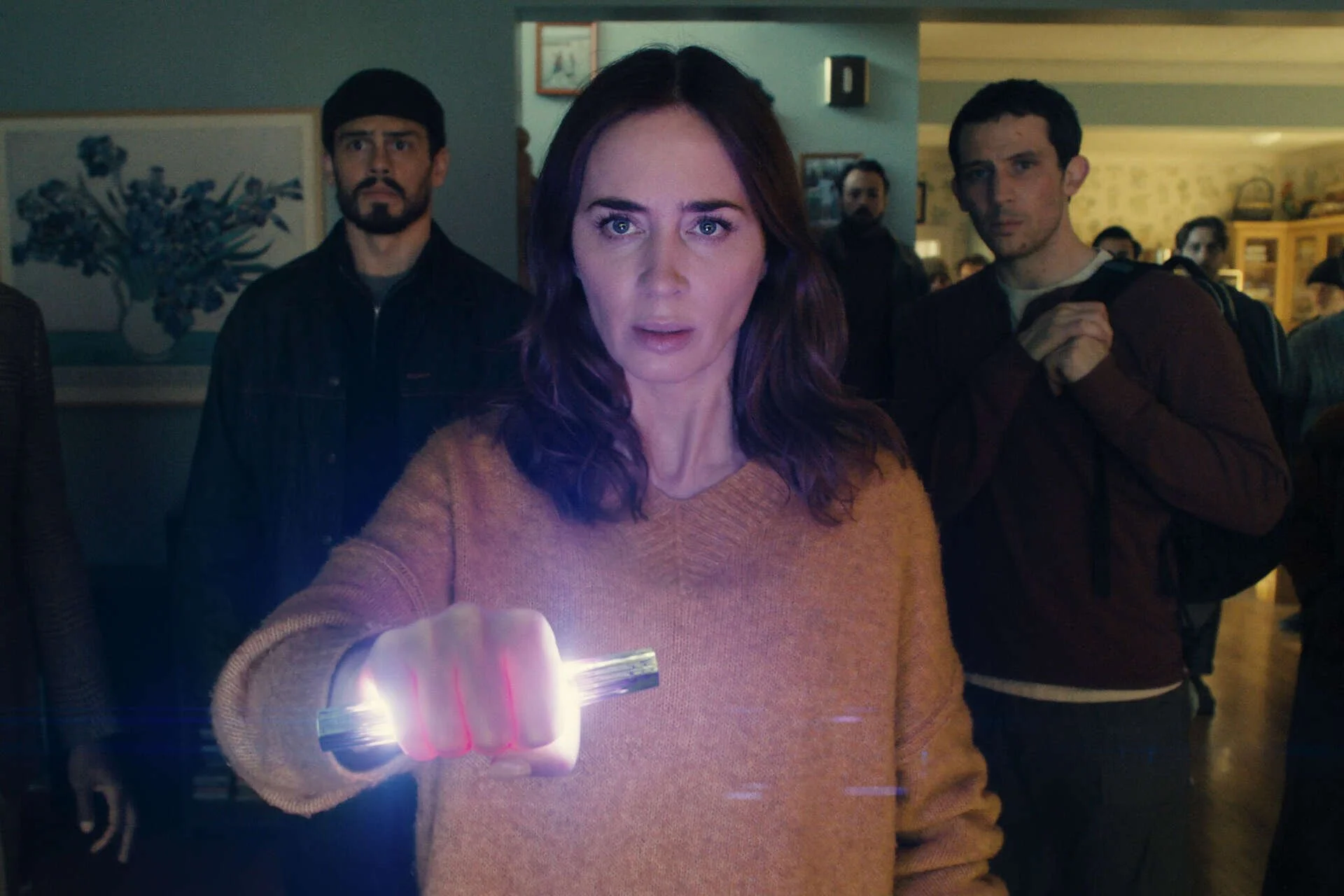
Disclosure Day revolves around the twin poles of Margaret Fairchild (Emily Blunt) and Daniel Kellner (Josh O’Connor), an unlikely pair of camarades. Margaret reports the weather for a Kansas City news station, and Daniel works in data security for WARDEX, a private corporation hired by the government to maintain and extract data related to something mysterious (you know). The movie begins jarringly in media res, as someone holds a gun to Daniel’s back and demands he subtly lose the backpack containing material he removed from WARDEX. He’s stolen a treasure trove of data files that he insists the world deserves to know about. He’s also stolen something else, which is the real concern for WARDEX’s agents.
While Daniel’s on the run from his former employer, Margaret’s having an odd day. After a cardinal flies in through her apartment window and holds her in a strange gaze, she finds herself speaking Russian, translating Korean, and uttering garbled, nonsensical noises on-air during her weather report. She’s as confused as everyone else, especially when she suddenly acquires deep, personal knowledge of the people around her, giving them messages that strike them with silence. Soon she, too, is on the run.
Chasing both of them is WARDEX’s chief, Noah Scanlon, played with real, frightening calm by Colin Firth. His goal is to stop them before they can make their way to Hugo Wakefield (Colman Domingo), another whistleblower who gives his reassuring voice to guide Margaret and Daniel as they narrowly escape company agents and police.
The level of craft and skill on display is refreshing, enthralling, and enlivening. The main cast is perfectly suited to their roles—no one is giving impassioned pleas with the hangdog zeal of O’Connor, just as no one has the resounding diction and generous expressions of Domingo. Blunt has plenty of energy and gravitas to ground the fantastic moments within a convincing character. Firth, despite not cutting an imposing figure, knows how to hold his body still in a way that emanates threat and intelligence, alike. If there isn’t any standout here, it’s because they’re all so effective together, giving exactly what the scenes call for. And around them are solid turns by Wyatt Russell, playing Margaret’s skeptical partner; Eve Hewson as Daniel’s girlfriend, Jane, and a former novitiate; and Elizabeth Marvel, a Catholic sister who offers Jane some theological direction.
The script by David Koepp (who, in addition to working with Spielberg on Jurassic Park and other films, also penned one of 2025’s best films, Black Bag) gives everyone, Spielberg included, the right balance of characterization, exposition, and tension. The viewer is thrown into the proceedings from minute one, and there’s a lot to catch up on, which means quite a bit of explanation. It’s not a subtle script (and it reaches its least subtle when it becomes most explicitly religious), but it’s a practical one that the performers make the most of. Even the way O’Connor delivers the simple line of “Get out.” early on brought a smirk to my face.
CE3K and E.T. are the obvious forerunners for Disclosure Day, but entire decades of Spielberg’s work are evident in the movie. As Daniel and Jane flee Scanlon’s technocapitalist surveillance, the set pieces hinge on the same sense of timing and narrow escapes as Minority Report. Scattered throughout are set pieces that evoke The Fabelmans (trains!), Indiana Jones and the Last Crusade (dropping into train cars filled with unexpected cargo!), and even reach all the way back to Duel (a vehicle cascading off a cliff). Within the first two minutes, there’s a reveal of a mysterious device that’s handled by the camera and score alike as if it’s an ancient artifact that Dr. Jones would insist be returned to a museum posthaste. These moments impel a nearly Pavlovian sense of childlike thrill in me—it’s great fun watching one of history’s greatest directors twist your emotions around so effortlessly.
Speaking of twisting, the camerawork by Janusz Kamiński is vitally dynamic. It’s often most creative in moments the viewer may never catch, as even casual conversations in cars or living rooms are captured with pans and sweeps that seem to defy structural logic. It creates a sense of movement even in expository scenes and a threat of danger even in still moments.
All of this makes Disclosure Day a blast to watch, but it still doesn’t answer that question: How do you make an alien conspiracy movie relevant in today’s world? Spielberg’s answers by moving beyond the aliens, themselves. The existence or motive of extraterrestrials is never in question here. What is unclear and what’s ultimately at stake is humanity’s relationship to truth. In a weary world inundated with corruption, scandal, cover up, base denial, illogical war, and the constancy of media figures vying for attention, it’s not clear that even the most astonishing truth will break through. The truth will set us free, we believe. But will we have the ears to hear it?