A24
As a feature debut, Club Kid resoundingly announces its directorial skill and style in the very first shot. A brief, fairly standard close-up of a rideshare driver grows dizzying when his car fills up with a group headed to their next club and the camera spins. It first turns to Peter (Jordan Firstman) in the front passenger seat, but it never slows, rotating through the back until it makes at least a couple of full revolutions. Along the way the partiers sing and Peter leans out the window. It brings an immediate, frenetic energy and demonstrates an inventive approach to this establishing shot.
Few instances throughout the rest of Club Kid will be as ostentatious, but they will continue to be just as considered and energetic. This is Firstman’s film and his story—he’s not simply the star but also the director and writer. Even when he’s not on screen, his thoughts and decisions are driving everything forward, and the results reveal the arrival of a new directorial voice that will be worth listening to in years to come.
I suppose you could call Peter’s life consistent, though it’s far from stable or orderly. He’s a club promoter organizing parties and increasingly selling drugs to guests as a side hustle. But he’s also immersed in the party; he’s just as likely to get high—literally—on his own supply. Drugs, sex, and strobing DJ sets form the familiar routine of Peter’s life. The attendant hangovers and blackouts and lost days are just part of the deal, but the extent of this behavior is stretching his partner’s (Cara Delevingne) patience.
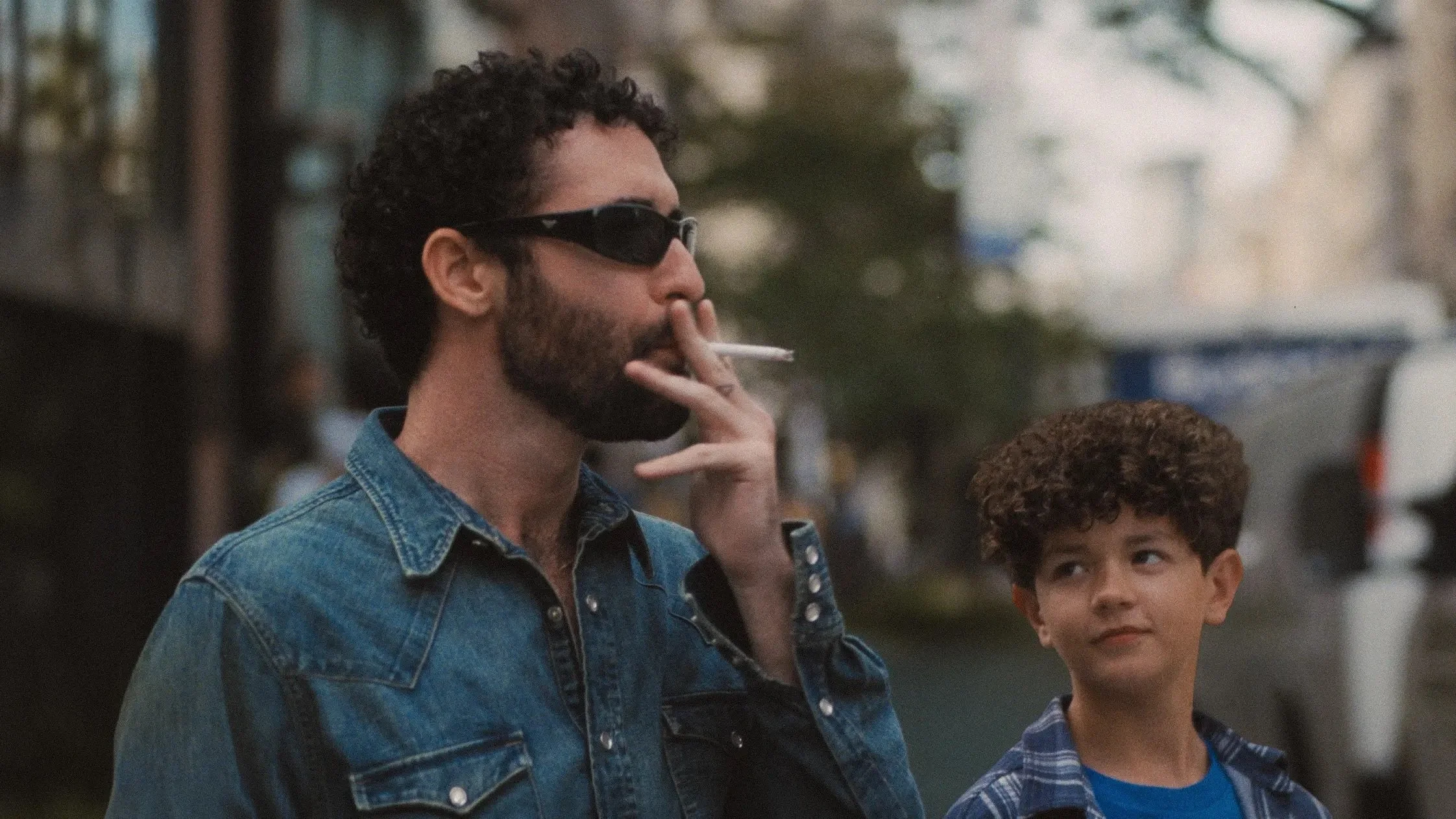
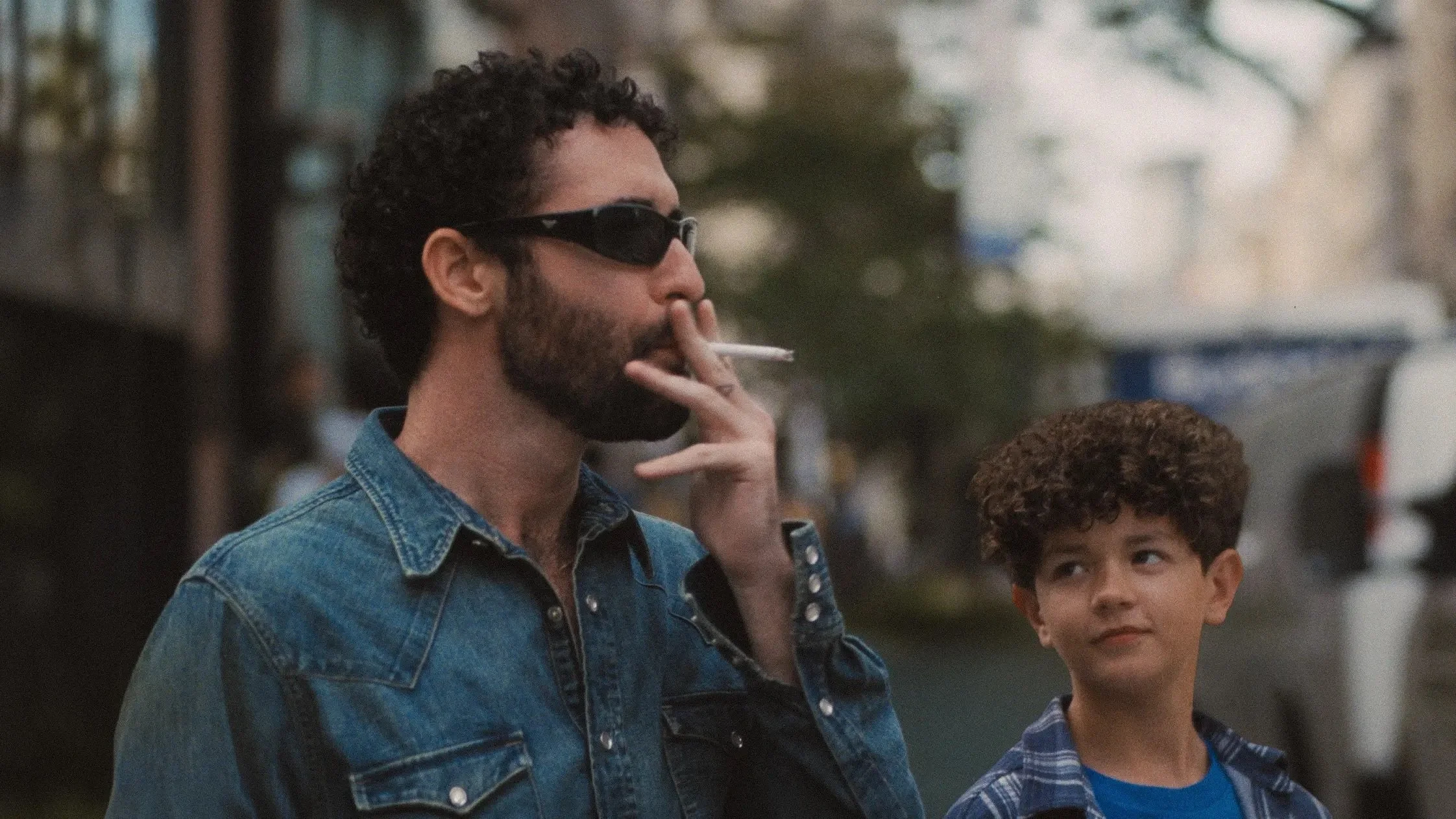
For all the hits and bumps he’s taken throughout the years, he’s not ready for the blindside that comes when Edison (Kirby Howell-Baptiste) shows up at his door with a child in tow, informing Peter that this is his son, Arlo (Reggie Absalom). Peter responds with understandable disbelief: first, because he has no memory of hooking up with Arlo’s mother; and secondly, because Peter’s gay. Not bi. So why would he have had sex with a woman? And yet. It turns out that during one of those lost nights, a man that Peter was attracted to invited a woman to join the two of them. Lo and behold: Arlo.
After she delivers the news that Arlo’s mom is dead—and despite Peter’s (rather accurate) insistence that he’s not fit to care for Arlo—Edison ditches the two of them, leaving Peter to flail and try to find his footing. How does one go from the late night antics of perpetual club life to being a dad without any sort of warning? Things go predictably awry over the first few weeks, but the two of them just as predictably begin to bond. Arlo likes it here in New York City, and Peter begins to feel a real connection with his son.
Firstman’s talent as a director and as an actor somewhat outpace his storytelling. The script is replete with unexpected laughs—many of my notes are just my favorite lines, whether they come from Peter, Edison, or Peter’s roommate Nicky (Eldar Isgandarov). (“I’m just finishing watching War Horse” is a delightful non sequitur that doesn’t even come from any of the five funniest characters.) But the arc of the story and how its characters progress is clear from setup, alone. There’s a persistent sincerity and a real sweetness between Firstman and Absalom as they settle into their distinct father-son connection, but that predictably mutes some of the more powerful emotions later in the film.
But the craft and sensibility that Firstman brings strengthens the film. The pace is frequently switching between a stress-inducing, 1970’s inspired dynamism and quieter vacancy that allows the characters room to breathe, contemplate, and change. The cinematography makes both the busy and spacious moments sing—they’re just singing very different songs. And how could I not love a well placed Cocteau Twins needle drop? Through Firstman’s acting, Peter is entirely convincing at his lowest moments, but he also grows with a believability. The film is also Absalom’s feature debut, and he shines when the script allows. And there’s a near constant spin of side characters through who each make an impression, though Diego Calva anchors the movie in later scenes as a social worker and potential love interest for Peter.
There’s a lot of new skill on display throughout Club Kid, both in front of and behind the camera. It’s an effective feature debut from Firstman and the crew that he’s assembled. I hope that Club Kid only indicates the beginning of an artistic trajectory that, like Peter’s arc, sees continued maturity and growth.