Cinéfrance Studios
No one in the world is making movies like Ryusuke Hamaguchi. Drive My Car, his 2021 interweaving of Haruki Murakami short stories that saw a Japanese theater director staging a multilingual production of Uncle Vanya, is quite possibly the best film of the decade. At the very least, it’s a film I’ve thought more about and been moved by more than just about anything to come out in the last ten years. And it wasn’t even his only film in 2021; he also released Wheel of Fortune and Fantasy, a gemlike triptych whose facets portrayed different sides of desire and chance. His next movie, 2023’s Evil Does Not Exist, took on a more didactic manner as it explored a Japanese village’s attempt to block the development of a glamping project that would distort their region and harm their natural resources. This latter film contained an extended sequence of a town hall meeting where the villagers voiced their concerns as the developer’s employees attempted to sell a convincing message. It was simply a meeting, a lengthy conversation documenting this village’s collision with the corporatization of land. It was shot plainly, rebuking the heightened tendencies of blockbuster filmmaking, but also resisting the temptation toward abstraction and ostentatious technique that many arthouse movies turn toward.
In its style, subject, and relationship to the rest of the film, that scene is a fitting indicator of Hamaguchi’s current direction. His latest film, All of a Sudden, premiered at Cannes—where its two leads shared the best actress award—and has gradually been making the festival circuit. It’s a wonder that has left me puzzling over it ever since I walked out of the theater. Because the fact that Hamaguchi is making films in an entire realm of his own also makes them difficult to write about. To be candid about it, I’m not sure my usual habits and system for discussing a movie will even approach a right exploration of All of a Sudden. But that can be alright. There can be a limit to my writing.
All of a Sudden wants you to care. Maybe not about itself, but about yourself and about your world and about the people that fill it. The film wants you to slow down and breathe for a bit, to observe the limits of your body and your mind, these limits that we so incessantly push past and deny. In order to accomplish that, you may be bored by the movie—it lasts over three hours and has nothing easily labeled a setpiece—and I think Hamaguchi would be okay with that. We all have our limits, after all.
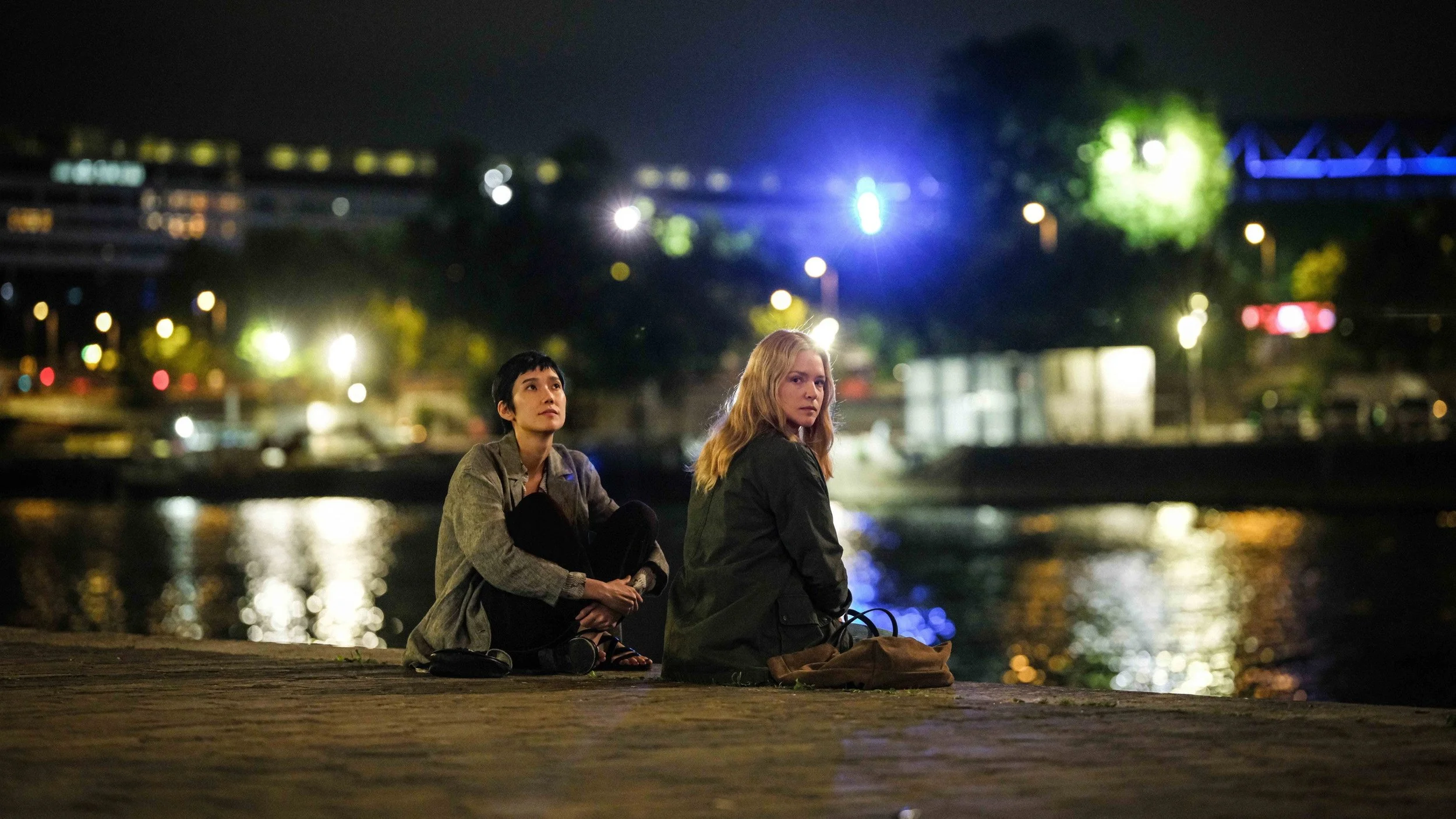
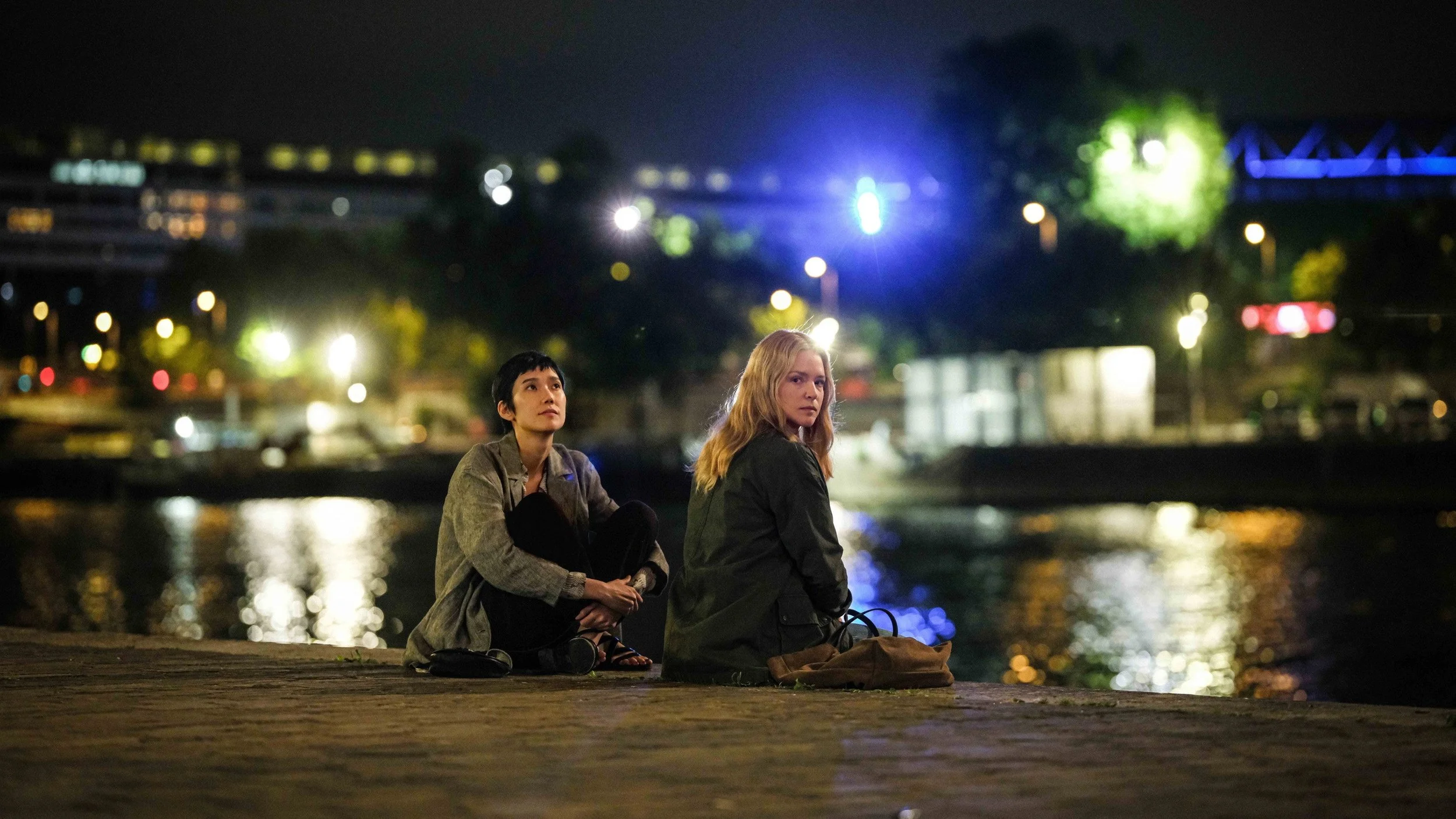
We meet Marie-Lou (Virginie Efira) and Mari (Tao Okamoto) as they meet each other by happenstance. Marie-Lou is the director of a Parisian care facility that specializes in patients with cognitive illnesses such as dementia and Alzheimer’s. Her work is her passion; she considers herself among those “who don’t want to separate work and life.” Both work and life have been profoundly reshaped by a framework called Humanitude—primarily a framework for cognitive care, it has also repostured her engagement in every aspect of life. Its aim is to “see the mind and soul inside every cognitive patient,” to emphasize gaze, speech, touch, and time as the structure of connection between people, and to trust that life burns bright within even the noncommunicative.
Mari is a Japanese theater director currently staging a show featuring Gōrō (Kyōzō Nagatsuka), an older actor. The show’s subject is the dismantling of the harsh mental hospital system in Italy under the guidance of psychiatrist and advocate Franco Basaglia. The resounding theme of the show is that “we must open up another possibility” for care. (Yet another multilingual theatrical performance.) This missional drive connects Mari and Marie-Lou, and the two take an extended walk through Paris discussing the ways our systems fail to meet the needs of our humanity, how the modern culture we live in denies that our human limits—exhaustion, time, emotional capacity, and frailty—are anything other than annoyances, or even anathema. These conversations culminate in a scene where Mari argues that capitalism soaks up any resources outside itself (such as nature) and that, over time, it even comes to view the body as part of that Outside. It’s an extended scene where a character draws diagrams on a whiteboard. It’s one of the most incredible scenes of the year.
These two individuals envision a better world, and they’re working toward it. They long for “the impossible to be made possible.” And I think Hamaguchi does, too. When we treat the body as the Outside (of the societal system, of ourselves), we lose a sense of ourselves and others. So it’s no wonder that we run ourselves ragged and consider ourselves failures when we break down. Or that we slough off care for those needing real human relationship. Mari sees her existence as a fight, and her “weapons are theater and philosophy.” Hamaguchi’s is film (and maybe also theater and philosophy).
Viewed this way, All of a Sudden is a skillfully honed weapon, and one put to use. It really doesn’t feel like any other film. Not only does it include lectures on capitalism, but it also spends extended stretches with the frequently nonverbal care home residents and staff as they go about their day. Sometimes that’s a staff meeting, sometimes it’s just walking around, and sometimes it involves foot rubbing. The movie refuses to move at the pace of any plot—it wants to linger in life.
None of this means that Hamaguchi can’t stun when he wants. It’s really unfair to most filmmakers that an insert shot up through leaves can be given such casual power as it is here. And when the film takes a detour to the countryside near Kyoto, the landscape feels less like a surprise and more like a reminder that beauty has been present in every place so far.
All of a Sudden is about embodied practices of care, and it simultaneously embodies a new cinematic practice of care. To be completely honest, I’m not sure that I was ready for it. But I can’t shake the feeling that the movie is aiming at an entirely different form of film, one that we haven’t yet the category to describe or posture to receive. It’s a momentous film in that respect, but it didn’t leave me enamored like Drive My Car. I hope that one day I will be more ready to receive movies like this—and if so, it will be because All of a Sudden helped reshape my sense of what a movie can be. The world needs movies like this, movies that hope against hope that the impossible can be made possible. Movies that celebrate the world while fighting against the deficiency of its systems. After all: “This world is the best. Don’t you think?”