TOHO
Takashi Yamazaki’s Godzilla Minus One was a powerful achievement, returning to an overly familiar figure of pop culture and reifying it with a sense of its original significance and tone. And that accomplishment was recognized—Yamazaki’s crew earned an Oscar for Best Visual Effects, beating out Marvel entries and Tom Cruise stunts. So a follow up comes with both a broader target audience and higher expectations.
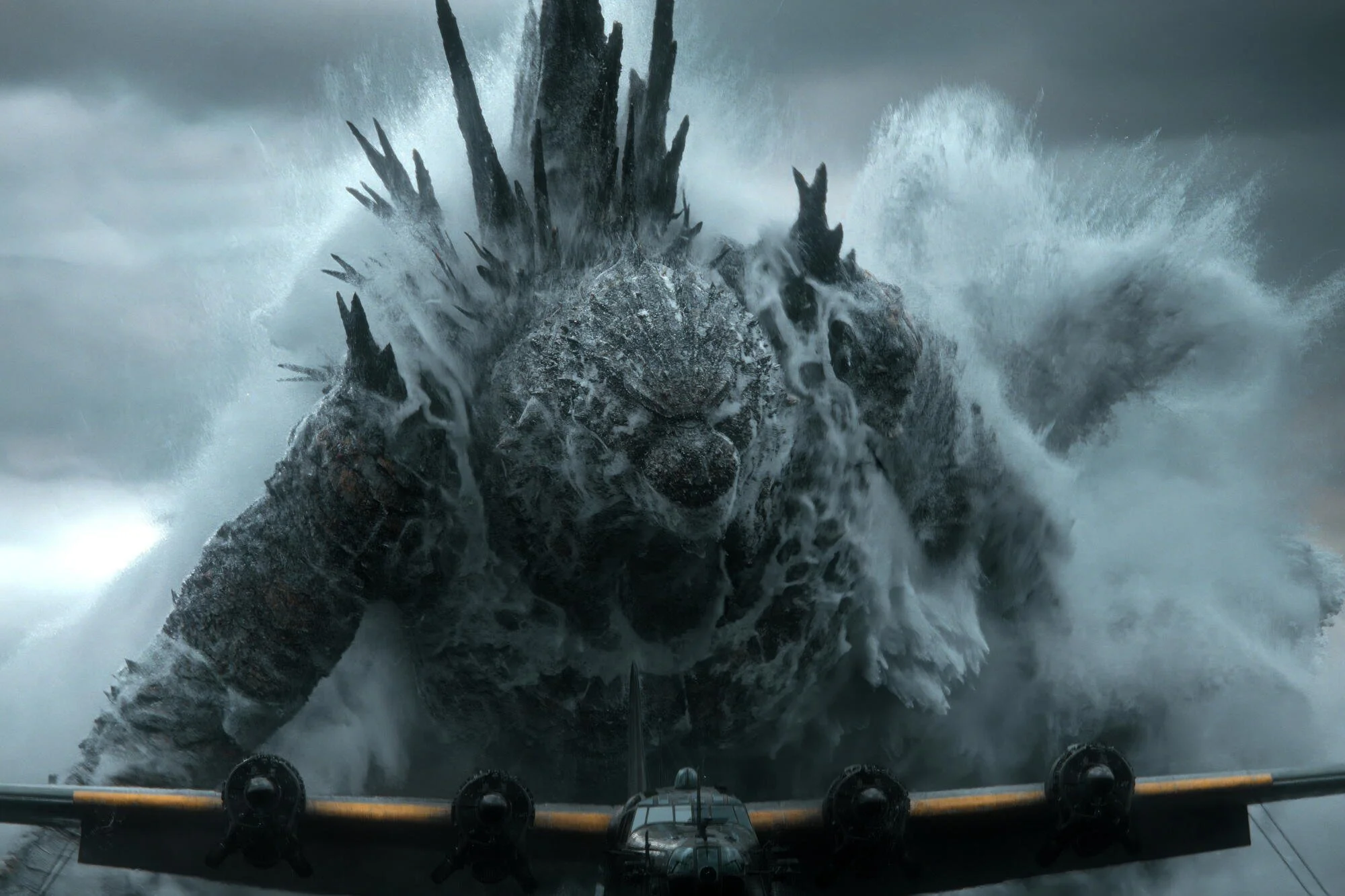
Minus One picked up at the end of World War II, and the awakened monster took on the loaded weight of both the guilt of those involved—like main character and fighter pilot, Koichi (Ryunosuke Kamiki)—and the trauma of those who suffered from the atomic bombs and other acts of destruction. The most crucial aspect of what made that film so potent is that it makes Godzilla scary. The kaiju is a destructive force that notes nothing of morality or justice, unmoved by pity or concern. Death visits all who fall in Godzilla’s path. Godzilla becomes a more effective symbol the most terrifying it feels, and Minus One knew that. This meant that to survive, the human characters had to face their horror, giving an urgency and pain to their stories. Minus Zero throws them right back into it.
A few years later, the stability that was achieved still feels tenuous, and the effects of the war and Godzilla’s rampage are felt throughout Japan. Orphans seem to outnumber parents, and just about everyone is haunted by some loss or another. Koichi and Noriko (Minami Hamabe) have formed a family with young Akiko (Sae Nagatani), but their lives begin to fray once another monster shows up. Koichi gets recruited back into piloting, while Noriko suffers a concerning skin condition due to her encounter with Godzilla.
Just about everything in Minus Zero—action, tone, character arcs—is a continuation of Minus One, if slightly distilled. This is both to the film’s credit and reveals its limitations. The effects and style create setpieces that feel just as chunky, carefully constructed, and surprising as the first film’s. The standout is a remarkable aerial sequence; the only gripe with it is that it’s the very first, meaning everything is a bit downhill from there. And again, the destruction unleashed feels equally devastating and horrific. So when one character laments, “Will we ever be in peace?” it bears a dire weight.
Yamazaki emphasizes the terror and trauma of war and its aftermath, but this leaves the characters to wrestle through essentially the same questions as before. As with Minus One, the need for heroic sacrifice is tempered by the recognition of “another moral boundary mankind shouldn’t cross.” And in order to save itself, the country must confront its past wounds. All of these ideas remain as true as before, but they aren’t as finely developed this time around. The seams of Minus Zero are just a little bit more visible. The movie around these ideas leans a little campier than its predecessor—particularly with an older character who bears secrets of his own. Narratively, there’s an over-reliance on narrative gaps and flashbacks.
Yamazaki’s sequel is a very good film that delivers much of what audiences connected to in Minus One. It’s a great time at the movies. Like its title, though, there’s something that just a little clunky, a little too indebted to the first film, to make a lasting impression as a distinct story.