Love Lies Bleeding Casts a Neon Haze into the Darkness
The canyon walls glow red against the deep blue night sky. A devilish, unnatural red, like the glow from taillights diffused into every particle of atmosphere, or like a neon sign reading “All hope abandon.” This place is not really the American desert, not actually rural New Mexico. Like the Black Lodge in Twin Peaks, this place is a grim otherworld, a liminal space where some unknowable darkness claims a foothold in the world. And just like that red glow, time here becomes diffuse; the town may be in the last gasp of the 1980s, but here is a land Paleozoic, a gaping maw of time ready to swallow up the violent acts of the world. Welcome to Rose Glass’s Love Lies Bleeding.
To be fair, regular life doesn’t seem that great here, on its own. Kristen Stewart’s Lou is stuck in this dead end, working as a manager at Crater Gym, eating frozen meals, and maybe trying to or at least thinking about kicking her smoking habit. Her family life isn’t much better. She actively avoids her creep dad (Ed Harris), who runs a local shooting range and is at one point referred to as “the bug guy” (which says enough). And her sister, Beth (Jena Malone), is caught in a marriage to the sleazy JJ (Dave Franco), who not only cheats on Beth but at times physically abuses her. Maybe that darkness is seeping into the town from the canyon, from far below the substrata of earth. Or maybe this collection of humanity never needed its influence to slip into degradation.
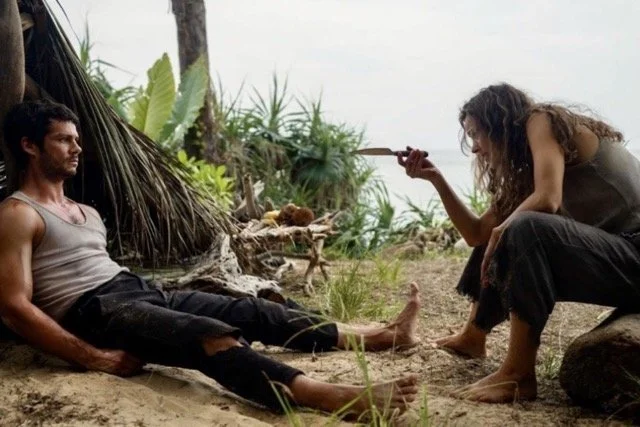
There are few bright spots in Lou’s life until Jackie (Katy O’Brian) stumbles into the gym one evening. Jackie’s a drifter hitchhiking her way to Las Vegas to compete in a bodybuilding contest. Her body is her marble made for sculpting—it’s also her way to obtain what she wants and needs to carry her toward her goal. But when Lou and Jackie tumble into a sexual relationship, maybe there’s more here than just something transactional. As other events boil over, the two of them are thrown into violence that might upend both of their lives.
In Rose Glass’s movies, violence is traumatic. That may seem to be a pedestrian observation, except that Glass is often more interested in the trauma incurred by the perpetrator rather than that enacted upon the victim. Her debut feature, Saint Maud, traced the arc of the singular (possibly corrupted) spiritual fanaticism of its protagonist. When the arrow of her devotion hits its target, it draws blood, and Glass hinges the tension of that film on Maud’s efforts to incorporate such dark events into her spiritual outlook.
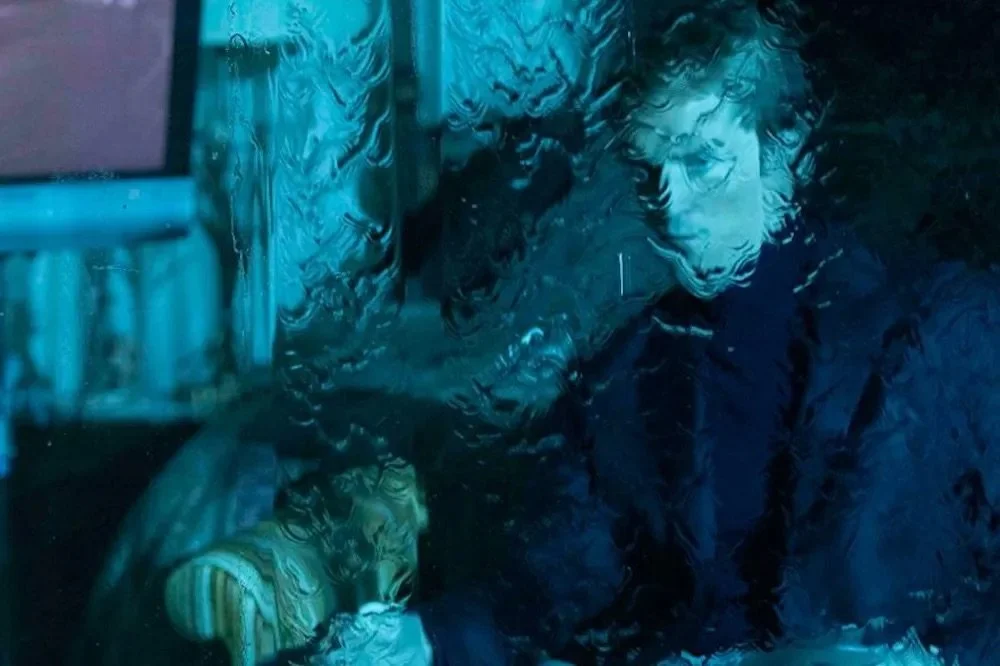
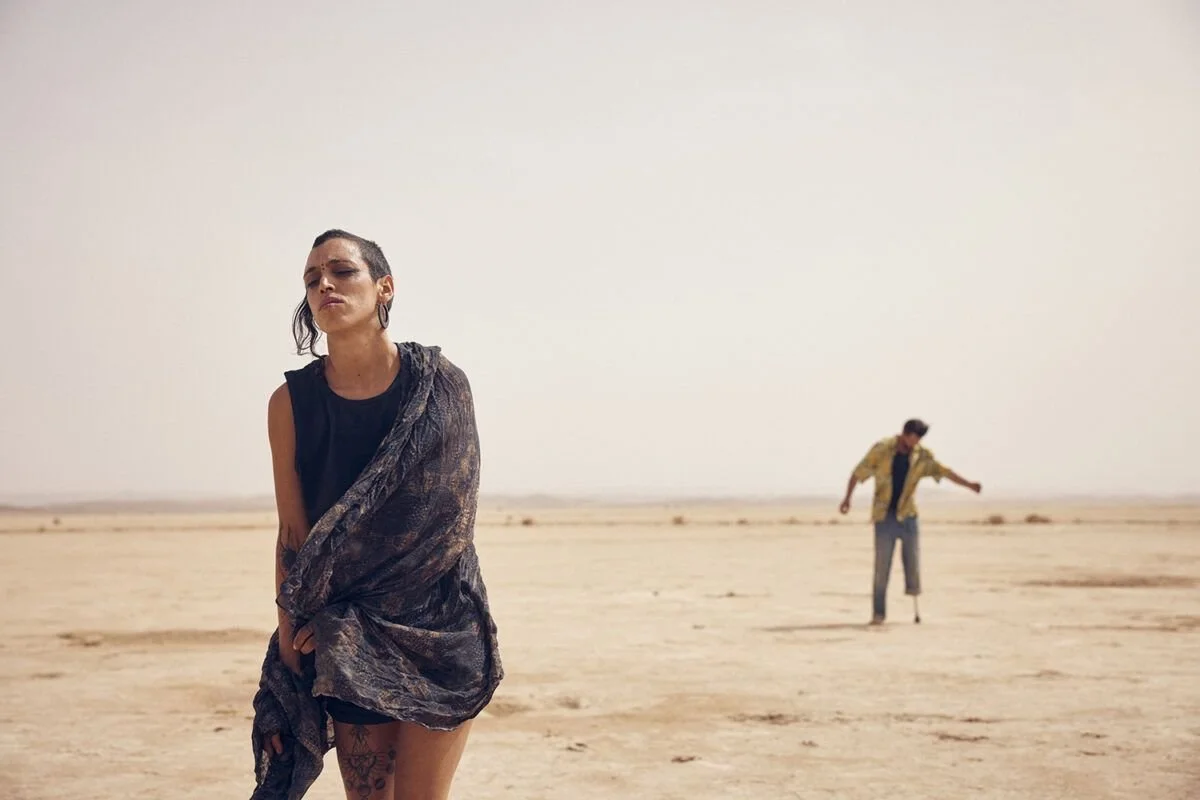
Saint Maud is a slow boil, but her follow up is an unpredictable thrill ride. Even before the plot throttles to a high gear, Glass inserts stylistic touches to mystify and excite. The opening shot from within the canyon is a great tone setter for all that is to come, and we revisit the red glow of the canyon with punctuating insert shots. It’s unclear whether these images are flashbacks, foreshadowing, or dreams, but it’s clear that the darkness under the surface is getting ready to burst forth. The starry sky over the town, and especially over the desert, is heightened to the point of being fantastical, and it makes the desert seem like an entirely different planet. There’s an odd beauty that fascinates even as life in the town persists in sickening. All the while, Clint Mansell goes wild with the score, alternating between bumping tracks and a spacey ether. We know we’re heading somewhere bad, but the journey there is so propulsive that we can’t help wanting to see what’s next.
To say I’ve struggled with Stewart’s acting would be generous—I’ve firmly disliked more of her performances than I’ve enjoyed—but this is a wise role for her coiled twitchiness. Lou (as with Princess Diana in Pablo Larraín’s Spencer) is a memorable character precisely because of the barefaced desire and restless annoyance Stewart brings. Relative newcomer O’Brian is also doing great work as the insatiably driven Jackie. It’s a performance that demands physicality more than nuance, and O’Brian makes every swinging fist and muscular pose count.
Along with Harris (who excels at this sort of eccentric menace) and Franco, the performers are all game for the eerie, bizarre story Glass has set out along with co-writer Weronika Tofilska. Love Lies Bleeding feels like someone threw David Cronenberg, David Lynch, and the Coen brothers into a blender, then filtered it through a tube of neon. That’s a compliment, by the way. Early on the movie feels tonally scattershot, but Glass is keeping things in tight control. She’s just not revealing all of her cards yet. There are much darker things going on under the surface than we can guess. Under every surface, be it the facade of this small town, or the layers of skin that so flexibly shift to accommodate our transforming bodies.
Everything builds toward a genuinely wild ending that, though hinted at throughout, I’m not sure works. Nevertheless, the ride through those dusty desert roads to get to that destination is unpredictable, propulsive, and thrilling. Love Lies Bleeding is an electric, tense thriller, a harsh and imaginative tale that is burning at the edges with something demonic. It’s yet another singular vision from Rose Glass, who’s quickly honing her perspective that, because it’s slightly askew, sheds sharper light on the darkness of this world.