28 Years Later: The Bone Temple. Columbia Pictures
Horror franchises often retread tired ground, adding new characters for the sake of adding new forms of death, but rarely exploring novel thematic territory. But horror can also be one of the most fruitful genres for bold conceptual and narrative approaches, as large studio blockbusters often refrain from or dilute the most interesting questions a story invites. When horror chooses to forge a new path, it can be one of the most thoughtful and invigorating genres. Recent years have given us Get Out and Nope from Jordan Peele, interrogations of modern identity in Cloud and I Saw the TV Glow, and last year’s crowdpleasing Sinners (which has now set a new record for Oscar nominations) and Weapons. All of these, however, are standalone films. Whither shall we go to find a contemporary, thought-provoking horror franchise?
The good news is that Danny Boyle and Alex Garland’s 28 Years Later, which arrived last summer, seems intent on both furthering and reigniting the zombie franchise by emphasizing a thematic surfeit. While itself a threequel to the pair’s original 28 Days Later (2002), the film also signaled the initial film of a new trilogy conceived of a united narrative arc. Nia DaCosta takes over the reins (working with Garland’s script) for 28 Years Later: The Bone Temple and proves that this world is still fruitful earth for meaningful stories.
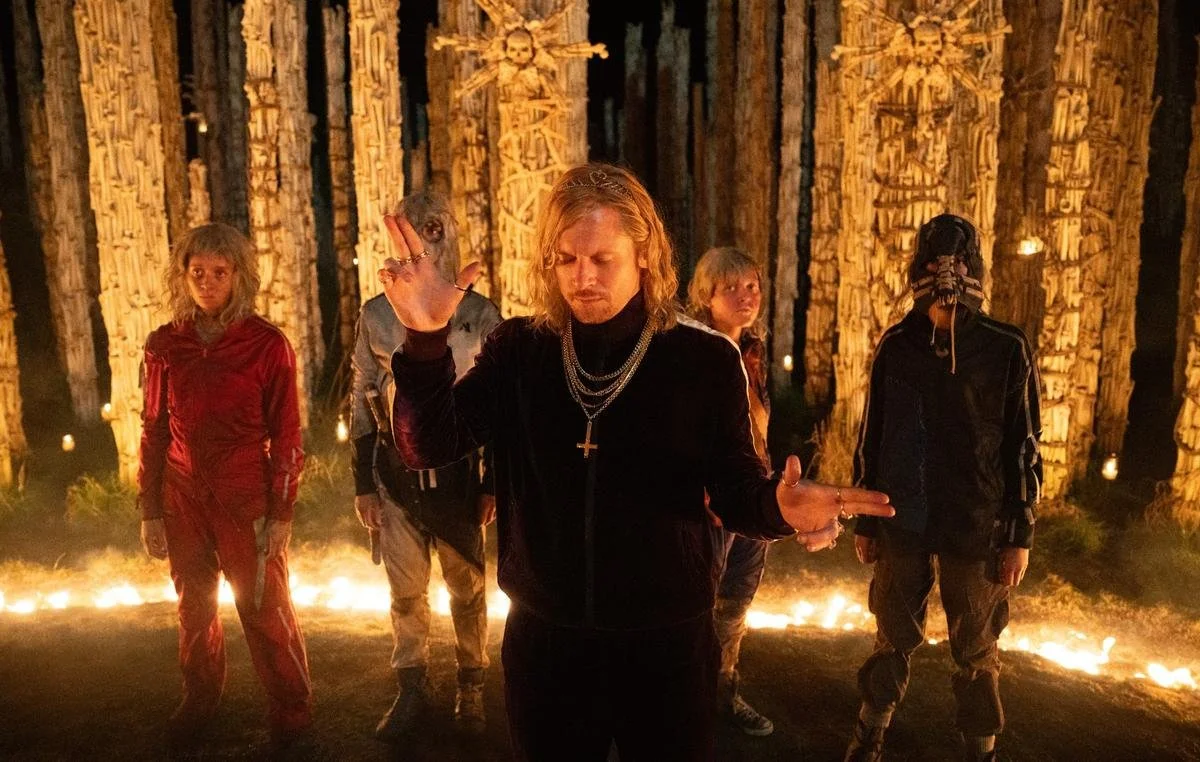
The Bone Temple picks up where 28 Years Later left off. Having embarked on his own into the mainland of England, young Spike (Alfie Williams) is now part of Jimmy Crystal’s (Jack O’Connell) crew—whether he likes it or not. Jimmy’s tracksuited, blonde-wigged troupe (all of whom are also named Jimmy) isn’t exactly a secure community, seeing as Spike’s initiation involves a fight to the death with another Jimmy. Spike’s a good kid, but bad company and all… At this point in zombie cinema, we don’t need reminders that “humans are the real monsters,” but Jimmy’s Fingers push forward the creative horizons of such demonstrations.
As Spike sticks with Jimmy for survival, the group shifts from a gang to a cult. Jimmy Crystal, it turns out, is a very religious man, frequently calling out for guidance from his father and master—that is, from Satan. I love a good, eloquent sense of impending evil, and Jack O’Connell is ready to deliver. In last year’s Sinners, O’Connell was charmingly sinister; here he’s devious and electric. Jimmy has succumbed to the mania of his childhood trauma and become a rather committed Satanist—even a fundamentalist—claiming to be the devil’s very son, and he’s turned the Jimmys into his acolytes. They roam the land, killing zombie and human, alike, considering their acts to be “charity.” But who truly wants to be a deity’s son? It sounds promising, powerful; but it might not be all it’s cracked up to be. It may come with quite a cost.
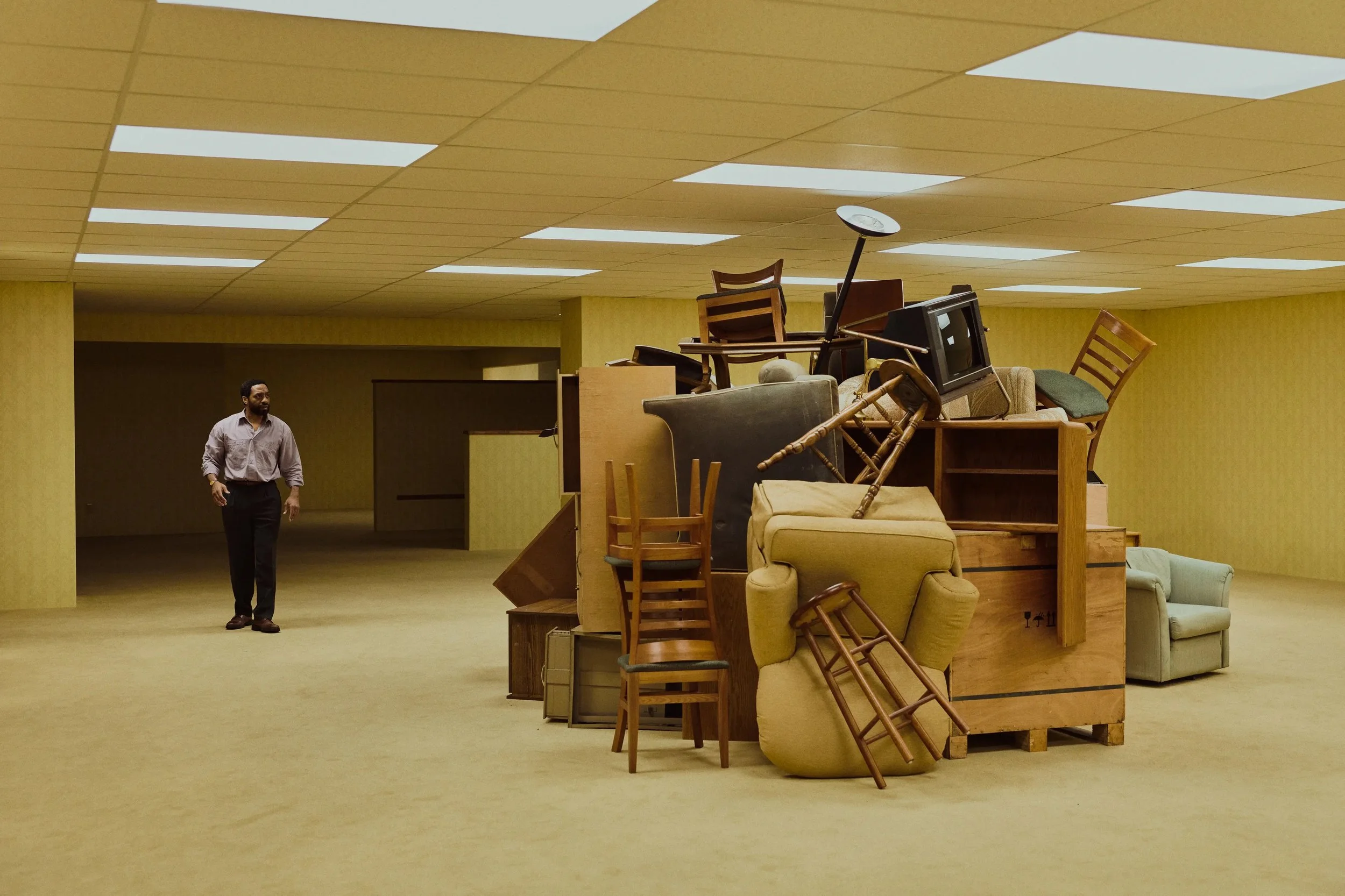
Jimmy’s grasp on his disciples is weakening, and the cult faces a turning point when they stumble onto Dr. Kelson (Ralph Fiennes) and his grand ossuary. It’s a bizarre sight that confounds even Jimmy, who notes, “this castle… I wasn’t expecting that.” When Jimmy confronts Kelson, DaCosta stages a striking, if inverted, debate about the nature of religion. (Between this and Wake Up Dead Man, thoughtful discussions of religion in genre films are having a moment.) Where 28 Years Later posed memento mori and a reminder to love as the kernels necessary for rebuilding society, The Bone Temple contemplates the place of religion and the possibility of humanization.
Jimmy is, of course, not a convincing ambassador for faith, but the religious symbolism doesn’t end there. Kelson has been busy forming tenuous interactions with Samson (Chi Lewis-Parry), an Alpha zombie who seems to recognize, maybe even respect, Kelson. Through the good doctor’s efforts, The Bone Temple poses the question about whether we can rehumanize—a refreshing counterpoint to the dynamics at the heart of most zombie films. Fiennes is as composed and arresting as ever, bringing a truly beautiful, human center to such a dark world. He shows that Kelson has both a steady hand and a playful, nostalgic side; he is generous with everyone he comes across, initially withholding judgment of both Samson and Jimmy.
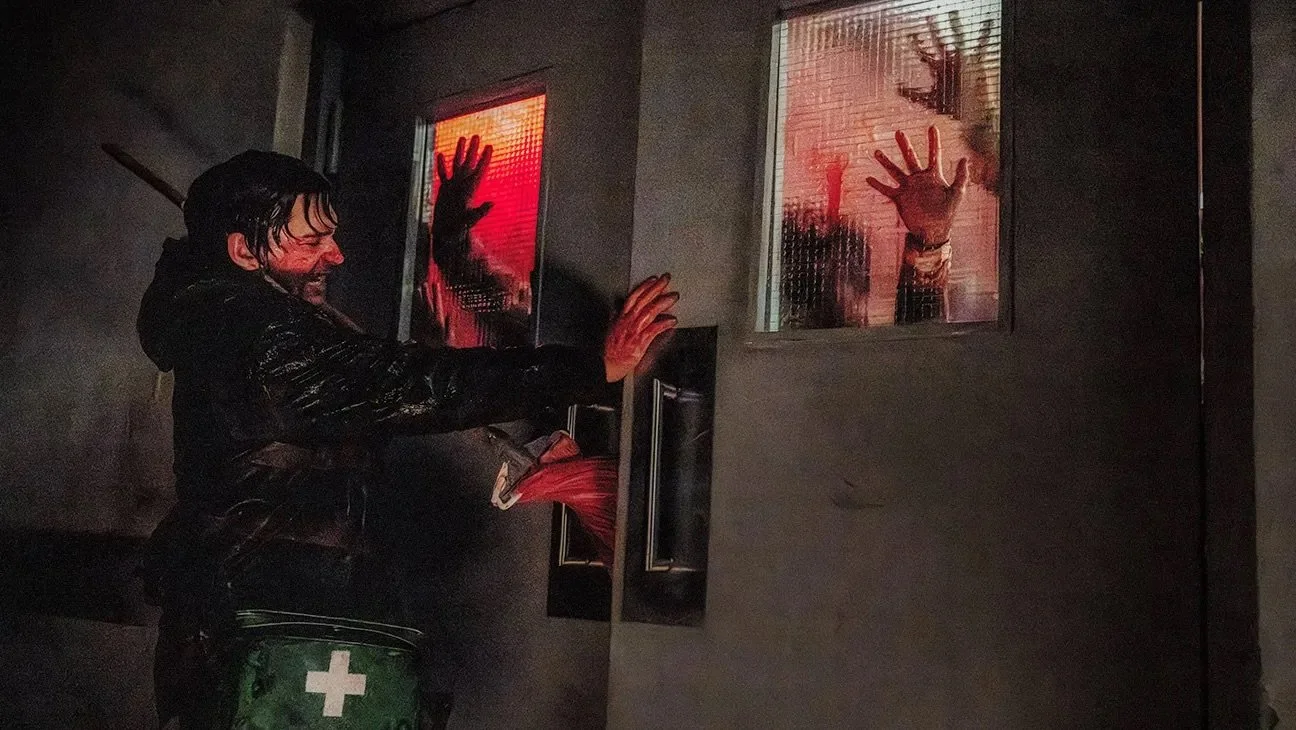
The Bone Temple is slightly restrained visually as compared to last year’s film, though that’s not to say dull or flat. The jarring camera fixed to the body of the zombies is used more sparingly; but DaCosta also inserts time lapse photography that infuses the world with beauty. It’s hopeful imagery, needed if the audience is to accept the surprising optimism of the narrative. The action is arranged clearly and tensely, and the film really shines when revelling in its arresting, ominous images. 28 Years Later held a distinctly contemplative, mournful tone for a zombie film. The Bone Temple, on the other hand, is just about as metal as it can be. And beyond all that, I mean it quite literally when I say that the climactic dance scene, alone, is worth the price of admission.
28 Years Later is proving that there’s still much to be gleaned from this horrific world, that there are still new ideas that a zombie apocalypse can teach us about ourselves. Memento mori, the nature of faith, the hope of rebuilding, and recognition of the other. Last year’s entry gave us a child trying to find his way in life. The Bone Temple presents us with a false prophet, a false Satan, an inadvertent creator, and a new Adam. The zombie film is most frequently a bleak, disheartening affair, but Boyle, Garland, and DaCosta are forging a resonantly hopeful path through the wilderness.