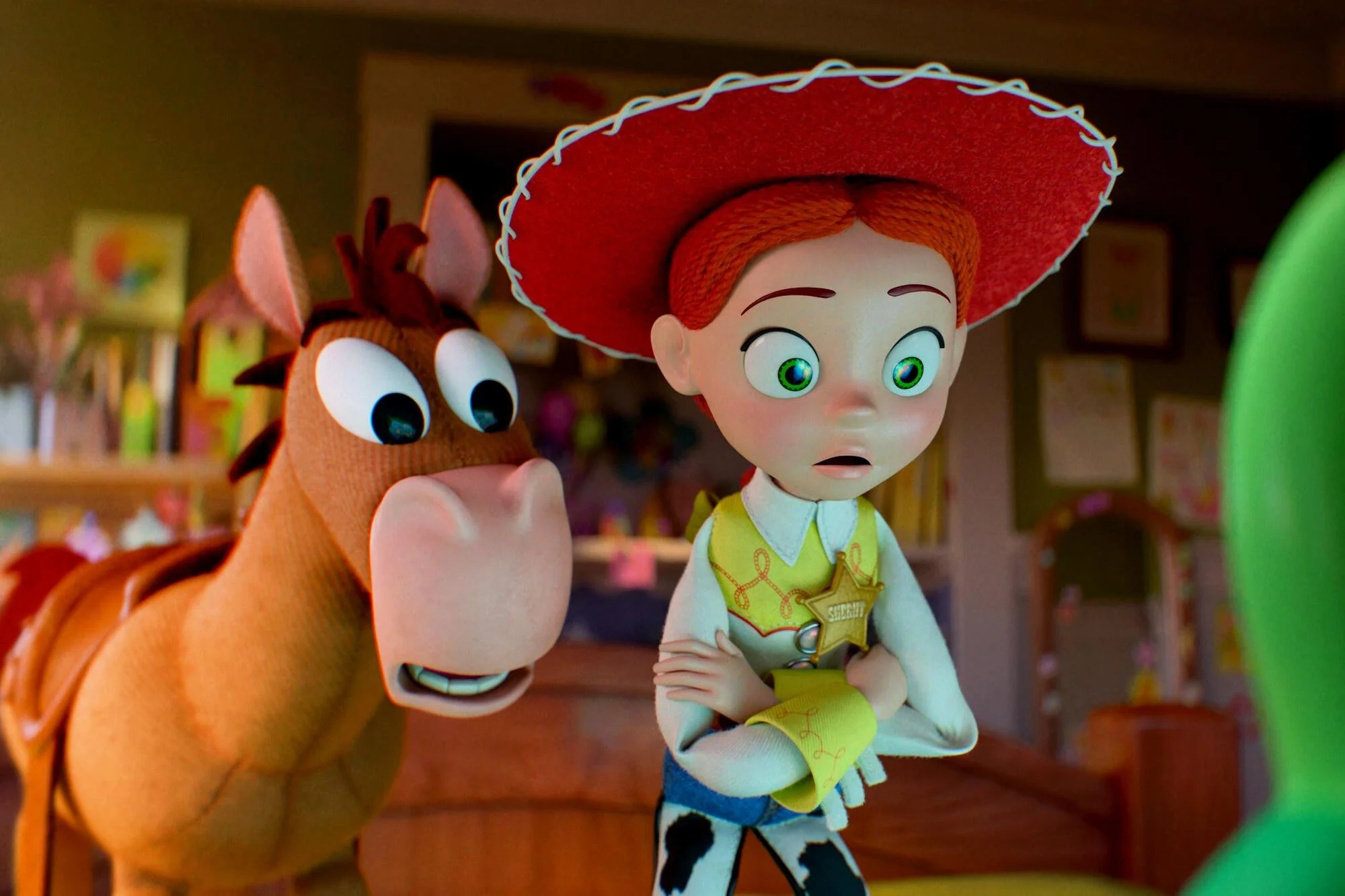
Jessie Takes the Reins in ‘Toy Story 5’
Pixar
At this point in our technological history, we’re well aware of the health ramifications of social media and portable devices. The US surgeon general called for warning labels on social media two years ago. The Department of Health and Human Services has released reports and guidelines related to effects of social media on children' s mental health. Parents and teachers are increasingly pushing back on the use of digital devices in schools. The latest to join the wave of backlash against tech? Our old, trusty friends: Toys.
Pixar sequels aren’t the rarity they once were, but they still only move forward with a new Toy Story film when they find a strong enough thematic or narrative reason to do so. Often, these reasons are existential: Toy Story 2 posed Woody’s purpose as a question between relational value and monetary value. The third film foregrounded the relational ravages of time and the loss of one’s perceived purpose. And Toy Story 4 straight up questioned existence in the first place. (Karen Beverly’s first full sentence lashes out at an unfeeling universe: “Why am I alive?”) This substance-first approach to the series continues with Andrew Stanton’s Toy Story 5, which targets the various ways that modern technology is distorting childhood.
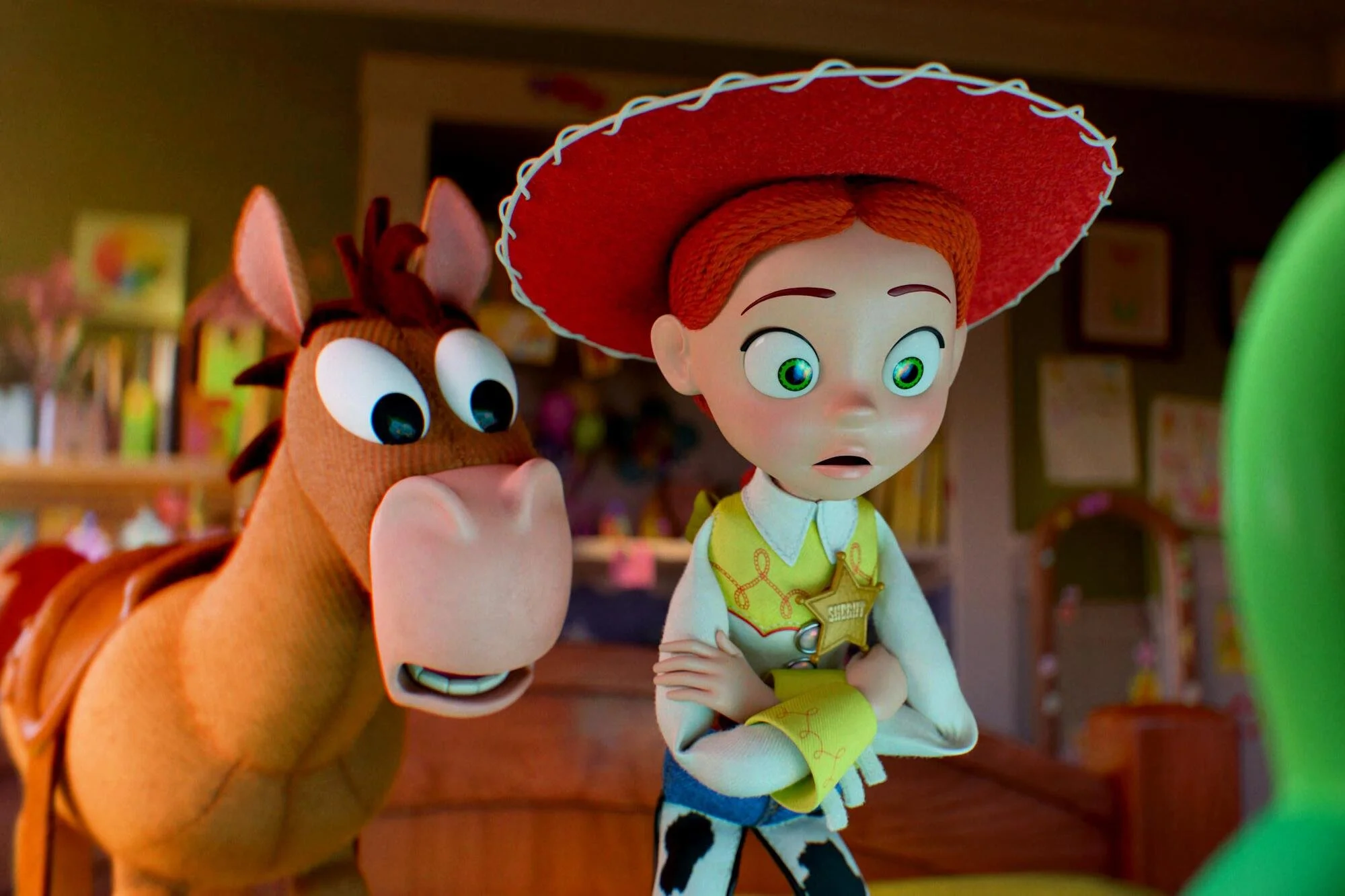
Woody (Tom Hanks), Buzz (Tim Allen), and the rest of the gang—yes, Forky (Tony Hale), too—are all here, but this is Jessie’s (Joan Cusack) show. Jessie is for Bonnie what Woody was for Andy, the protagonist in many of the imagined dramas, from romances to Westerns to spy mysteries, frequently all three at once. But when Bonnie gets a Lilypad (standing in for iPads and other tablets) that comes with addictive games, group chats, and email, it seems as if “the age of toys is over.”
Jessie refuses to take this lying inertly on the floor. She’s always been a cowgirl; now she’s a Luddite. Cusack is tremendous with the reins of this film in her hands, giving protective anger and sadness equal heft. But the toys aren’t quite ready for such a foe. Lilypad (Greta Lee) manipulates Bonnie, her parents, and her friends alike to push the toys away, both literally and figuratively. In the ensuing fallout Jessie and Bullseye are separated and incidentally returned to a familiar home filled with unfamiliar faces.
The pacing and structure of Toy Story 5 feel more akin to the series’ ethos than the previous film, which took more cues from contemporary kids movies in its jokey, constant-movement approach. Stanton has written for the series, but never directed an entry (though he did direct WALL-E and Finding Nemo). He delivers a proficient film, not the best by either series or his own standards, but with a level of quality that remains impressive throughout the Toy Story films three decades since the original. There’s a particularly sweet change in animation style to something drawing from water-color or crayon drawings whenever the toys are roped in for a round of imaginative play.
The central concern is the role of devices in children’s development. The instant Bonnie turns on Lilypad, she immediately zones out everything around her. While she’s able to text other girls, it proves more challenging than ever to make real friends. For whatever apparent good the device brings into Bonnie’s life—an ephemeral fix for feeling down, an invitation to a sleepover, potential connections with other kids—it also brings dependency, social anxiety, and shame. She’s not the joyful Bonnie she once was. In fact, she’s hardly a kid, as the movie makes explicit: tech is pressuring kids to abandon childhood before they’re ready.
Toy Story 5 eventually waters down its critique, assuaging with a milquetoast sort of ending that is not unexpected in an animated kids movie but ends up arguing that only tech can fix the problems that tech, itself, has created. Its limp resolution, however, can’t weaken what the rest of the movie makes clear: this trend is destructive for all, but especially for children. The film even briefly poses the idea that perhaps the best thing big tech can do is self-immolate. Lilypad pompously informs the others that she’s not for playing, she’s “for everything.” But nothing should be for everything—this is a false promise that tech companies exploit to massive profits and little payoff for the average consumer.
Stanton’s film is another worthy entry that maintains Toy Story’s thirty-plus year run as a franchise worthy of children and adults, alike. This adventure subordinates timeless themes below a timely critique, but it still manages to suddenly deliver an emotional gut punch. (How do they keep getting away with this? When will I stop tearing up because of plastic toys? Maybe never.) The latest film makes it clear that Pixar still has more thoughtful stories to tell in this world.