‘Possible Love’ Questions the Gaze
Netflix
While Lee Chang-dong’s Possible Love opens with a title card that reads “Thou shalt not covet” and closes by paying respects to Dekalog 10, the film is far from an adaptation or a reworking of Krzysztof Kieślowski’s tale. Perhaps there’s some shared inspiration, and Lee both refracts the Sinaitic theme and laces it with an ironic twist in ways that Kieślowski favored, but Possible Love is very much its own work. And despite the undeniable coveting thrown in every direction, the biblical reference that sticks most troublingly in mind is that of “the living and the dead.” The phrase is lifted—purposely or incidentally—from Acts 10:42 and is proclaimed in the Nicene Creed to declare that all will be subject to the judgment of Jesus Christ. Lee’s an expert at quietly constructing a deep sense of disturbance, and this question of judgment creeps over the film like a dark cloud.
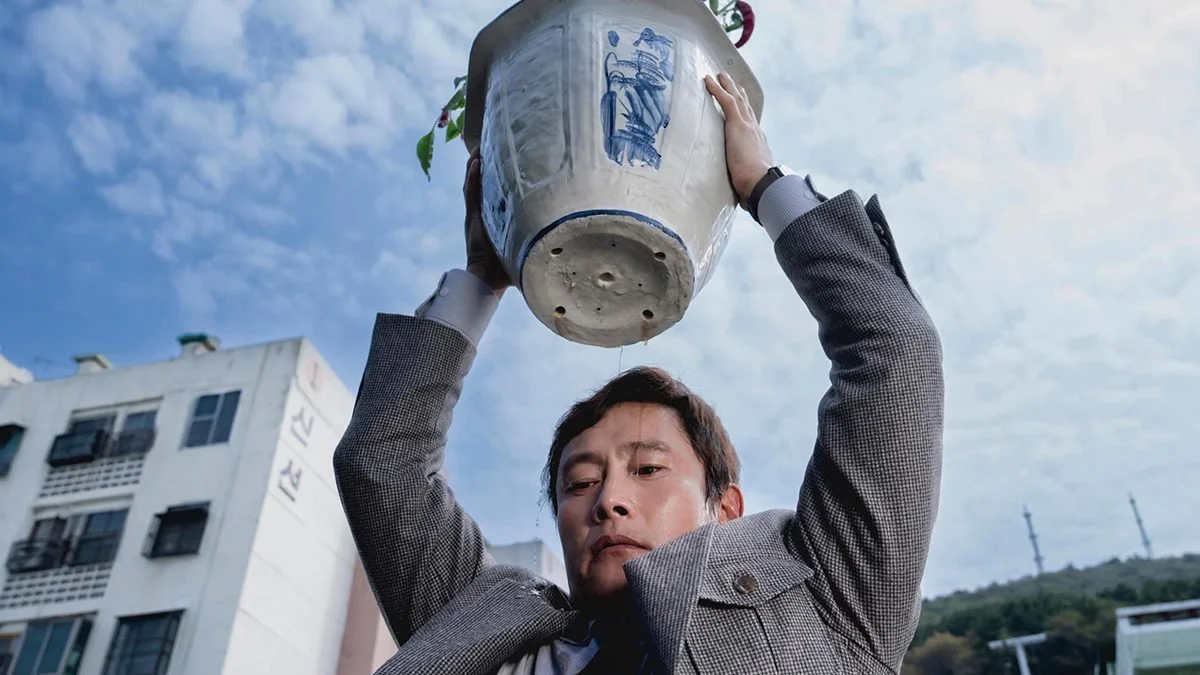
Mi-ok’s husband is “dead.” This is the designation for the workers that were laid off by SP Heavy Industries after striking for better working conditions. The company turned to the police to break the strike, and the police turned to their batons and riot shields, cruelly attacking and arresting the union members. Ho-seok (Sul Kyung-gu) was beaten badly enough to end up in the hospital, and he remains unemployed two years later. Mi-ok (Jeon Do-yeon) sees him turning to dust in front of her eyes, but it’s all she can do to earn a paycheck and curb his volatile drinking habit. Anytime Ho-seok observes one of the “living”—those who retained their jobs—he becomes zombified, following them and fixating on the normalcy of their lives.
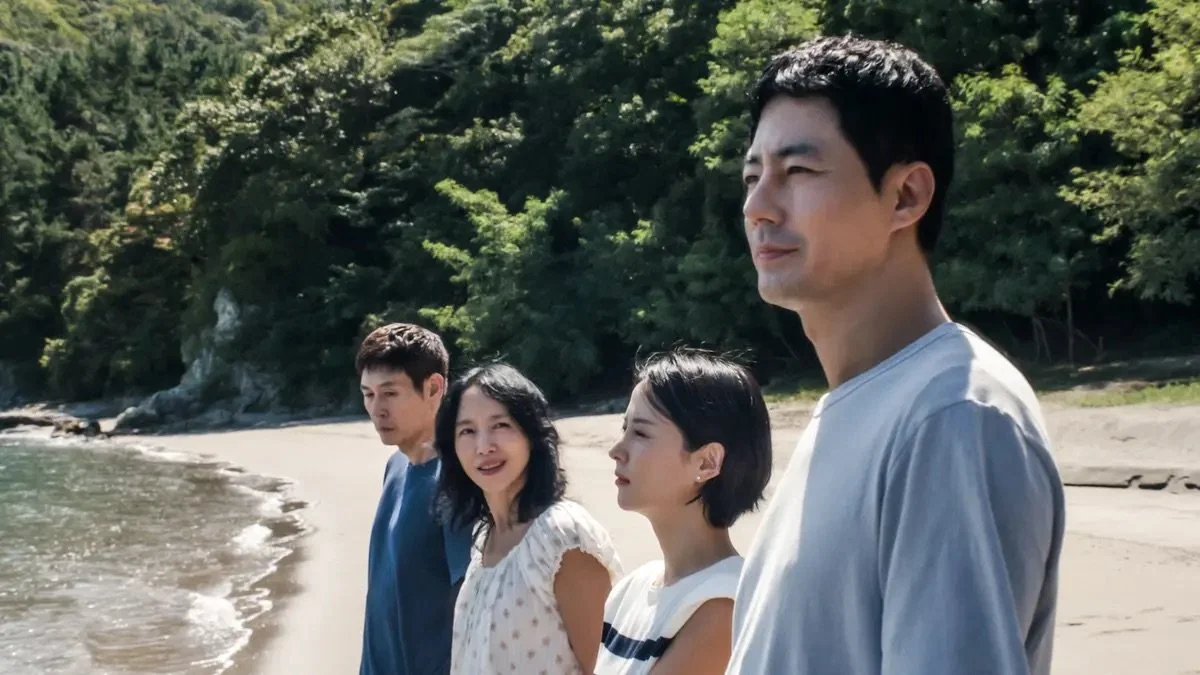
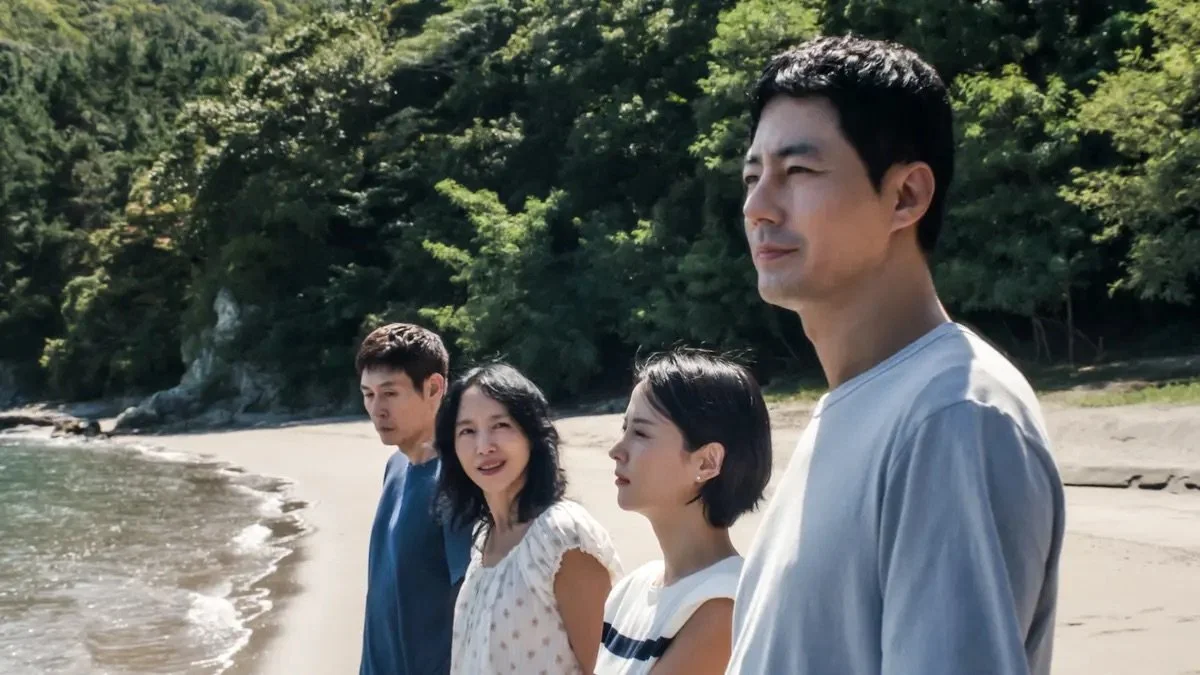
Ye-ji (Cho Yeo-jeong) and Sang-woo’s (Zo In-sung) lives are also far from normal, though their distinction is that of being unencumbered by economic concerns. Sang-woo lives in the comfort of his significant inherited wealth, which gives Ye-ji the leeway to work for passion instead of necessity. That passion is filmmaking, and she’s working on a project highlighting the injustice and suffering foisted on those cut by SP Heavy Industries. Ye-ji and Mi-ok strike up a quick friendship of sorts, with Mi-ok grateful for a chance to tell their story. Ho-seok, however, is reticent and reserved—pent-up would be a more apt description, which Sul constantly expresses in his embodiment.
This isn’t really friendship though. Far too much separates these couples. Wealth and class, but also Ye-ji’s camera. Their opportunity to bond is not for the sake of itself, but for the sake of this documentary, and the camera stands like a third (or fifth) wheel in many scenes. For his part, Ho-seok does his utmost to stay out of the frame; Sang-woo, on the other hand, never seems to pay it any attention at all. The ensemble is extraordinary: Jeon (who also led Lee’s Secret Sunshine) and Cho (Parasite) hold the more verbose roles, forming nesting dolls of care and desire and self-deceit. Meanwhile Zo and Sul employ their physicality to portray opposite ends of the spectrum. Ho-seok is all bottled emotion and shame, while Sang-woo is eternally at ease. One senses he has never felt shame.
To covet is first in the eyes, in the gaze. And it therefore shows most clearly in Mi-ok’s preoccupation with the price of Ye-ji’s handbags and blouses. But envy takes many forms. Ye-ji wants to be interesting, wants to portray herself as though she is the same as Mi-ok. It’s all an act (“method acting” as Sang-woo describes it) for the sake of the camera’s perception and her self-perception. Ho-seok can’t empty his strange feelings toward his former coworkers. And Sang-woo is so enculturated by wealth that he believes anything could be at his fingertips.
Lee is a masterful filmmaker, and Possible Love puts his power on display. It crafts a layered image of human desire and anomie as well as an equally emphatic laceration of the systems that perpetuate such societal imbalances and lead to strife and animosity. Even a simple conversation in a car is portrayed via a creative shot-reverse shot from behind the seats. There are at least a handful of lush scenes in the faint light of morning, sunset, or night, each of which make an impression that lasts far after the final credits.
Throughout it all, Possible Love keeps the labor in sight, even when the two couples (along with Mi-ok and Ho-seok’s son) vacation at Sang-woo’s cliffside home. None of the adults has to work during this retreat, but that means that many others—groundskeepers and gardeners and cooks—do have to work to enable that recreation. Are these the living or the dead? They are paid for their labor, but, “like people from the underworld,” they are allotted no voice.
Lee doesn’t navigate his films with twists so much as with turns. Unexpected confrontations will erupt, and pent-up desires will be unleashed in ways that will change these families. But every step is rooted in the psychology of the characters and is grounded by Lee’s adroit filmmaking. Possible Love is one of the year’s best, and its provocations will likely be rattling inside my head for a long time to come.