The Rom-Com Meets a Harsh Reality in ‘No Good Men’
No Good Men. Adomeit Films
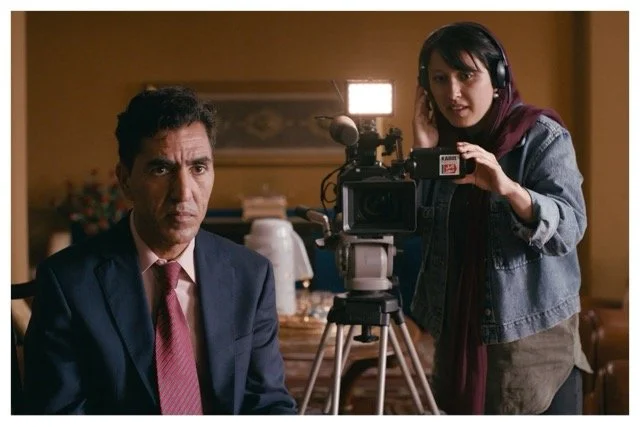
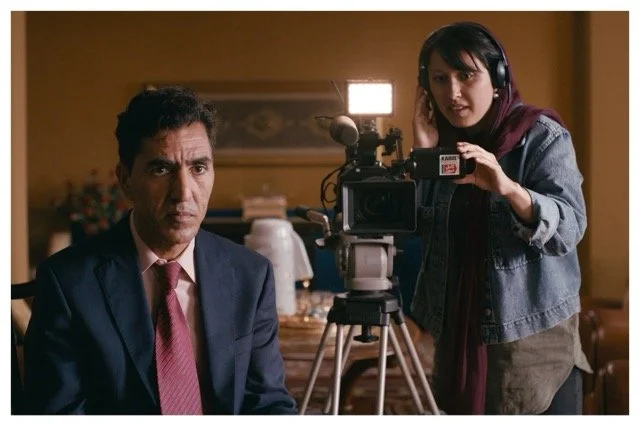
Conduct an experiment. First, take a well-trod set up for a romcom: Our hero is a camerawoman at a big city news station, fighting for respect from male colleagues who look down upon her. Her experiences with the men all around her have led her to the conclusion that there are no good men out there, that they’re all “bullies and brainless.” She starts out cynical about love, but an unexpected conversation with one of the station’s top reporters calls that stance into question, and she finds herself inching toward something unexpected and romantic. Now take that premise and set it in Afghanistan: this big city is Kabul, and the time is early 2021—a few short months before the Taliban will reclaim power. Her attempt at a big break is to shoot an interview with a Taliban leader.
This is the set up for Shahrbanoo Sadat’s No Good Men, which opened the 2026 Berlinale festival in February. The uncomfortable juxtaposition between apparent genre and context is no mere experiment for Sadat; it’s a work about the overlooked experience of Afghan women and the attempt to foster a good life in a tenuous time. Naru (Sadat, also starring in the film) receives the ire of men from all directions. Even her driver in the opening scene grumbles when he has to help women out of the back of his van, openly insulting them as he does so. Later that day Naru films a daytime TV show where a doctor assures a distraught caller that “women are like flowers”—a tired, facile trope—and guarantees that she can regain her husband’s affection if she will simply “put on a lot of makeup.” It’s wearying and frustrating, and it’s made more pointed for Naru as she tries to teach her three year old son, Liam (Liam Hussaini), to be brave and kind without recourse to violence.
When her first big break goes awry, the reporter Qodrat (Anwar Hashimi) drops her off in a marketplace out of annoyance. Believing his deceitful instructions, she interviews women as Valentine’s Day approaches. The women unanimously note that their husbands don’t say “I love you,” and that just about all of them have been abused. An old woman sums it up directly: “There’s no good husband in Afghanistan… my life has become ashes.” After she returns to the studio with the interviews, Qodrat claims he has no interest in them, but his comeuppance is immediate as the other reporters remark with awe that they have never been able to convince a woman to answer questions on camera.
These clips have a doubled significance. Most immediately they articulate and justify Naru’s adamant pessimism, but they also enable Sadat to give voice to Afghan women whose perspectives are often unheard or ignored. No Good Men’s greatest strength is attentive to the ways women in Kabul protect themselves and their children. Because this does not set out to be a straightforward romcom. The real world is always close at hand, always a threat. Throughout the film, as Naru pushes back against male dismissals, Sadat uses a close, handheld approach to the imagery. We feel the immanent possibility of violence that swims beneath the casual prejudice. No Good Men cultivates this sense of threat in direct and subtle modes. In one scene a woman reports about a man with a broken hand who raped her teenage daughter; a few scenes later we encounter a jocular policeman whose hand is bandaged. It never gets commented on, but it punctuates the scene with a heavy sense of distrust.
Initially the film maintains its romantic narrative structure, triggered when Qodrat does the last thing that Naru expects—apologizes. Not only that, but he changes his attitude and actions toward her and slowly, but surely, the two grow closer at work and in their personal lives. As Naru’s cynicism gradually unravels, the film proposes that perhaps the quality that makes a man good (or at least capable of goodness) is a willingness to change. Qodrat is a fair bit older than Naru, and he carries a different perspective on Afghan society, but her words cause him to adjust his ideas. Sadat and Hashimi have believable chemistry that’s most evident in scenes of disagreement—their emotions, aligned with the focus of the film, are most passionate when discussing their reality than each other.
As the real world intrudes, the light tone that exists throughout the first third increasingly dissipates. The romance isn’t forgotten, but it’s deprioritized as the Taliban tighten their grip on the country. The women of Afghanistan have survived under the constant threat of violence for years, but things are about to get far worse. Amid the real-life chaos, No Good Men becomes a tricky narrative to land. It generally does, but not without some unsatisfying threads along the way. For instance, what does it really mean for Qodrat to be a good man? He’s kind and caring toward Naru, but he’s also a married man with children (one of whom is the same age as Liam). Even if he’s never violent, his romance involves damage to his own family.
During a workday lunch, the characters discuss the trajectory of Afghanistan culture. Naru, as we’ve seen her approach many personal interactions, insists that citizens must act to bring about a right society. Qodrat is more reticent: “It’s our society, we can’t change it.” If one takes this view, of course, then society will never change. No Good Men is persistently interested in this conversation, extrapolating from the personal, mundane gendered interactions to encompass the country. It’s the capacity and willingness for change that represents the seed of goodness in Qodrat. (The jury’s still out on the verdict.) Maybe that’s also the marker for what it means for a society to be good. A willingness to change, to become more equitable and fair, just and honest. Such societal transformations are rare in this world and always hard-won, but that