‘Coyote vs. Acme’ Takes Consumer Capitalism to Cartoon Court
Warner Bros Pictures
Near the start of Dave Green’s Coyote vs. Acme, an intertitle pops up reading declaring that the film is based on a true story. The advisory is both tongue-in-cheek and outright goofy, but it goes beyond a simple joke—even if the filmmakers couldn’t have predicted how close it comes to being true.
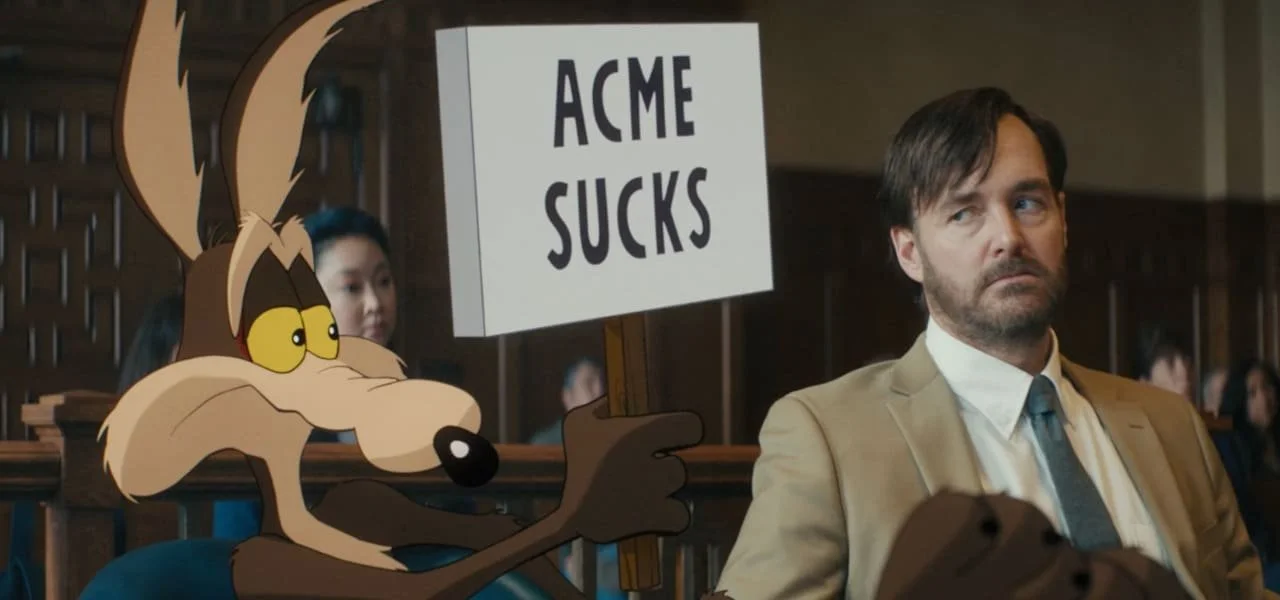
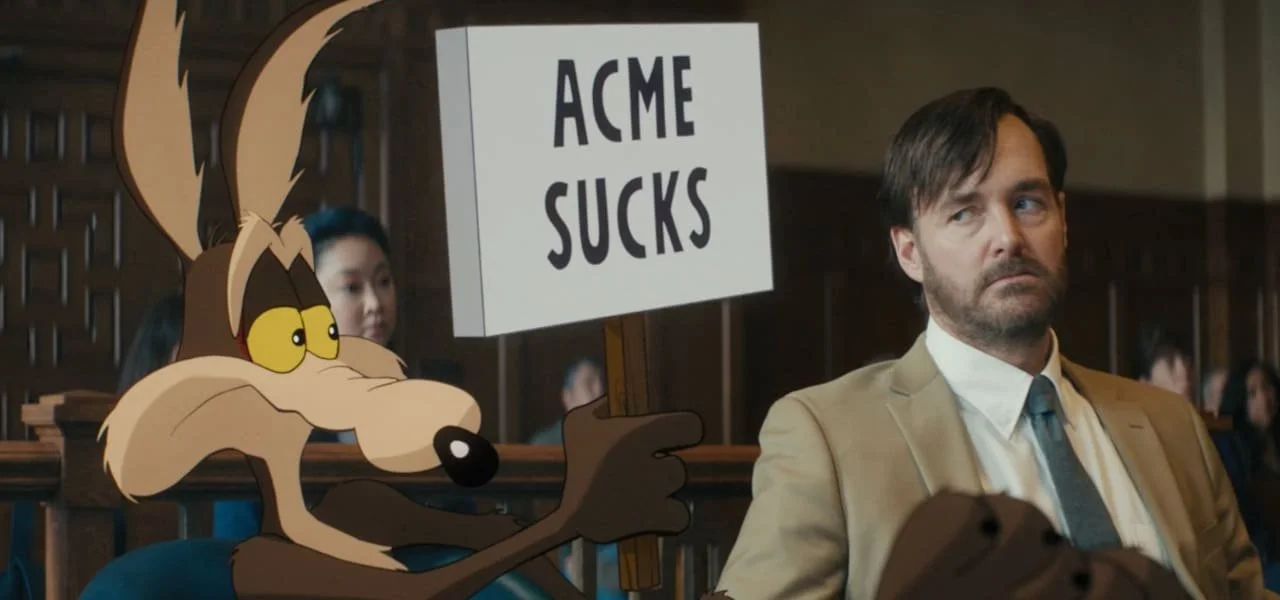
Coyote vs. Acme tells a David vs. Goliath story, or rather a Sisyphus vs. boulder story, wherein the ill-fated Looney Tunes canid sues the mega-conglomerate company whose products fail without fail. Wile E.’s segments were always about insatiable hunger, predation, and foolishness, with his just desserts involving his own pain and suffering. In Acme, though, he runs into an even bigger predator motivated by an even greedier hunger and stupidity. This predator is the company that expands without bound, encompassing our everyday technology, military products, entertainment, and more. The company that balloons its shareholder value to cartoonish proportions while delivering a worse and more exploitative product.
So when Warner Bros. attempted to shelve Green’s finished film for the sake of a tax write-off, they pushed the metaphorical TNT plunger of their own comedic demise. The cast and crew were livid, and so were potential moviegoers, once the word got out. Eventually the backlash was large and loud enough that the corporation folded, and their foolishness was convincingly proven—the film is nearing $100 million at the theatrical box office. So WB ended up turning the “true story” quip into a pointed criticism.
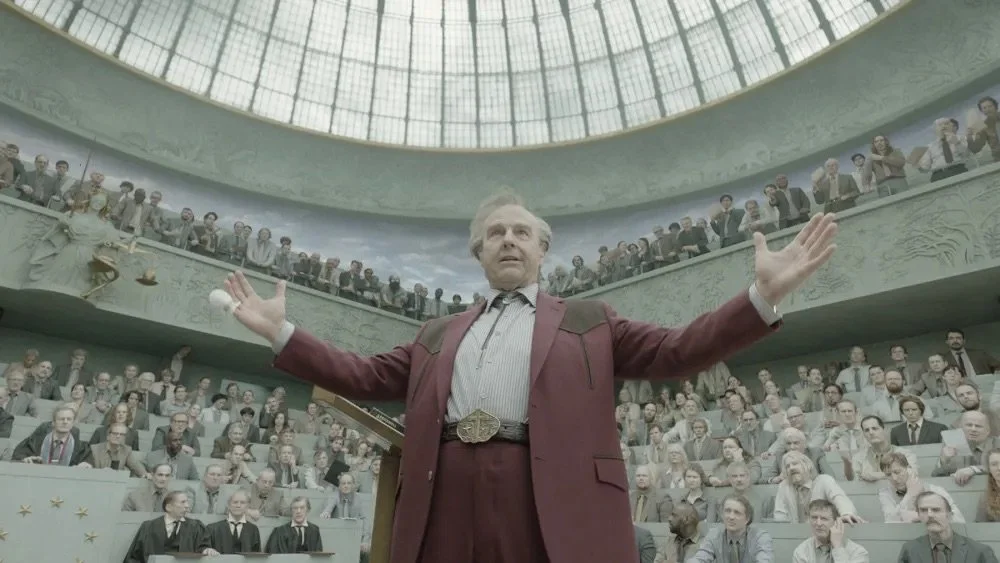
Real world parallels aside, the movie is much more fun than the game of box office politics. Foiled (and mutilated) one too many times, Coyote decides to hire local injury attorney Kevin Avery (Will Forte) to sue Acme. Avery’s not really interested in the case (“It is really super easy to lose”); he’d rather settle for a tidy settlement. But his new, mute client insists, and Avery’s niece Paige (Lana Condor) eggs him on to fight the power. Avery finds himself in court against Acme’s top lawyer, one Buddy Crane (John Cena), a brutal bad man in a bolo tie. (Between this and Digger, I’m really finding my suspicions about bolo ties confirmed in current cinematic critiques of corporate evil.)
Green balances a classic sense of Looney Tunes energy—with all its falling pianos, crazed Daffy Duck rants, and sly winking—with a modern comedic tone. The very idea of Coyote suing the corporation is inspired by Ian Frazier’s New Yorker article (which also knew enough to use “v.” instead of “vs.”), and it involves all the dry wit one would expect. Forte handles both sides with aplomb, in one instance leaping onto a cartoon rocket, in another responding to Crane’s invite for a face-to-face with a flat, “Your face and my face?” It’s tough to think of another actor who would be as ready for the goofiness the movie requires while still inserting some humanity.
There are plenty of great jokes, many of them deriving from the homages that Looney Tunes has always been drawn toward. The mystery centers around the missing Dr. Lorre—that is, the cartoonified version of Peter Lorre, a cultural reference that never gets tiresome. We get other leanings into noir films and investigative movies such as All the President’s Men, with Bugs Bunny stepping into the Deep Throat role. This latter allusion is fun enough, but it’s elevated when Bugs snuffs out a carrot on the ground with his foot.
Green grounds the film in pertinent critiques against our obsession with consumerism and the companies that are more than happy to exploit it. Acme is envisioned as one part Apple and two parts Amazon, with tendrils into the military industrial complex thrown in for good measure. This industrialization and commodification is so enveloping that the users themselves have become the products—their data is the real source of value.
Coyote vs. Acme carries a trenchant critique of consumer capitalism within the trenchcoat of rocket skate and magnet glove gags. It’s still a light film, at the bottom of it all, but it generates a lot of delight.