Mickey 17 Retreads Past Lives and Past Movies
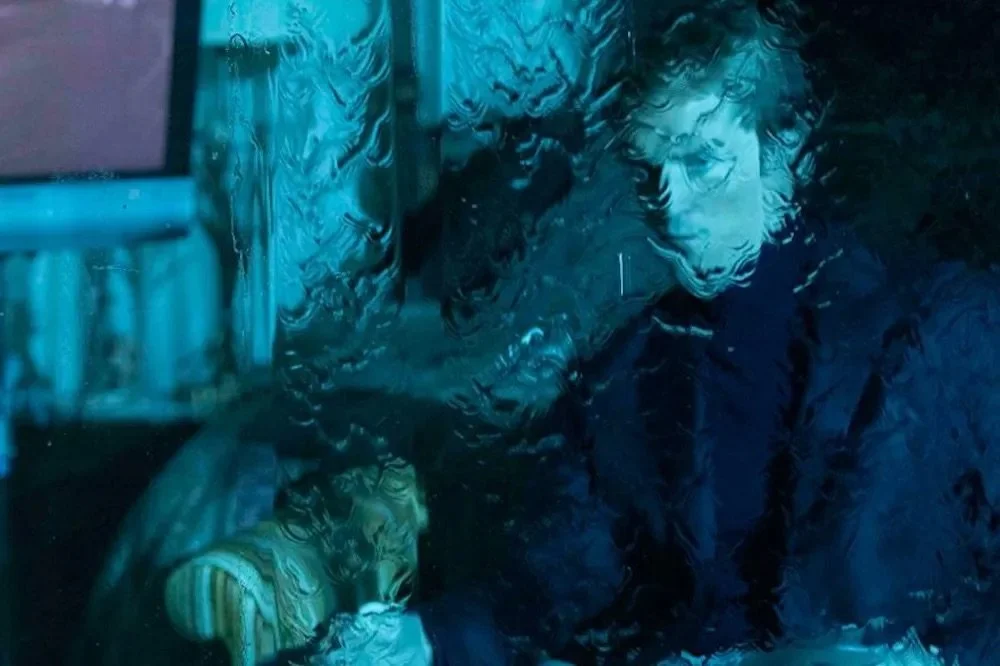
Mickey (Robert Pattinson) is an unfortunate chap. Way in over his head on debts to a creatively sadistic loan shark, Mickey signs away his life to join the crew of a space colonizing expedition. Hopefully that can help him evade a painful death; unfortunately, it only obtains him an assortment of violent deaths at the hand of his new corporate overlords. For Mickey’s role is to be an “expendable,” a sort of ready-made clone: the company scans his DNA, sends him on risky (read: suicidal) missions, and, each time Mickey he meets his untimely demise, they create a new Mickey. Go fix the exterior of the space ship in an asteroid belt, Mickey. New clone. Go breathe this uncertain atmosphere and we’ll see if there are any toxins, Mickey. New clone. It all runs like clockwork until they create a new clone while the previous one is still alive. So let’s revise that first statement to say that, in fact, Mickey is an unfortunate chaps.
Mickey 17 is Bong Joon Ho’s follow up to his Best Picture winner, Parasite. Based on a science fiction novel (which was titled Mickey 7—but this one goes to 17), the film tackles ideas of class, corporate exploitation, cults of personality, humanity’s ecological impact, and the desperate lengths one will go to in order to avoid death. Fitting themes for the director of Parasite, The Host, Snowpiercer, and Okja. Maybe too fitting, as Mickey 17 finds little new or insightful to critique.
With the earth dying, humanity’s easiest recourse is to venture outward in cosmic manifest destiny, colonizing any available planet, native species are merely an obstacle to that need to survive. Mickey’s ship, helmed by Kenneth and Ylfa Marshall (Mark Ruffalo and Toni Collette), has arrived at Niflheim, a world covered in snow and ice and populated by underground swarms of massive slug-like creatures. As soon as the ship left earth, the Marshalls had turned the voyage into a self-propelling engine of admiration—their tyrannical drives demonstrating that their egos are just as important as humanity’s survival, perhaps more so. Ruffalo and Collette play their despots like ill-informed buffoons, ready to throw away more lives than just Mickey’s. Thankfully for Mickey, he’s found allies in Naomi Ackie’s Nasha and Anamaria Vartolomei’s Kai, in addition to a less-than-ideal friend in Steven Yeun’s Timo.
The arrival of the new Mickey collapses what little ease was left in his world. “It felt like it was me continuing. But now…” It turns out we only discover ourselves in the face of the other, even if that other is ourselves. Together they try and stand against the cruelty and stupidity of the Marshalls, and Mickey’s unique plight gives the film its interest. Through him, we’re witnessing real cutting edge endeavors in corporate exploitation. Humanity has finally found a way to beat death, and the first use we come up with is another way to manipulate menial workers. To make things worse, no breakthroughs in technology can resolve the terror of death. “It’s scary. Always. Every time.”
Bong Joon Ho’s films have always been tonally scattershot, and Mickey 17 is no exception. When it’s smartly calibrated, it results in some of this century’s best movies (Parasite, Memories of Murder). But when the balance isn’t dialed in, the train goes off the rails way faster than (spoiler alert) the central one in Snowpiercer. Beginning with that 2013 film, he’s worked on English language movies in addition to Korean films, and I can’t help but feel like something of his tonal balancing act is lost in the translation. Snowpiercer has a strong contingent of fans (Okja quite a smaller one), but I’m not among them. This trend continues with Mickey 27, despite great central performances by Pattinson.
If you’re able to view Mickey 17 as Bong Joon Ho just having some twisted sci-fi fun, it’s a solid enough time. But if you are hoping to explore probing questions of economics and morality, you’ll be better served by a number of other movies, including earlier works in his own oeuvre. Thematically, the movie retreads territory explored by Starship Troopers and doesn’t do much new with it. Likewise, the imagined world of Niflheim gives a blurred, carnivalesque reflection of a Miyazaki film, lacking that auteur’s trademark warmth and articulate criticisms. And while Pattinson’s Mickeys 17 and 18 are well designed characters, the choices for Collette and Ruffalo spoil things every moment they’re on screen. Ruffalo, a highly talented actor who can add layers to a number of roles, can’t do much with this one. His skill is wasted on a bad translation of Trump that fails to be incisive or cathartic in its mockery. The same things can be said for Collette.
In hindsight it’s clear that Mickey 17, which opened in early 2025, was a harbinger of what the movie year would bring. Many years are rife with movies that speak to our current political and social environments, but in 2025 those voices became far louder, far more direct, far more literal. It’s an approach that has given us some of the year’s boldest films, such as One Battle After Another and Sinners, but it doesn’t come together in Mickey 17.