‘Blue Heron’: A Lush Portrait and a Painful Re-evaluation
Nine Behind Productions
When you recall the summers of your childhood, what images and senses spirit their way back into your mind? Perhaps it’s the heat of the sun, the cloudless sky, and the tickling chill of sprinklers in the yard. Or hours of bike rides in the surrounding neighborhoods. Maybe it’s the slight taste of the forbidden in getting to stay up late to watch fireworks after the sun has set. For many the first recollections are of this nature—the sweet sense of being carefree, of attending to the fun right before you and little else. But somewhere along the way those memories begin to be intermingled with an encroaching realization that not everything is carefree.
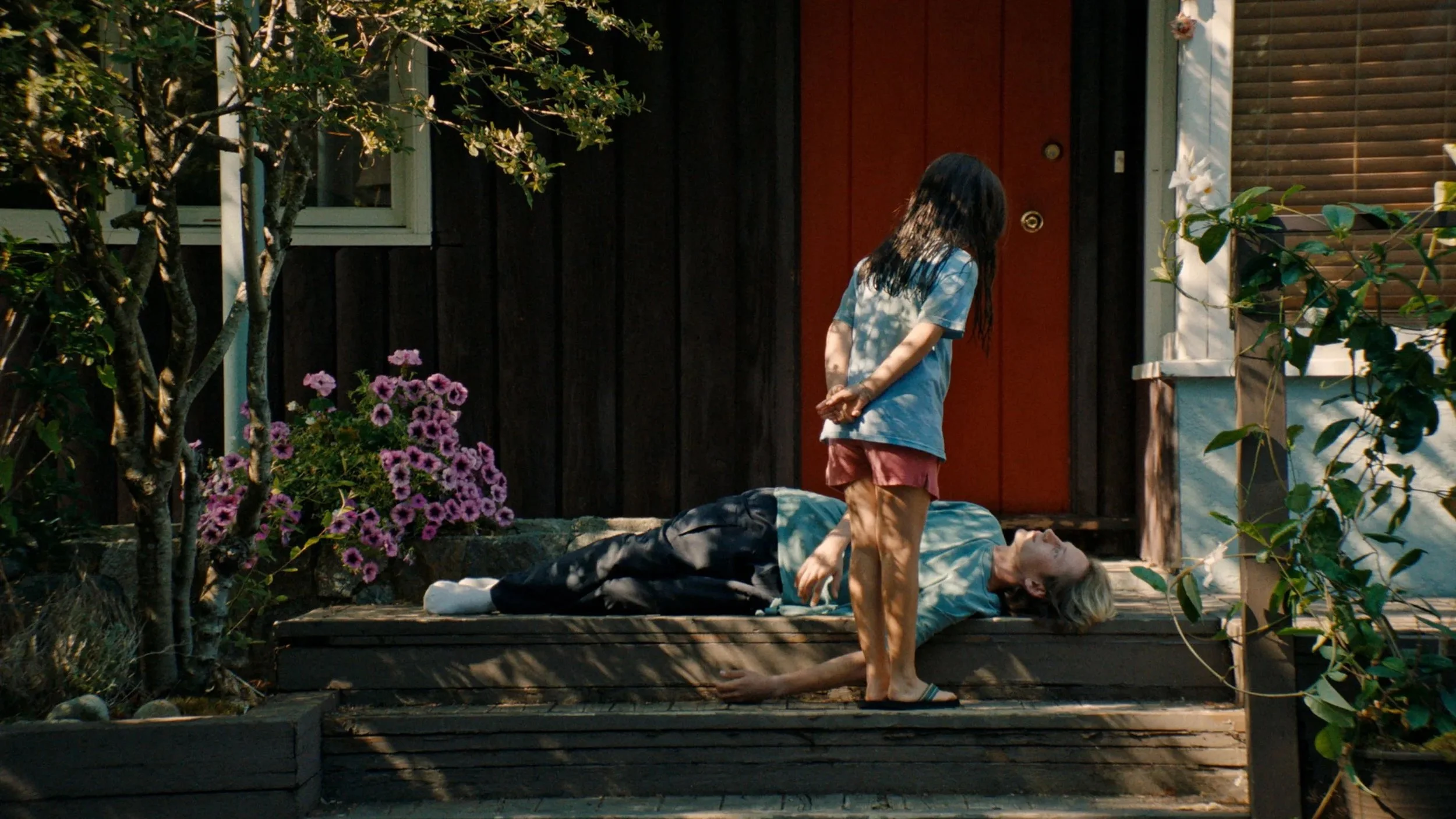
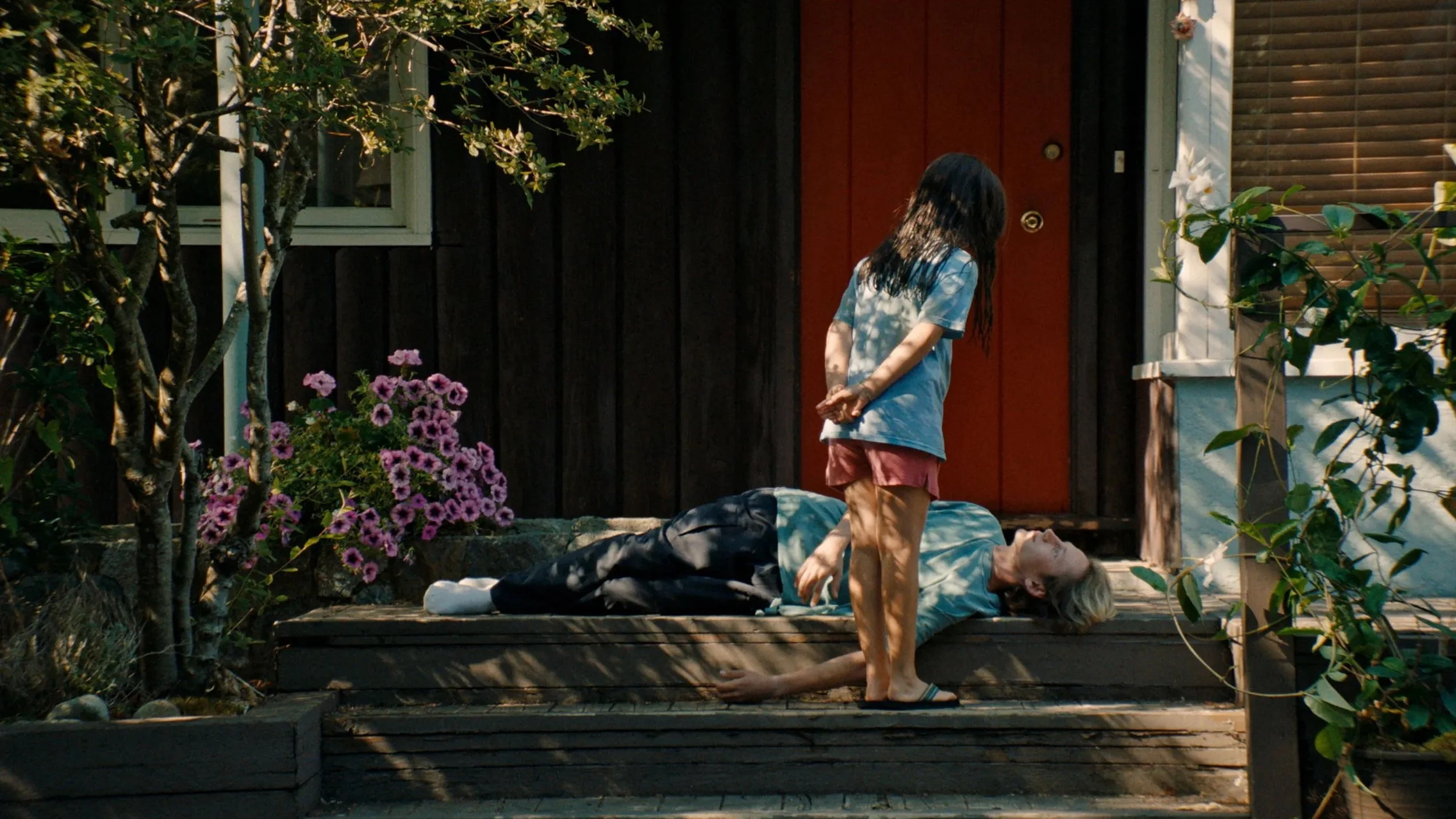
Sophy Romvari’s Blue Heron is a work of autofiction that places its protagonist, Sasha (Eylul Guven), back in that precise moment of her life. Sasha’s family has just moved to a home on Vancouver Island, B.C., and she takes to it quickly, making friends with the girls around her, exploring the forest and coastline with her mother (Iringó Réti) and brothers, and capturing home videos at the encouragement of her father (Ádám Tompa). It’s a wistful time, lit by the dappled rays of sun, cooled by the blue of the open water, and marked by the adventures around this new home. Other flashes of awareness start to intrude, however: Her parents alternating between English and Hungarian as their voices become more distressed. Her older brother Jeremy (Edik Beddoes) on the edge of the roof, her parents commanding him to come down. A police officer showing up at their door. Jeremy in handcuffs.
Memory, though. Memory is evasive. Perception alone is slippery enough, but memory is a shapeshifter. As the film opens, an adult Sasha (Amy Zimmer) narrates that “even those memories are hard to trust.” Romvari and cinematographer Maya Bankovic give the film the quality of a photo slowly coming into clarity—but it’s a partial clarity, always hinting that the picture will become clearer, sharper, but never quite getting there. The young Sasha is coming into a tentative awareness that there’s something wrong with Jeremy, something that strains her parents. But the perspective of a young child hardly knows what’s normal and what’s off. When her mother apologizes for Jeremy’s embarrassing behavior, Sasha responds “I’m not embarrassed.” Why would she be? It’s just her brother being exactly who she’s always known him to be.
Romvari sits in the troubled spaces. For the first half of the film, Sasha is in that zone between carefree play and a complicated awareness of those around her. Her perceptions of her own family begin to be challenged by the question of how others perceive her family. The memories still give the picture of an enchanted time, but serious life is going on underneath all of the summer frivolities. The magnificent Aftersun followed a similar project, but where Charlotte Wells’ film expressed this fragmented perception visually by using the edges of the frame to fracture the father’s body, Blue Heron conveys it aurally. The audience is mostly placed in Sasha’s point of view—and point of hearing—snatching snippets of half heard conversations, judging the situation by tone and expression as much as by the words that are being shared.
The film eventually jumps to the adult Sasha, now a filmmaker (like Romvari), whose next project is an interrogation of herself and her family. Sasha inserts herself into a conversation recorded by her mother during that turbulent time—the structure of the film making it briefly unclear if this is actually occurring or only imagined. From here on out, Blue Heron becomes structurally intricate, becoming a work of meta-autofiction, as Sasha puts her family’s story under a microscope. With another two decades of resources, would social workers and counselors suggest a different treatment for Jeremy? Can Sasha find a lever to alter the history and the painful results?
Romvari leaves much unresolved and unstated, but her film is profoundly honest. Making a work of art looking back at one’s childhood is never merely about remembering; it’s also, inevitably, an act of re-evaluating, of interrogating, of rewriting, of wishing. A risky act that implicates and affects the artist as much as any of its subjects. With Blue Heron Romvari not only confesses this truth but confronts it head-on.